
Nicholas Meyer Holmes Pastiches Books in Order
Part ofNicholas Meyer Books in OrderBrowse the Nicholas Meyer Holmes Pastiches in order by Nicholas Meyer, with quick summaries, series background, reading order, and where to start.
Last updated:
As an Amazon Associate, we earn from qualifying purchases (at no extra cost to you).
Nicholas Meyer Holmes Pastiches books in publication order
6 books
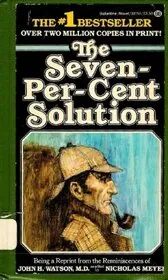
The Seven-percent Solution
by Nicholas Meyer
1974
Watson secretly turns to Sigmund Freud when Holmes's cocaine use spirals out of control. Their unlikely partnership leads to a dangerous kidnapping case and a fresh, provocative take on the Holmes legend.
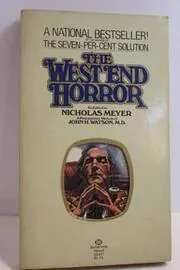
The West End Horror
by Nicholas Meyer
1976
In 1895 London, murders and disappearances ripple through the theatre district while Oscar Wilde, George Bernard Shaw, and Bram Stoker brush past the case. Holmes follows the pattern toward a killer with a notorious name.
The Canary Trainer
by Nicholas Meyer
1993
During Holmes's vanished years, he turns up in Paris as a violinist at the Opera and collides with the legend behind the Phantom. Strange accidents and a threatened young singer pull him into a stylish backstage mystery.
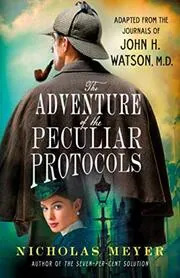
The Adventure of the Peculiar Protocols
by Nicholas Meyer
2019
Mycroft sends Holmes and Watson after a dead secret agent and a smuggled document that hints at a vast global conspiracy. Their trail runs from London to the Orient Express and into Tsarist Russia.
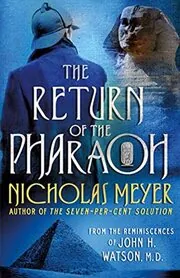
The Return of the Pharaoh
by Nicholas Meyer
2021
Watson, wintering in Egypt with his wife, unexpectedly reconnects with Holmes and a missing duke case turns into something far larger. Tombs, empire politics, and ancient shadows give this mystery a grand adventurous sweep.
Sherlock Holmes and the Telegram from Hell
by Nicholas Meyer
2024
In 1916, a battered Holmes pulls Watson into a wartime chase after a coded telegram that could shift the course of World War I. U-boats, spies, and political intrigue push the aging partners onto a dangerous international stage.
Nicholas Meyer Holmes Pastiches books in chronological order

Sherlock Holmes and the Telegram from Hell
by Nicholas Meyer
2024Nicholas Meyer Holmes Pastiches, Book 6
Series background & context
Nicholas Meyer’s Holmes books start with a bold but very readable idea: what if John Watson decided his friend needed Sigmund Freud more than another violin, another pipe, or another case? In The Seven-percent Solution, that meeting changes the emotional weather of the series right away. Meyer presents the books as recovered Watson manuscripts, which lets him play the old Sherlockian game with a straight face while also giving himself room to tweak the canon.
These books love Doyle, but they are not afraid to take a side road.
Holmes is still the Holmes readers want, brilliant, restless, rude when impatient, and thrilling when the facts suddenly lock into place. Watson is just as important. He is doctor, narrator, witness, and the human center of the room. Meyer leans harder than many pastiche writers on the friendship between them, and that helps the series. Holmes can be wounded, addicted, tired, or older here without feeling out of character, because Watson is always there to ground the story.
The settings do a lot of work. The West End Horror uses theatreland London and brushes up against Jack the Ripper. The Canary Trainer sends Holmes into the Paris Opera during the Great Hiatus. The Adventure of the Peculiar Protocols turns the series toward espionage and secret history on the road to Russia. The Return of the Pharaoh heads to Egypt, where missing nobles, archaeology, empire, and local politics all matter at once. Sherlock Holmes and the Telegram from Hell moves into World War I intrigue, and Sherlock Holmes and the Real Thing brings blizzards, corpses, and the art trade into the mix. Meyer likes real history pressing in on the detective story.
He also likes Holmes best when Baker Street is no longer enough.
That makes these books feel bigger than a standard drawing-room puzzle, even though the deductions are still there. The tone sits somewhere between classic detective fiction, historical adventure, and espionage thriller. They are clever, but they move. They care about period detail, but not at the expense of pace. Most of the novels can be read on their own, but starting with The Seven-percent Solution gives the later books more weight, especially as Holmes and Watson age and the partnership takes on a little more wear, affection, and history. If you want Holmes stories that sound rooted in the old world while still opening out into Freud, opera houses, Egypt, wartime politics, and the business of art, Meyer’s run is a very enjoyable place to start.






Edited by
Software engineer whose passion for tracking book recommendations from podcasts inspired the creation of MRB.
Lead investor at 3one4 Capital whose startup expertise and love for books helped shape MRB and its growth.
Comments
Did we miss something? Have feedback?
Help us improve this page by sharing your thoughts