
Neanderthal Parallax Books in Order
Part ofRobert J Sawyer Books in OrderThis page shows the Neanderthal Parallax books in order by Robert J Sawyer, with short summaries, series background, and where to start with the trilogy.
Last updated:
As an Amazon Associate, we earn from qualifying purchases (at no extra cost to you).
Neanderthal Parallax books in publication order
3 books
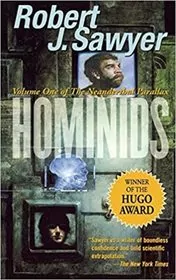
Hominids
by Robert J Sawyer
2002
A physics experiment opens a passage between our Earth and one where Neanderthals survived. When Ponter Boddit stumbles through, Sawyer turns first contact into a sharp story about justice, culture, and what humanity might have been.
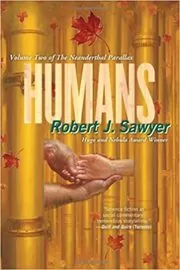
Humans
by Robert J Sawyer
2003
Ponter returns to our world, and contact between humans and Neanderthals becomes more deliberate and far messier. Politics, culture shock, and his bond with Mary Vaughan deepen the trilogy's central question about what a better society might look like.
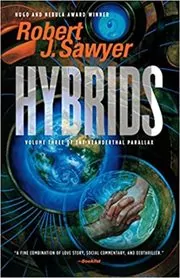
Hybrids
by Robert J Sawyer
2003
Mary and Ponter are pulled between two worlds as their relationship becomes entangled with science, politics, and the future of both species. The trilogy's final volume raises the stakes without losing sight of the people at its center.
Series background & context
Hominids, Humans, and Hybrids are Sawyer's big alternate-world trilogy, built on one clean question: what if Neanderthals had survived and become the dominant people on Earth instead of us? The series begins when a quantum physics accident opens a passage between two versions of our planet. Through it comes Ponter Boddit, a Neanderthal physicist from a parallel world whose civilization has developed along very different lines.
It is first contact, but the alien species is uncomfortably close to home.
Much of the emotional core comes from Ponter's relationship with Mary Vaughan, a human paleoanthropologist in our world. Through them, the books can compare the two societies without turning the story into a lecture. Ponter is shocked by human violence, crowding, and the way men and women live together. Mary is forced to see that the Neanderthal world, for all its order and ecological balance, has its own rules, blind spots, and costs. Meanwhile, back on Ponter's Earth, his colleague Adikor Huld faces a murder charge tied to the accident that sent Ponter across, giving the series a legal and moral thread that runs alongside the cultural exchange.
The setting does a lot of work. On our side, the story spends time in real Canadian institutions such as the Sudbury Neutrino Observatory, grounding the wild premise in a place that feels solid and lived in. On the Neanderthal side, Sawyer imagines a cleaner, less crowded world with different family structures, justice systems, and beliefs about sex, religion, and community. The contrasts are sometimes funny, sometimes harsh, and often meant to make readers question which parts of our own society we treat as normal just because we are used to them.
The trilogy keeps widening as it goes. What starts as an accident between worlds becomes a larger question about whether the two Earths can learn from each other without trying to exploit each other. There is romance here, but also politics, science, ethics, and a steady stream of what-if conversations about gender, faith, environment, and free will. Sawyer enjoys the debate, but he gives the books enough story momentum that they never become static.
This is one of his biggest thought experiments.
If you want the full effect, read the books in order from Hominids to Hybrids. The trilogy works because the social questions keep getting bigger, while the characters keep the stakes personal. You are not just watching two civilizations compare notes. You are watching people from each side decide what they are willing to defend, what they are willing to change, and what being human might actually mean.








Edited by
Software engineer whose passion for tracking book recommendations from podcasts inspired the creation of MRB.
Lead investor at 3one4 Capital whose startup expertise and love for books helped shape MRB and its growth.
Comments
Did we miss something? Have feedback?
Help us improve this page by sharing your thoughts