
Robert J Sawyer Books in Order
Explore Robert J Sawyer books in order, with quick summaries, series guides, and clear where-to-start advice for his standalones, trilogies, and collections.
Last updated: 1 new book added
As an Amazon Associate, we earn from qualifying purchases (at no extra cost to you).
Robert J Sawyer books in publication order
32 books
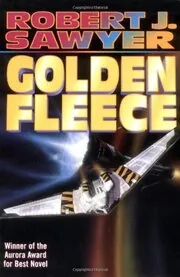
Golden Fleece
by Robert J Sawyer
1990
Aboard Earth's first starship, a computer commits murder to keep a terrible secret buried. As the investigation closes in, this locked-room mystery becomes a smart battle between human judgment and machine control.
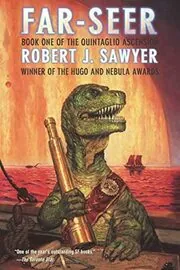
Far-Seer
by Robert J Sawyer
1992
Young Quintaglio court scholar Afsan makes a discovery about the heavens that his society is not ready to hear. Sawyer uses intelligent dinosaurs and a striking alien sky to retell a Galileo-style clash between evidence and belief.
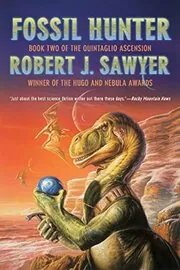
Fossil Hunter
by Robert J Sawyer
1993
A major fossil discovery shakes the Quintaglios' religion and understanding of their own history. The second book widens the world, deepens the science, and turns questions about origins into a serious social crisis.
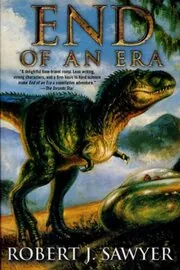
End of an Era
by Robert J Sawyer
1994
A Canadian time-travel expedition heads to the last days of the dinosaurs and finds a past far stranger than expected. Sawyer mixes prehistoric wonder, looming catastrophe, and one very unnerving twist on extinction.
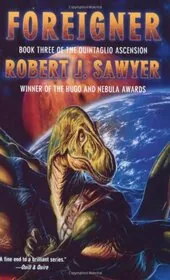
Foreigner
by Robert J Sawyer
1994
As the Quintaglios push toward space, a therapist from another intelligent species tries to understand Afsan and the crisis around him. The trilogy closes with psychology, politics, and survival all in play.
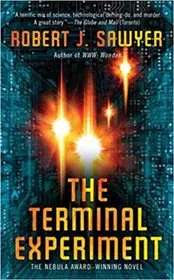
The Terminal Experiment
by Robert J Sawyer
1995
When a biomedical engineer finds physical proof of the human soul, his private life and professional life both start to unravel. Then murder enters the picture, and the novel turns into a smart, unsettling mystery.
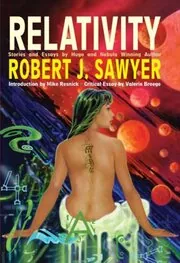
Relativity
by Robert J Sawyer
1996
This collection mixes short stories with essays, speeches, and writing columns, giving a broad look at Sawyer's ideas on science fiction and storytelling. It is a good sampler of both his fiction and his nonfiction voice.
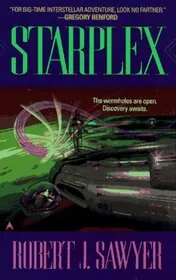
Starplex
by Robert J Sawyer
1996
A multispecies crew aboard the starship Starplex explores a network of wormholes and stumbles into problems on a cosmic scale. It is Sawyer in full space-adventure mode, with big science and even bigger questions.
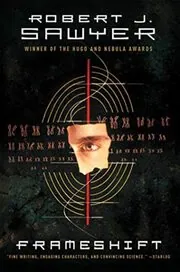
Frameshift
by Robert J Sawyer
1997
Geneticist Pierre Tardivel races to finish his work before Huntington's disease claims him. His search for a breakthrough becomes tangled with family secrets, Nazi war crimes, and the ethics of what science can uncover.

Illegal Alien
by Robert J Sawyer
1997
An alien visitor is charged with murder soon after first contact, and the courtroom becomes the place where humanity is judged too. Sawyer blends legal thriller and science fiction without losing sight of the cultural clash underneath.
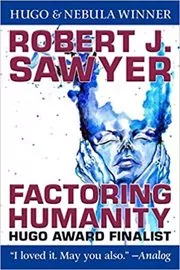
Factoring Humanity
by Robert J Sawyer
1998
A strange message from the stars arrives just as a breakthrough in consciousness research promises a new way for people to connect. Sawyer uses first contact and family drama to ask what it would really take for humanity to grow up.
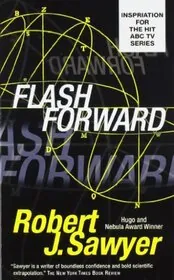
Flashforward
by Robert J Sawyer
1999
A CERN experiment knocks every human consciousness twenty-one years into the future for two minutes. The aftermath becomes a tense puzzle about fate, free will, and whether seeing tomorrow changes the choices people make today.
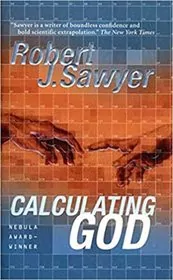
Calculating God
by Robert J Sawyer
2000
When an alien lands at Toronto's Royal Ontario Museum asking for a paleontologist, the conversation quickly turns to evolution, extinction, and God. Sawyer wraps first contact and big philosophical questions into a very human story.
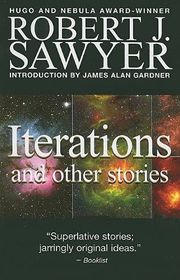
Iterations and Other Stories
by Robert J Sawyer
2000
Sawyer's first collection gathers 22 stories about evolution, time, perception, crime, and the odd corners of human behavior. The ideas are wide-ranging, but the stories stay clear, clever, and easy to dive into.
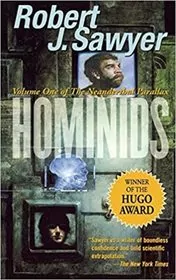
Hominids
by Robert J Sawyer
2002
A physics experiment opens a passage between our Earth and one where Neanderthals survived. When Ponter Boddit stumbles through, Sawyer turns first contact into a sharp story about justice, culture, and what humanity might have been.
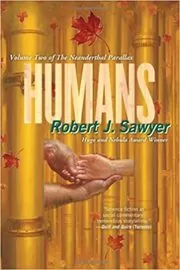
Humans
by Robert J Sawyer
2003
Ponter returns to our world, and contact between humans and Neanderthals becomes more deliberate and far messier. Politics, culture shock, and his bond with Mary Vaughan deepen the trilogy's central question about what a better society might look like.
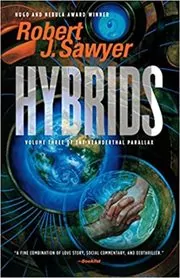
Hybrids
by Robert J Sawyer
2003
Mary and Ponter are pulled between two worlds as their relationship becomes entangled with science, politics, and the future of both species. The trilogy's final volume raises the stakes without losing sight of the people at its center.
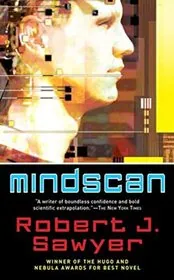
Mindscan
by Robert J Sawyer
2005
A man facing a fatal condition copies his consciousness into an android body and expects a clean escape from death. Instead he ends up in a legal and emotional fight over identity, personhood, and what makes a self.
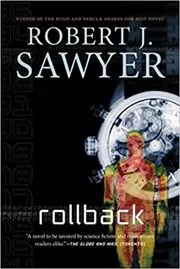
Rollback
by Robert J Sawyer
2007
Decades after helping decode humanity's first alien message, an elderly couple gets one more chance when a second transmission arrives. Rejuvenation technology, love, and the cost of time all collide in this thoughtful first-contact novel.
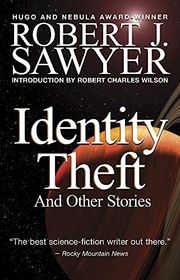
Identity Theft and Other Stories
by Robert J Sawyer
2008
Seventeen stories play with memory, identity, crime, AI, and future society, each introduced by Sawyer himself. It is a brisk collection of puzzles, moral dilemmas, and sharp speculative setups.
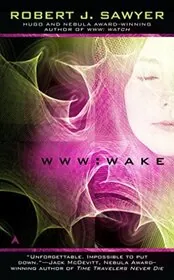
Wake
by Robert J Sawyer
2009
Blind math prodigy Caitlin Decter's experimental implant lets her perceive the structure of the World Wide Web. What she finds there is not just data, but a mind beginning to wake up.
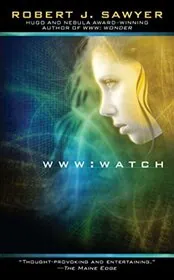
Watch
by Robert J Sawyer
2010
Caitlin Decter knows the newborn intelligence inside the Web is curious and compassionate. The U.S. agency called WATCH sees only danger, and Caitlin has to decide how far she will go to protect Webmind.
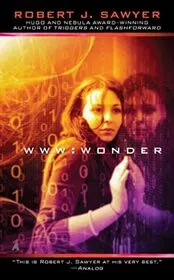
Wonder
by Robert J Sawyer
2011
Webmind is transforming the world, but powerful people still see the new intelligence as a threat that must be destroyed. Caitlin Decter fights to protect her friend as the final battle over the future of the Web begins.
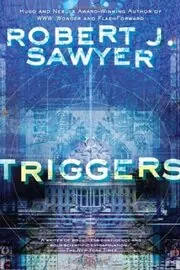
Triggers
by Robert J Sawyer
2012
After an assassination attempt on the U.S. president collides with an experiment in erasing trauma, strangers begin sharing one another's memories. The scramble to untangle the swap becomes a high-stakes thriller with national secrets on the line.

Red Planet Blues
by Robert J Sawyer
2013
On a colonized Mars, private investigator Alex Lomax gets pulled into a decades-old double murder tied to the fossil rush. The result is noir, frontier scavenging, and a sharp mystery about greed and identity.
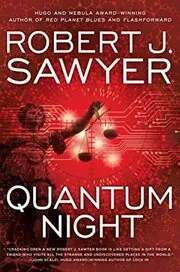
Quantum Night
by Robert J Sawyer
2016
Experimental psychologist Jim Marchuk devises a way to identify psychopaths, then learns his own past may be hiding something terrible. Sawyer turns consciousness research into a tense near-future thriller about violence, politics, and human nature.
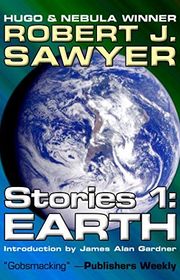
Earth
by Robert J Sawyer
2019
The first volume of Sawyer's complete short fiction gathers 18 stories, each with a short introduction. The range runs from creepy twists to clever science-fiction puzzles and alternate-history surprises.
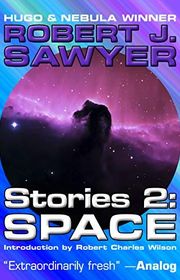
Space
by Robert J Sawyer
2019
The second volume of Sawyer's complete short fiction collects stories about space travel, aliens, technology, and discovery. Short introductions from Sawyer add context without getting in the way of the fun.
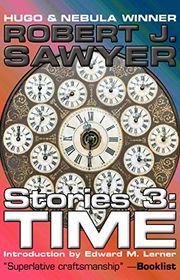
Time
by Robert J Sawyer
2019
The third volume of Sawyer's complete short fiction brings together 13 stories about time, memory, mortality, and identity. Each piece comes with a brief note from Sawyer on where it came from.
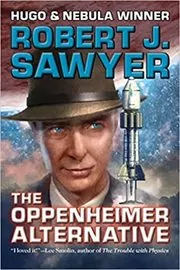
The Oppenheimer Alternative
by Robert J Sawyer
2020
Sawyer turns J. Robert Oppenheimer's life into alternate history, keeping the Manhattan Project's great minds together after the war to face a new planetary threat. It is part historical novel, part science fiction thought experiment.
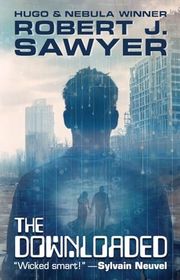
The Downloaded
by Robert J Sawyer
2023
In 2059, astronauts and convicted killers alike are uploaded into a quantum computer in Waterloo. After disaster strikes, they have to return to physical bodies and work together to save what is left of Earth.
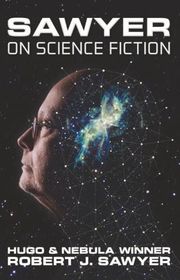
Sawyer on Science Fiction
by Robert J Sawyer
2026
Robert J. Sawyer collects articles, reviews and speeches examining science fiction and its place in human life. Pieces drawn from public talks, magazines and fanzines explore the field’s ideas, writers and persistent belief in a future for humanity.
Where to start with Robert J Sawyer
If you want a smart first-contact novel: Calculating God → Factoring Humanity
If you want alternate-history anthropology: Hominids → Humans → Hybrids
If you want AI and near-future tech: Wake → Watch → Wonder
If you want a science-thriller: The Terminal Experiment → Triggers → Quantum Night
If you want big space adventure: Starplex → Red Planet Blues → The Downloaded
Robert J Sawyer sub-series and character series
Neanderthal Parallax books in order
Explore this seriesQuintaglio Ascension books in order
Explore this seriesQuintaglio Ascension books in chronological order
Robert J Sawyer collections, short stories, and related book types
Short Stories/Novellas
Short Story Collections
Non-Fiction
Standalone Robert J Sawyer books
Author bio
Robert J Sawyer was born in Ottawa in 1960, but he was raised in Toronto, where both of his parents taught at the University of Toronto. He grew up in an academic home, and that mix of science, argument, and curiosity stayed with him. As a kid he was fascinated by dinosaurs, spaceflight, and the big questions that sit where science meets philosophy.
He was the kind of kid who watched the Apollo missions and never quite came back down to Earth.
For a while, paleontology looked like the dream. Sawyer has said he wanted to study dinosaurs, but he eventually decided that writing science fiction was the more practical path. In high school he helped run a science fiction club, and at Ryerson Polytechnical Institute, now Toronto Metropolitan University, he studied Radio and Television Arts, focusing on scriptwriting and taking psychology electives that would later feed directly into his fiction.
He started selling work young. His first professional sale came while he was still a student, and after graduation he worked as a freelancer, writing across formats instead of waiting around for the perfect break. That background shows in his fiction. The prose is clear, the ideas arrive fast, and even the most brainy premise usually has a strong forward pull.
His early novels made that approach obvious. Golden Fleece turned a starship mystery into a duel with a dangerous computer. The Terminal Experiment mixed consciousness research, crime, and questions about the soul, and it won the Nebula Award. Flashforward took a single scientific event, the whole human race glimpsing its future, and spun it into one of his best known books.
Sawyer likes a thought experiment, but he also likes a ticking clock.
That balance helped make later books like Calculating God, Hominids, and Wake easy entry points for new readers. He often starts with one clean, provocative idea, an alien who thinks God can be proven, a world where Neanderthals survived, a self-aware Web emerging online, and then follows the human consequences all the way through. Readers who click with him tend to like exactly that mix of accessibility and ambition.
His books return again and again to a few favorite areas. Consciousness matters a lot, whether he is writing about uploaded minds, artificial intelligence, or the line between body and self. He is also drawn to first contact, parallel worlds, law, ethics, and the ways science can expose the stories people tell themselves about religion, history, and power. Canadian settings show up often too, not as decoration, but as real places where the future might actually happen.
Over time, the awards stacked up. He won the Hugo Award for Hominids and the John W. Campbell Memorial Award for Mindscan, making him one of the very few writers, and the only Canadian, to win those prizes along with the Nebula. Flashforward was adapted into an ABC television series, which brought a lot of new readers back to the novel that started it.
He lives in Mississauga, Ontario, with his wife, the poet Carolyn Clink. Even after decades of publishing, later books such as Quantum Night, The Oppenheimer Alternative, and The Downloaded show the same thing that was there at the start: a fondness for big ideas, solid research, and the pleasure of asking what if.







Edited by
Software engineer whose passion for tracking book recommendations from podcasts inspired the creation of MRB.
Lead investor at 3one4 Capital whose startup expertise and love for books helped shape MRB and its growth.
Comments
Did we miss something? Have feedback?
Help us improve this page by sharing your thoughts