
Myriam J A Chancy Books in Order
Browse Myriam J A Chancy books in order, with short summaries, where to start suggestions, and a simple guide to her novels and critical works.
Last updated:
As an Amazon Associate, we earn from qualifying purchases (at no extra cost to you).
Myriam J A Chancy books in publication order
9 books
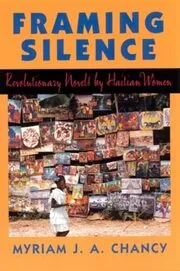
Framing Silence
by Myriam J A Chancy
1997
Chancy studies Haitian women's novels through the lenses of history, politics, and gender. The book shows how these writers confront sexual violence, class, race, and national struggle while making space for women's own voices.
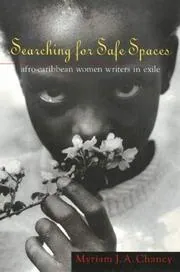
Searching for Safe Spaces
by Myriam J A Chancy
1997
Focusing on Afro-Caribbean women writers and filmmakers in exile, this study explores migration, vulnerability, and the search for home. Chancy looks at how race, gender, class, and sexuality shape both displacement and self-definition.
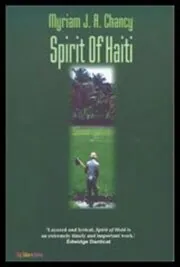
Spirit of Haiti
by Myriam J A Chancy
2004
Set in early 1990s Haiti, this novel follows four intertwined lives shaped by military rule, exile, illness, and spiritual calling. It is intimate and haunting, with the country's history pressing hard on every choice.
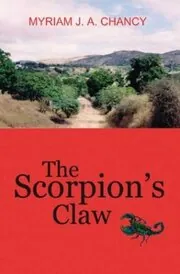
The Scorpion's Claw
by Myriam J A Chancy
2004
A family is torn apart by violence in postcolonial Haiti, and Josèphe's act of remembrance pulls past and present together. Chancy uses many voices to connect personal loss with the country's longer history of bloodshed and survival.
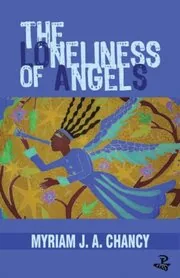
The Loneliness of Angels
by Myriam J A Chancy
2010
This nonlinear novel moves between Haiti, Canada, Paris, and Ireland as several voices circle murder, exile, grief, and faith. A scattered community slowly comes into view, held together by memory and a shared spiritual life.
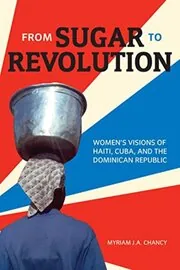
From Sugar to Revolution
by Myriam J A Chancy
2013
This comparative study brings Haiti, Cuba, and the Dominican Republic into the same frame through women's writing and art. Chancy tracks how questions of nation, race, gender, and memory cross borders rather than staying neatly apart.
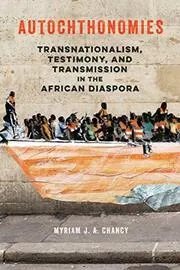
Autochthonomies
by Myriam J A Chancy
2020
Chancy offers a new way to read literature and art across the African diaspora, using a transnational lens and the idea of the lakou. It is a theory-driven study of connection, transmission, and how Black cultural works speak to one another.
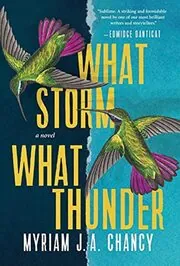
What Storm, What Thunder
by Myriam J A Chancy
2021
After the 2010 earthquake strikes Port-au-Prince, a chorus of survivors, mourners, and exiles tries to make sense of the damage. The novel turns disaster into human-scale stories about love, guilt, class, and endurance.

Village Weavers
by Myriam J A Chancy
2024
In 1940s Port-au-Prince, two girls from very different social worlds become close friends until a family secret drives them apart. Their bond stretches across decades, countries, and political upheaval as they try to face the past.
Where to start with Myriam J A Chancy
If you want a recent, accessible novel: What Storm, What Thunder → Village Weavers
If you want her earlier Haiti-centered fiction: Spirit of Haiti → The Scorpion's Claw → The Loneliness of Angels
If you want family, friendship, and long historical arcs: Village Weavers → The Loneliness of Angels
If you're here for Caribbean feminist criticism: Searching for Safe Spaces → Framing Silence → From Sugar to Revolution
If you want her broader diaspora theory: Autochthonomies
Myriam J A Chancy collections, short stories, and related book types
Non-Fiction
Standalone Myriam J A Chancy books
Author bio
Myriam J A Chancy was born in Port-au-Prince, Haiti, and spent her childhood between Haiti and Canada, including time in Quebec City and Winnipeg. That back-and-forth shows up everywhere in her work. Her fiction and criticism return again and again to questions of home, exile, memory, and what people carry when they cross borders.
Writing came first.
Chancy has said she was publishing fiction in her teens, long before she became an academic. Later, while studying English literature in Canada and then earning a PhD at the University of Iowa, she realized that the books and traditions closest to her own background were often missing from the usual reading lists. That gap pushed her toward research on Caribbean women's writing, even as she kept building a life in fiction.
Her early scholarship made that commitment clear. Searching for Safe Spaces looks at Afro-Caribbean women writers and filmmakers in exile, while Framing Silence studies Haitian women's novels and the ways they speak back to political and sexual violence. In From Sugar to Revolution, she broadens the frame and puts Haiti, Cuba, and the Dominican Republic into conversation through the work of women artists and writers.
She writes criticism, but she never leaves the human story behind.
That human focus is what draws many readers to the novels. Spirit of Haiti, her first novel, follows four lives moving through military-ruled Haiti in the early 1990s. The Scorpion's Claw turns to family memory and the long afterlife of violence. The Loneliness of Angels stretches across Haiti, Canada, Paris, and Ireland, using several voices to show how spirituality, grief, and migration can bind scattered people together.
With What Storm, What Thunder, Chancy wrote an ensemble novel about the 2010 earthquake in Port-au-Prince and the people living through its shock and aftermath. She has said the book grew out of years of listening to others and feeling that the disaster had slipped too quickly from public view. More recently, Village Weavers traces a friendship between two girls from very different backgrounds, following them across decades, countries, and family secrets.
Across both fiction and scholarship, her work keeps circling Haiti, the wider Caribbean, and the diaspora. She writes about women making sense of broken histories, families split by migration, and communities shaped by class, race, language, and faith. Readers who stay with her books often like the mix of research, emotion, and many-voiced storytelling. The political stakes are real, but so are the intimate details, food, music, longing, private grief, and stubborn love.
Today Chancy teaches in California, where she holds the Hartley Burr Alexander Chair in the Humanities at Scripps College. She is also a Guggenheim Fellow, and she has balanced teaching, criticism, and fiction for decades without treating them as separate worlds. That makes sense for a writer who once joked she probably should have been a chef. In her books, ideas and lived experience are always in the same kitchen.




Edited by
Software engineer whose passion for tracking book recommendations from podcasts inspired the creation of MRB.
Lead investor at 3one4 Capital whose startup expertise and love for books helped shape MRB and its growth.
Comments
Did we miss something? Have feedback?
Help us improve this page by sharing your thoughts