
Moises Naim Books in Order
Find Moises Naim books in order, with short summaries, where to start advice, and a quick guide to his nonfiction and fiction on power, politics, and Venezuela.
Last updated:
As an Amazon Associate, we earn from qualifying purchases (at no extra cost to you).
Moises Naim books in publication order
5 books
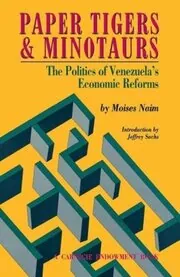
Paper Tigers and Minotaurs
by Moises Naim
1993
Drawing on his time in government, Naim examines Venezuela's push for market reform and the forces that fought it. It is part political memoir, part case study in how change gets tangled up in institutions and power.
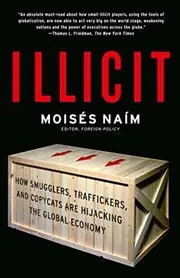
Illicit
by Moises Naim
2005
This book traces the global networks behind smuggling, trafficking, money laundering, and counterfeiting. Naim shows how black markets seep into everyday commerce, enrich criminal groups, and weaken states that struggle to control them.
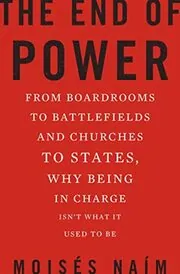
The End of Power
by Moises Naim
2013
Naim argues that power has become easier to gain, harder to use, and easier to lose. He connects politics, business, religion, and war to show why old giants keep getting challenged by smaller players.
Recommended by
1 person Mark Zuckerberg recommended this book
Mark Zuckerberg
"Explores how the world is shifting to give individual people more power that was traditionally only held by large governments, militaries and other organizations." - Mark Zuckerberg
Mark Zuckerberg's recommendation of this book
Two Spies in Caracas
by Moises Naim
2019
Set in Chávez-era Venezuela, this political thriller follows rival operatives from Cuba and the United States whose missions collide with love, betrayal, and a country sliding toward authoritarian rule.
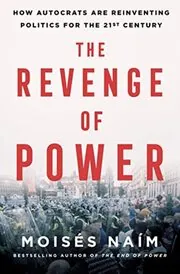
The Revenge of Power
by Moises Naim
2022
Naim examines how modern autocrats rebuild and concentrate power through populism, polarization, and post-truth politics. It is a global look at why democracy feels more fragile, and what those tactics do in practice.
Where to start with Moises Naim
If you want his core idea about modern politics: The End of Power → The Revenge of Power
If you want global crime and black markets: Illicit
If you want Venezuela from the inside out: Paper Tigers and Minotaurs → Two Spies in Caracas
If you usually prefer a novel to policy writing: Two Spies in Caracas
Moises Naim collections, short stories, and related book types
Non-Fiction
Standalone Moises Naim books
by Moises Naim
2013From Boardrooms to Battlefields and Churches to States, Why Being In Charge Isn't What It Used to Be
Author bio
Moises Naim was born in Tripoli, Libya, and grew up in Venezuela. Much of his work comes back to the same basic question: who really has power, and what happens when that power starts to shift, splinter, or harden.
He studied at Universidad Metropolitana in Caracas, then went on to earn a master's degree and a Ph.D. from MIT. Back in Venezuela, he taught business and economics, and later became dean of IESA, one of the country's best-known business schools. Long before he was writing widely read books on global politics, he was moving between classrooms, research, and the day-to-day realities of public policy.
Then he moved from studying power to dealing with it up close.
In the early 1990s, Naim served as Venezuela's minister of trade and industry, directed the country's central bank, and also served as an executive director at the World Bank. Those jobs gave him firsthand experience with reform, bureaucracy, and the political costs of change. He turned that experience into Paper Tigers and Minotaurs, a book that looks closely at how economic reform can be derailed by weak institutions, corruption, bad communication, and entrenched interests.
From 1996 to 2010, he was editor in chief of Foreign Policy. During those years he helped turn the magazine into a more global publication, and he became known for explaining big, messy international stories in clear language. He also taught at Johns Hopkins SAIS in Washington, which fits the pattern of his career, moving back and forth between ideas, institutions, and public argument.
Then he widened the frame.
In Illicit, he followed the routes of smugglers, traffickers, counterfeiters, and money launderers, showing how black markets plug into ordinary commerce instead of living somewhere far away from it. In The End of Power, he argued that power is easier to get, harder to use, and easier to lose than it used to be, whether you are talking about governments, corporations, armies, or religious institutions. In The Revenge of Power, he returned to the subject from the other side, looking at how modern autocrats rebuild control through populism, polarization, and post-truth politics. Readers who like his work usually come for the big picture, but stay for the way he connects that picture to real incentives, real systems, and real consequences.
He also took a turn into fiction.
Two Spies in Caracas is his first novel, and it brings together many of the themes that run through his nonfiction: secrecy, ambition, ideology, and the slow breakdown of democratic life. Set against the rise of Hugo Chávez, it uses espionage and romance to tell a story Naim had been studying for years from the worlds of policy, journalism, and Venezuelan public life.
Outside books, Naim has remained a public voice. He is a Distinguished Fellow at the Carnegie Endowment for International Peace, and he created, hosted, and executive produced Efecto Naím, an Emmy-winning television program on international affairs. He received the Ortega y Gasset Award for journalism in 2011, and he is based in Washington, DC. His work still circles the same territory, democracy, globalization, authoritarianism, and the strange ways power keeps changing shape.















Edited by
Software engineer whose passion for tracking book recommendations from podcasts inspired the creation of MRB.
Lead investor at 3one4 Capital whose startup expertise and love for books helped shape MRB and its growth.
Comments
Did we miss something? Have feedback?
Help us improve this page by sharing your thoughts