
Mervyn Peake Books in Order
Browse Mervyn Peake books in order, with short summaries, series notes, reading paths, and simple advice on where to start with Gormenghast and beyond.
Last updated:
As an Amazon Associate, we earn from qualifying purchases (at no extra cost to you).
Mervyn Peake books in publication order
28 books
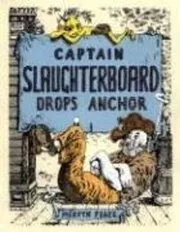
Captain Slaughterboard Drops Anchor
by Mervyn Peake
1939
A fierce pirate lands on a tropical island expecting conquest and finds an odd yellow creature instead. The story turns from menace to offbeat friendship, with Peake's wild illustrations doing half the magic.

Ride a Cock-Horse and Other Nursery Rhymes
by Mervyn Peake
1940
A classic nursery-rhyme collection brought to life by Peake's illustrations. His drawings keep the playfulness of the verses but add a faintly eerie edge of their own.

Shapes And Sounds
by Mervyn Peake
1941
One of Peake's early poetry collections, mixing lyric feeling with a strong ear for rhythm and image. You can already hear the poet who would later move between romance, satire, and darkness.

Rhymes Without Reason
by Mervyn Peake
1944
A book of nonsense verse with Peake's own illustrations, full of odd turns, comic logic, and verbal play. It sits comfortably beside Edward Lear and Lewis Carroll, but with a sharper, stranger edge.
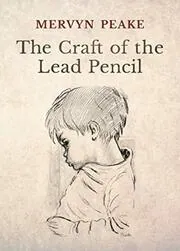
The Craft of the Lead Pencil
by Mervyn Peake
1946
Part handbook, part meditation on seeing, this short art book shows Peake thinking through line, form, and drawing from life. It's a good glimpse of how the novelist's visual mind worked on the page.
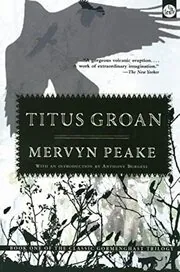
Titus Groan
by Mervyn Peake
1946
In the vast castle of Gormenghast, infant heir Titus Groan is born into a world ruled by ritual. As servants, nobles, and the ruthless Steerpike maneuver for power, the castle starts to tilt toward chaos.

Letters from a lost uncle
by Mervyn Peake
1948
Presented as letters from an eccentric explorer to his nephew, this children's book follows a quest through polar regions in search of a white lion. Peake pairs deadpan adventure with wonderfully strange drawings.
Drawings
by Mervyn Peake
1949
A collection of Peake's artwork, from character studies to darker, stranger visual scenes. It shows the draughtsman behind the novels and why his prose often feels so sharply drawn.
Gormenghast
by Mervyn Peake
1950
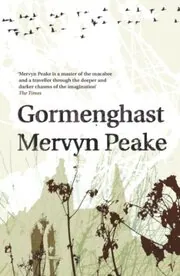
Seven-year-old Titus grows restless inside Gormenghast's crushing routines while Steerpike pushes his climb toward power. Schemes, rivalries, and old rituals tighten until the whole castle feels ready to break.

The Glassblowers
by Mervyn Peake
1950
This poetry collection includes work shaped by Peake's wartime years, including the title poem inspired by a glass factory commission. It moves between beauty, labor, and the darker pressures of the time.
Mr. Pye
by Mervyn Peake
1953
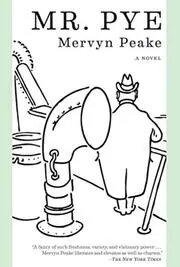
Mr. Pye arrives on the island of Sark determined to do good and improve everyone around him. His mission turns absurd when supernatural changes to his body force him into a comic struggle between virtue and vanity.
Figures of Speech
by Mervyn Peake
1954
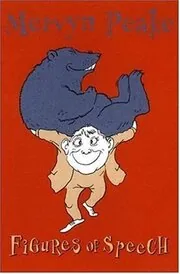
Peake turns familiar sayings into visual jokes, asking readers to guess the phrase behind each drawing. It's a small, witty book of puns, riddles, and playful illustration.

Boy in Darkness
by Mervyn Peake
1956
A short, disturbing Titus story about escape, captivity, and monstrous power beyond the castle walls. It reads like a dark fable set beside Gormenghast rather than a full sequel.

Boy in Darkness and Other Stories
by Mervyn Peake
1956
This collection brings together Peake's shorter fiction, led by the haunting Titus novella Boy in Darkness. The stories mix fable, menace, and dreamlike invention in a smaller space than the novels.
Titus Alone
by Mervyn Peake
1959
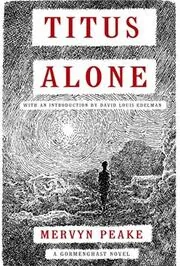
Titus leaves Gormenghast and enters a strange outside world that feels modern, fractured, and hostile. Cut loose from the castle's rituals, he has to work out who he is without the life he was born to.

The Rhyme of the Flying Bomb
by Mervyn Peake
1962
A later poem with Peake's illustrations, written out of wartime experience and its long shadow. It blends nightmare, irony, and visual intensity in a compact form.

A Reverie of Bone and other poems
by Mervyn Peake
1967
One of Peake's last poetry collections, gathering reflective, unsettling, and sharply observed verse. The poems move between private doubt, wartime memory, and flashes of dark humor.

A Book of Nonsense
by Mervyn Peake
1972
An illustrated collection of Peake's nonsense poems, full of invented creatures, verbal sideways steps, and cheerful absurdity. It's lighter on the surface than Gormenghast, but just as individual.

Selected Poems
by Mervyn Peake
1972
A posthumous selection that offers a clear entry into Peake's poetry. It gathers lyrical, wartime, and character-driven pieces and shows how central poetry was to his work.

Mervyn Peake
by Mervyn Peake
1975
This illustrated miscellany brings together biographical material, drawings, poetry, and previously unpublished pieces. It's a compact way to see how closely Peake's writing and visual art belonged together.

Twelve Poems 1939 - 1960
by Mervyn Peake
1975
A slim collection of twelve poems written across two decades. It offers a focused look at Peake's poetic voice, with drawings that keep text and image close together.

Writings & Drawings
by Mervyn Peake
1975
A generous sampler of Peake's art, poems, short prose, and biographical material, assembled after his death. It works as both a reader's introduction and a visual survey of his wider work.

Peake's Progress
by Mervyn Peake
1978
A large retrospective collection of Peake's poems, stories, fragments, plays, and drawings. It's less a single book than a tour through the full range of his imagination.
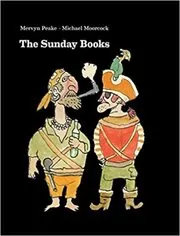
The Sunday Books
by Mervyn Peake
2006
Built from drawings Peake made for his children on Sark, this later collaboration pairs his art with Michael Moorcock's verses and stories. It's playful, eerie, and full of pirates, shipwrecks, and make-believe adventure.

Collected Poems
by Mervyn Peake
2008
The fullest one-volume gathering of Peake's serious poetry. It traces the range of his verse, from romantic and reflective pieces to work marked by war, portraiture, and unease.

Complete Nonsense
by Mervyn Peake
2011
This expanded gathering brings together Peake's nonsense poems, illustrations, and related pieces in one place. It's the best single stop for his playful, odd, and gloriously unruly comic side.

Peake Plays
by Mervyn Peake
2011
A collection of Peake's dramatic work, including comedy, darker pieces, and writing for children. It shows how his ear for language and grotesque comedy carried easily onto the stage.
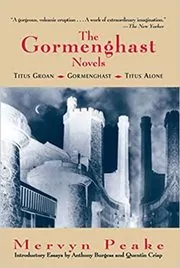
The Gormenghast Trilogy
by Mervyn Peake
Titus Groan inherits a vast castle governed by ancient rituals and populated by eccentric inhabitants. Across three novels, intrigue and murder threaten Gormenghast while Titus's longing for freedom draws him toward life beyond its walls.
Recommended by
1 person Astro Teller recommended this book
Astro Teller
"My favorite books." - Astro Teller
Astro Teller's recommendation of this book
Where to start with Mervyn Peake
If you want the core fantasy sequence: Titus Groan → Gormenghast → Titus Alone
If you prefer a strange standalone first: Mr. Pye
If you want Peake's lighter, illustrated side: Captain Slaughterboard Drops Anchor → The Sunday Books → Letters from a lost uncle
If you want the poetry first: Selected Poems → A Book of Nonsense → Collected Poems
Mervyn Peake sub-series and character series
Mervyn Peake collections, short stories, and related book types
Collections
Picture Books
Short Stories/Novellas
Non-Fiction
Standalone Mervyn Peake books
Author bio
Mervyn Peake was born on July 9, 1911, in Kuling, China, to British missionary parents, and he spent most of his childhood in Tianjin. That early split, China first, England later, seems to matter. His books often feel as if they were written by someone who always saw familiar places a little from the outside.
He came back to England in 1923 and grew up in Surrey, then studied art at Croydon School of Art and the Royal Academy Schools. Before readers knew him as a novelist, he thought of himself as a painter and draughtsman. That shows in everything he wrote. Rooms, faces, stairways, weather, fabric, stone, he notices them the way an artist does.
He was an artist before he was a novelist.
In the 1930s he spent time on Sark in the Channel Islands, exhibited his work, and later taught at Westminster School of Art. There he met the painter Maeve Gilmore, who became his wife. They had three children, and family life mattered to the work more than you might guess from the gloomier corners of Gormenghast.
The war changed him. Peake served in the army, began writing Titus Groan during those years, and later worked as a war artist. In 1945 he visited Bergen-Belsen, an experience that marked both his drawings and his poems. Even when his fiction turns comic or bizarre, there is often a pressure underneath it, a sense that cruelty, absurdity, and tenderness can occupy the same room.
Sark stayed with him.
After the war the family moved back to Sark, and Peake carried on with the books that made his name. Titus Groan, Gormenghast, and later Titus Alone are the works most readers start with. What people tend to love is not just the plot, but the strange life of the place itself, the rituals, the cramped ambitions, the dark humor, and the feeling that the castle is as alive as any character. The schemer Steerpike, the lonely Fuchsia, and the drifting Titus all come out of that mix.
But he never worked in just one lane. He also wrote the island satire Mr. Pye, the children's adventure Captain Slaughterboard Drops Anchor, and Letters from a lost uncle. His poetry ranges from playful nonsense to bleaker wartime pieces, and books such as The Glassblowers, Selected Poems, and A Book of Nonsense show both sides of him. Readers who only know the novels sometimes miss how much of Peake's imagination lived in poems, radio pieces, sketches, and illustrated books.
Success came, though not in a simple straight line. Gormenghast and The Glassblowers helped win him the Heinemann Prize in 1951, and he was elected a Fellow of the Royal Society of Literature that same year. At the same time, he kept drawing, teaching, and taking on different kinds of work, because he was never only one thing.
His later years were hard. Serious illness steadily limited his ability to write and draw, and he died in 1968 at the age of fifty-seven. Still, the body of work he left is unusually wide: novels, poems, plays, drawings, illustrated classics, and children's books. If there is one thread through all of it, it is probably this, Peake cared about the seen world, but he also cared about how strange it becomes when imagination presses against it.


Edited by
Software engineer whose passion for tracking book recommendations from podcasts inspired the creation of MRB.
Lead investor at 3one4 Capital whose startup expertise and love for books helped shape MRB and its growth.
Comments
Did we miss something? Have feedback?
Help us improve this page by sharing your thoughts