
Matthew A Rozell Books in Order
This page shows Matthew A Rozell's World War II books in order, with a full list, brief summaries, series background and clear guidance on where to start.
Last updated:
As an Amazon Associate, we earn from qualifying purchases (at no extra cost to you).
Matthew A Rozell books in publication order
10 books
The Things Our Fathers Saw: Voices of the Pacific Theater
by Matthew A Rozell
2015
Based on interviews from one small American community, this first volume follows sailors, Marines and airmen from Pearl Harbor through island battles to Tokyo Bay, capturing raw memories of fear, friendship, captivity and the long trip home.
A Train Near Magdeburg
by Matthew A Rozell
2016
A Train Near Magdeburg tells how a history teacher uncovered the story of an American tank crew that halted a death train in 1945, then spent years tracking survivors and liberators so they could finally meet again.
The Things Our Fathers Saw, Volume II: From the Great Depression to Combat
by Matthew A Rozell
2017
Drawing on eight heavy bomber veterans, Volume II moves from childhood in the Great Depression into training, formation flying and missions over occupied Europe, capturing close calls, shootdowns, captivity and the struggles of rebuilding life after war.
The War In The Air Book One
by Matthew A Rozell
2017
Focusing on heavy bomber crews tied to a single hometown, this book traces their path from Depression-era adolescence into the lethal air war over Europe, blending cockpit tension, near misses and quiet moments of humor and doubt.
The War In The Air Book Two
by Matthew A Rozell
2017
Continuing the air war story, this volume adds voices of fighter pilots and prisoners of war, following missions, shootdowns, captivity and liberation as veterans recount how they survived and what it cost them long after the guns fell silent.
Up the Bloody Boot-The War in Italy
by Matthew A Rozell
2018
From North African deserts to muddy Italian mountains, veterans in this book describe landings, mountain assaults and grinding stalemates along the peninsula, revealing a brutal campaign that was vital to victory but often overlooked back home.
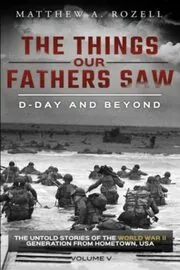
D-Day and Beyond
by Matthew A Rozell
2019
Centered on D-Day and the push across France, these firsthand accounts from engineers, infantrymen, sailors, tank crews and glider pilots move from Omaha Beach through hedgerow fighting into liberated towns, showing how ordinary people carried an extraordinary invasion.
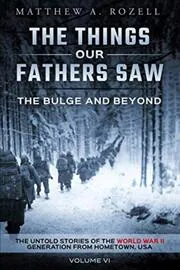
The Bulge and Beyond
by Matthew A Rozell
2020
This volume plunges readers into the frozen forests of the Ardennes and the bitter winter of 1944 and 1945, as soldiers recall surprise attacks, foxholes, long marches and heavy losses in the Battle of the Bulge and beyond.
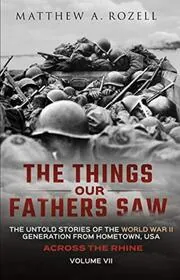
Across the Rhine
by Matthew A Rozell
2021
Across the Rhine follows paratroopers, infantry and tankers from cliff assaults at Pointe du Hoc and bridge fights in the Netherlands through the Ardennes, the Rhine crossing and into Germany, where they confront concentration camps and the war's final reckoning.
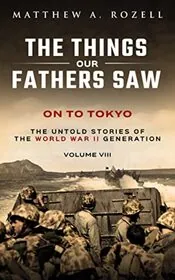
On to Tokyo
by Matthew A Rozell
2022
On to Tokyo returns to the Pacific theater, as veterans remember the chaos after Pearl Harbor, jungle fighting on islands like Guadalcanal, amphibious assaults, B-29 missions over Japan, and the grinding cost of pushing toward final victory.
Where to start with Matthew A Rozell
If you want to begin in the Pacific: The Things Our Fathers Saw: Voices of the Pacific Theater → On to Tokyo.
If you're interested in the air war over Europe: The War In The Air Book One → The War In The Air Book Two.
If you prefer the ground war in Europe: Up the Bloody Boot-The War in Italy → D-Day and Beyond → The Bulge and Beyond → Across the Rhine.
If you care most about Holocaust history and memory: A Train Near Magdeburg.
If you like to follow the original series order: The Things Our Fathers Saw: Voices of the Pacific Theater → The Things Our Fathers Saw, Volume II: From the Great Depression to Combat → The War In The Air Book Two.
Matthew A Rozell sub-series and character series
The Things Our Fathers Saw books in order
Explore this series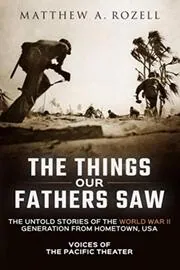
The Things Our Fathers Saw: Voices of the Pacific Theater
by Matthew A Rozell
2015The Things Our Fathers Saw, Book 1
The Things Our Fathers Saw, Volume II: From the Great Depression to Combat
by Matthew A Rozell
2017The Things Our Fathers Saw, Book 2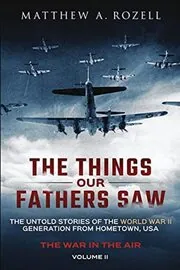
The Things Our Fathers Saw books in chronological order
The Things Our Fathers Saw: Voices of the Pacific Theater
by Matthew A Rozell
2015The Things Our Fathers Saw, Book 1The Things Our Fathers Saw, Volume II: From the Great Depression to Combat
by Matthew A Rozell
2017The Things Our Fathers Saw, Book 2
Matthew A Rozell collections, short stories, and related book types
Non-Fiction
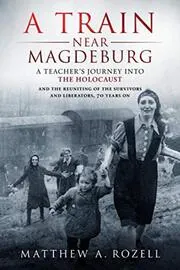
by Matthew A Rozell
2016A Teacher's Journey into the Holocaust, and the reuniting of the survivors and liberators, 70 years on
Author bio
Matthew A. Rozell was born in 1961 and grew up in Hudson Falls, a small town along the upper Hudson River in upstate New York, with two teachers for parents and a childhood steeped in stories about the past. As a boy he roamed nearby woods and riverbanks looking for traces of old forts, encampments and battle sites, long before he had the language to call it archaeology.
That early habit of walking the ground before opening a book would shape how he later taught history.
He graduated from Hudson Falls High School in 1979, then went on to SUNY Geneseo for a history degree in 1983 and a master's in education in 1988, eventually being recognized as a Distinguished Alumni Educator by his alma mater.
Rozell's first teaching job was at St. Mary's Academy in Glens Falls, but in 1987 he returned to his hometown high school to teach world history, following in the footsteps of his father, who had long taught across the river. Over the next three decades he taught nearly every course in the social studies department, though he kept circling back to World War II and the Holocaust.
In summers he stepped out of the classroom and into the dirt as an avocational archaeologist along the upper Hudson. Working with archaeologist David Starbuck and teams of students, he helped uncover a smallpox hospital on Rogers Island, parts of Fort Edward, the barracks of Fort William Henry and a long-buried colonial trading post, literally digging up the places he had chased as a teenager.
Inside the school, Rozell became just as hands-on with memory. A simple homework assignment asking students to interview relatives about World War II grew into the World War II Living History Project, an oral history program whose transcripts, photographs and taped conversations eventually numbered in the hundreds. Those interviews became the backbone of his multi-volume The Things Our Fathers Saw series, which organizes the voices of one upstate community's veterans into themed books on the Pacific war, the air war over Europe, the Italian campaign and the fighting from D-Day to the Rhine and beyond.
His best-known Holocaust work grew from the same habit of listening. In 2001 an interview with a former tank commander led him to the little-known liberation of a train packed with Jewish prisoners near the German town of Magdeburg in April 1945; over years of research he tracked down survivors and their American liberators, reunited more than 275 of them, and told the story in A Train Near Magdeburg.
The classroom project and that book brought a flood of recognition, though Rozell tends to frame it as validation for his students and the people they interviewed. He has been named History Teacher of the Year by the Organization of American Historians, received the National Society Daughters of the American Revolution Founders Medal for Education, served as a Teacher Fellow at the United States Holocaust Memorial Museum, studied at Yad Vashem's International School in Jerusalem and accepted New York State's Yavner Award for teaching about the Holocaust and human rights. Television networks and education groups have profiled his work, from an ABC World News segment that named him Person of the Week to pieces for national newscasts and museum programs, and his contribution has been formally noted in the Congressional Record and in resolutions from New York State and his hometown communities.
Since retiring from the Hudson Falls classroom in 2017, Rozell has continued to live with his wife, Laura, in Washington County, New York, writing new volumes, tending his acreage and staying closely involved with veterans, survivors and readers.
What runs through all of his work is a quiet belief that history is a human conversation, not a list of dates. By slowing down, asking careful questions and sharing the answers widely, he invites the rest of us to listen in and remember.






Edited by
Software engineer whose passion for tracking book recommendations from podcasts inspired the creation of MRB.
Lead investor at 3one4 Capital whose startup expertise and love for books helped shape MRB and its growth.
Comments
Did we miss something? Have feedback?
Help us improve this page by sharing your thoughts