
Martin Woodhouse Books in Order
Browse Martin Woodhouse books in order, with quick summaries, series background, Giles Yeoman and Leonardo da Vinci guides, and help choosing where to start.
Last updated:
As an Amazon Associate, we earn from qualifying purchases (at no extra cost to you).
Martin Woodhouse books in publication order
11 books
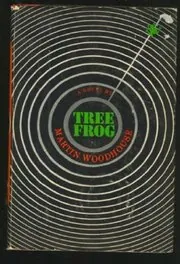
Tree Frog
by Martin Woodhouse
1966
Research scientist Giles Yeoman is pulled into a British intelligence double game around a radar-proof pilotless aircraft. As Cold War deception closes in, he has to work out whether the project is genuine, bait, or a trap meant for him.
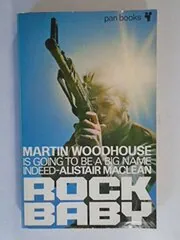
Rock Baby
by Martin Woodhouse
1968
Yeoman is drawn into a tense Cold War hunt for covert monitoring devices linked to nuclear testing. What looks like a technical mission becomes a fight over sabotage, false signals, and a weapon far more dangerous than anyone expected.
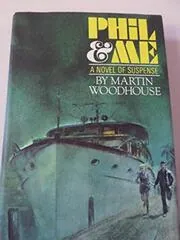
Phil & Me
by Martin Woodhouse
1970
A yachting trip in the Caribbean turns into a comic-suspense chase at sea, with trouble multiplying at every stop. It is lighter than Woodhouse's spy books, but still quick, tense, and full of motion.
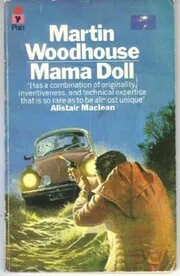
Mama Doll
by Martin Woodhouse
1972
Recovering from a head injury, Giles Yeoman is pushed into a case involving memory, brain surgery, and electronic control. The trail runs from Iceland to the Caribbean, where medical science and espionage start to look alarmingly similar.
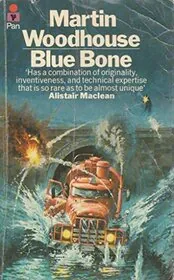
Blue Bone
by Martin Woodhouse
1973
A breakthrough plastics formula becomes a prize worth killing for, and Yeoman must reach the scientist behind it before rival powers do. Industrial greed and Cold War pressure turn one invention into a deadly target.
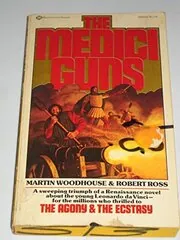
The Medici Guns
by Martin Woodhouse
1974
A young Leonardo da Vinci is pulled into Florence's power struggles when Lorenzo de' Medici needs brains as much as soldiers. Leonardo answers with geometry, artillery, and nerve as he tries to break a siege and change the rules of war.
Moon Hill
by Martin Woodhouse
1976
Now rich but still unable to stay out of trouble, Yeoman faces two disasters at once: an unstable volcano and a South American uprising. The book pushes his technical know-how into a bigger, wilder kind of thriller.
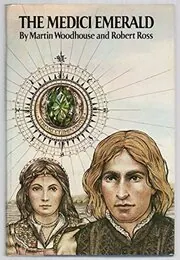
The Medici Emerald
by Martin Woodhouse
1976
When Bianca is kidnapped and Venice demands a legendary emerald in exchange, Leonardo faces a rescue mission wrapped in code and statecraft. To save the woman he loves and protect Florence, he must unlock the secret hidden in the stone.
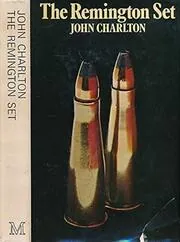
The Remington Set
by Martin Woodhouse
1976
Published as John Charlton, this short British crime novel leaves the gadgets behind for a sharper cops-and-robbers setup. Lean, quick, and tense, it is built around pursuit, pressure, and the small mistakes that make a bad situation worse.

The Medici Hawks
by Martin Woodhouse
1978
War reaches the Italian coast, and Leonardo is forced to think beyond guns and fortresses. With Bianca in danger and invasion closing in, he turns his dreams of flight into a desperate weapon against a far stronger enemy.
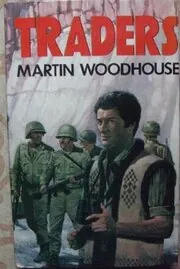
Traders
by Martin Woodhouse
1980
Adam Khan, an Afghan heir turned major arms dealer, has money, enemies, and divided loyalties. As political pressure mounts and violence spreads, he is forced to defend both his empire and the people closest to him.
Where to start with Martin Woodhouse
If you want Cold War spy tech: Tree Frog → Rock Baby → Mama Doll
If you want Renaissance adventure: The Medici Guns → The Medici Emerald → The Medici Hawks
If you want a lighter Caribbean caper: Phil & Me
If you want a later global thriller: Traders
Martin Woodhouse sub-series and character series
Standalone Martin Woodhouse books
Author bio
Martin Woodhouse was born in Romford, Essex, in 1932, the son of a local doctor and a mother who wrote poetry. He spent his school years at Salisbury Cathedral School and Oundle, far enough from London to miss the worst of the Blitz, and that mix of science, books, and wartime Britain stayed with him.
At Cambridge he studied natural sciences at Downing College, then went on to St Mary's Hospital to train in medicine. He qualified, but never built a conventional medical career. Instead he drifted toward research, experimental psychology, and computers, and at the Medical Research Council's Applied Psychology Unit he designed and built a logic machine nicknamed Lettuce to compare human and machine intelligence.
He never stayed in one lane for long.
National service with the RAF pushed him deeper into aviation and engineering. He worked on aviation medicine, missile guidance, and control systems, experiences that later gave his fiction its unusual technical confidence. A few weeks before leaving the service, his younger brother Hugh asked for help writing scripts for Supercar, and Woodhouse said yes.
That yes changed the shape of his working life.
With Hugh, he wrote most of the first season of Supercar, then moved into British television more broadly. He became one of the writers on The Avengers, and his first script introduced Cathy Gale as John Steed's new partner. He also wrote for Emerald Soup, The Hidden Truth, The Protectors, The Man in Room 17, and Dr Finlay's Casebook, bringing science, menace, and a sly sense of humor into shows that could easily have become much more ordinary.
When he turned to novels, the same ingredients came with him. Tree Frog introduced Giles Yeoman, a scientist drawn into British intelligence games around a radar-proof drone, and it was followed by Rock Baby, Mama Doll, Blue Bone, and Moon Hill. Readers who click with Woodhouse tend to like the same things: smart people solving ugly problems, dry jokes in the middle of danger, and plots built around real machinery, research, or ideas rather than pure muscle.
He liked brainy heroes.
That shows up again in the Leonardo books he wrote with Robert Ross, The Medici Guns, The Medici Emerald, and The Medici Hawks. These novels turn a young Leonardo da Vinci into a problem-solver in Renaissance Italy, using art, engineering, and nerve to survive city-state politics, kidnappings, sieges, and war. Woodhouse also wrote standalones like Phil & Me, a Caribbean comic thriller, The Remington Set, published under the name John Charlton, and Traders, which moved into the world of Afghanistan and the arms trade.
His settings were rarely accidental. After the success of Tree Frog he spent time in Los Angeles, hoping to get the book filmed, and later lived in Barbados, Grenada, and Montserrat. Those places fed directly into his fiction, especially the later Yeoman books and the more sunlit, sea-going energy of Phil & Me.
In later years he moved back to Britain and changed direction again, working as a freelance programmer and system designer. He was also involved very early in electronic publishing through a company called Illumination, and later worked on the idea of a low-cost reader powered by sunlight. It suits him that even after medicine, military research, television, and novels, he was still trying something new. He died on 15 May 2011, leaving behind books that feel very much of their moment and a little ahead of it.



Edited by
Software engineer whose passion for tracking book recommendations from podcasts inspired the creation of MRB.
Lead investor at 3one4 Capital whose startup expertise and love for books helped shape MRB and its growth.
Comments
Did we miss something? Have feedback?
Help us improve this page by sharing your thoughts