
Malcolm X Books in Order
Explore Malcolm X books in order, from the autobiography to major speech collections, with short summaries, reading guidance, and an easy place to start.
Last updated:
As an Amazon Associate, we earn from qualifying purchases (at no extra cost to you).
Malcolm X books in publication order
12 books
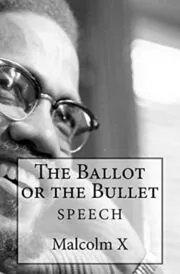
The Ballot or the Bullet
by Malcolm X
1964
This text of Malcolm X's landmark 1964 speech argues for Black political power, economic control, and self-defense. It is concise, direct, and still one of the clearest windows into his rhetoric after leaving the Nation of Islam.
Malcolm X
by Malcolm X
1965
A compact introduction built around Malcolm X's own words and public voice. It gives new readers a quick sense of the ideas, urgency, and self-questioning that run through his speeches and made him such a powerful figure.
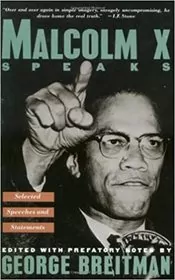
Malcolm X Speaks
by Malcolm X
1965
A key collection of speeches and statements from the last year of Malcolm X's life. It lets readers track his thinking on Black liberation, global politics, and self-determination as his views kept changing.
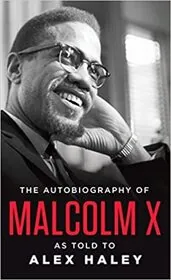
The Autobiography of Malcolm X
by Malcolm X
1965
Told to Alex Haley, this autobiography follows Malcolm X from Omaha and Lansing to prison, the Nation of Islam, Mecca, and beyond. It is both a personal story of reinvention and a sharp record of race in America.
Recommended by
6 people Casey Neistat recommended this book
Casey Neistat
"I’ve read [this book] more times than I can count. I cried at the end of [this book]." - Casey Neistat
Casey Neistat's recommendation of this book  Jason Calacanis recommended this book
Jason Calacanis
Jason Calacanis recommended this book on his blog.
Jason Calacanis's recommendation of this book  Ryan Holiday recommended this book
Ryan Holiday
"[One] of the most inspiring men of the last 150 years." - Ryan Holiday
Ryan Holiday's recommendation of this book  Jerrod Carmichael recommended this book
Jerrod Carmichael
Jerrod Carmichael mentioned this book on "The Tim Ferriss Show" podcast.
Jerrod Carmichael's recommendation of this book  Steve Aoki recommended this book
Steve Aoki
"[I] was blown away by the determination and commitment that Malcolm X had to his people and to fight against a system that was not designed to support or help him or his people." - Steve Aoki
Steve Aoki's recommendation of this book  Brian Koppelman recommended this book
Brian Koppelman
"[One of the autobiographies] I have read the most often." - Brian Koppelman
Brian Koppelman's recommendation of this book
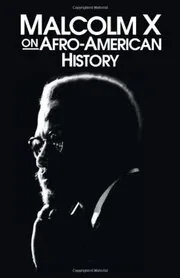
Malcolm X on Afro-American History
by Malcolm X
1967
Built around Malcolm X's teaching on Black history, this book pushes back against the stories America leaves out. It links labor, slavery, and achievement in a short, forceful lecture that invites readers to rethink the past.
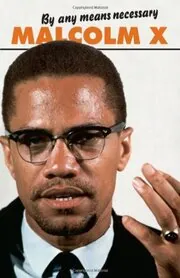
By Any Means Necessary
by Malcolm X
1970
In eleven speeches and interviews, Malcolm X takes on alliances, capitalism, imperialism, women's rights, and the freedom struggle. The collection shows a restless political mind testing ideas in public and refusing easy answers.
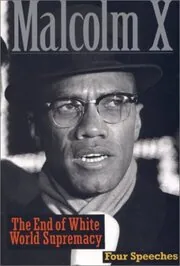
The End of White World Supremacy: Four Speeches By Malcolm X
by Malcolm X
1971
Four major speeches, including The Black Revolution and God's Judgment of White America, capture Malcolm X in an earlier phase of his public life. The book shows the sharpness of his critique and the power of his delivery.
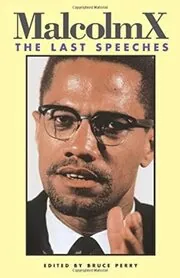
Malcolm X: The Last Speeches
by Malcolm X
1989
Gathering speeches and interviews from the last two years of his life, this volume shows Malcolm X thinking beyond narrow national limits. You can hear him moving toward a broader human rights frame even as the danger around him grows.
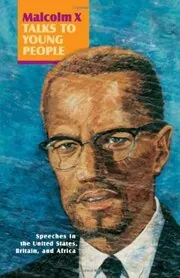
Malcolm X Talks to Young People
by Malcolm X
1990
These talks and interviews with young audiences in Ghana, Britain, and the United States feel unusually direct and conversational. Malcolm X speaks about revolution, responsibility, and solidarity in a way that still sounds aimed at the next generation.
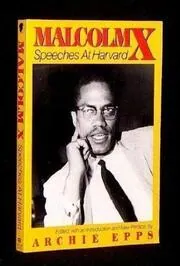
Malcolm X: Speeches at Harvard
by Malcolm X
1991
This collection of Harvard speeches and interviews catches Malcolm X answering students, critics, and supporters in real time. It is especially useful for seeing how his public message shifted across different moments of his short career.

Malcolm X Speeches
by Malcolm X
2012
A broad gathering of Malcolm X speeches that highlights his force as an orator and political thinker. Best read alongside the autobiography, it lets his arguments unfold in his own cadence, from Black nationalism to international human rights.
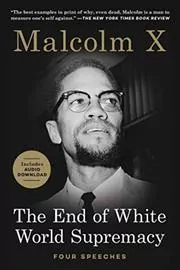
The End of White World Supremacy
by Malcolm X
Four speeches present Malcolm X's arguments about Black history, racial oppression, revolution, and political self-determination. The collection captures his forceful criticism of white supremacy and his call for a transformed understanding of African American identity and power.
Where to start with Malcolm X
If you want the full life story: The Autobiography of Malcolm X
If you want the essential speeches first: Malcolm X Speaks → The Ballot or the Bullet → Malcolm X: The Last Speeches
If you want his political evolution in speeches: The End of White World Supremacy: Four Speeches By Malcolm X → By Any Means Necessary
If you want shorter, more approachable reads: Malcolm X on Afro-American History → Malcolm X Talks to Young People → Malcolm X: Speeches at Harvard
Malcolm X collections, short stories, and related book types
Non-Fiction
Speeches
Standalone Malcolm X books
Author bio
Malcolm X was born Malcolm Little in Omaha, Nebraska, on May 19, 1925. His father, Earl Little, was a Baptist preacher and a supporter of Marcus Garvey, and his mother, Louise, was central to family life. White supremacist threats followed the family from Omaha to Lansing, Michigan, and Malcolm grew up with the memory of violence close at hand.
His early life was marked by loss.
The family home in Lansing was burned, his father died when Malcolm was still a boy, and his mother was later committed to a state hospital. Malcolm spent years in foster care, did well in school, and even talked about becoming a lawyer, until a teacher told him that kind of future was not realistic for a Black student. At fifteen he moved to Roxbury in Boston to live with his half-sister Ella Little-Collins, and the city opened up a bigger, faster world.
That world nearly swallowed him.
As a teenager and young man, Malcolm worked odd jobs, spent time in Boston and Harlem, and drifted deeper into crime. In 1946 he was arrested and sent to prison. There, the direction of his life changed. He read constantly, built his vocabulary, studied history and religion, and began corresponding with Elijah Muhammad. By the time he was released in 1952, he had joined the Nation of Islam and taken the name Malcolm X, with the X standing for a lost ancestral name.
He rose fast. Really fast.
Malcolm became one of the Nation of Islam's most visible ministers and its strongest public voice. He helped build membership, spoke with unusual clarity and force, and drew national attention through speeches, interviews, and television appearances. But he was never just repeating slogans. By the early 1960s he was pushing past the limits of the organization, and after his break with Elijah Muhammad in 1964, his thinking kept moving.
A trip to Mecca changed him in public view, but it also fit a bigger pattern in his life. He was willing to revise himself when experience demanded it. After the pilgrimage, he embraced Sunni Islam, founded Muslim Mosque, Inc. and the Organization of Afro-American Unity, and spoke more often in the language of human rights and global anti-colonial struggle. He married Betty Shabazz in 1958, and together they had six daughters. On February 21, 1965, he was assassinated in Manhattan at age thirty-nine.
He was not a desk writer in the usual sense. He wrote and thought out loud, through speeches, interviews, debates, letters, and long conversations. In 1963 he began working with Alex Haley on The Autobiography of Malcolm X. The book was published after his death, and it remains the clearest single place to start if you want the arc of his life in his own voice.
The rest of his books show other sides of him. Malcolm X Speaks and The Ballot or the Bullet capture the sharp edge of his public rhetoric. By Any Means Necessary shows him wrestling with politics, war, capitalism, and coalition. Malcolm X Talks to Young People feels more direct and conversational, almost like being in the room with him. Readers often come for the fire, but stay for the discipline, humor, honesty, and the way his ideas keep changing on the page.
What runs through all of it is a fight over dignity. He kept returning to self-respect, Black history, political power, religion, and the right to name the world clearly. That is a big reason his work still feels alive. Even now, Malcolm X reads less like a marble monument and more like a person thinking in real time, pushing himself and his audience to be braver and more exact.




Edited by
Software engineer whose passion for tracking book recommendations from podcasts inspired the creation of MRB.
Lead investor at 3one4 Capital whose startup expertise and love for books helped shape MRB and its growth.
Comments
Did we miss something? Have feedback?
Help us improve this page by sharing your thoughts