
Malcolm Lowry Books in Order
Find Malcolm Lowry books in order, with short summaries, publication background, and simple guidance on where to start with his fiction, poetry, and letters.
Last updated:
As an Amazon Associate, we earn from qualifying purchases (at no extra cost to you).
Malcolm Lowry books in publication order
15 books
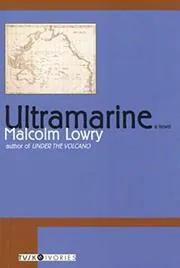
Ultramarine
by Malcolm Lowry
1933
In this first novel, young mess boy Dana Hilliot goes to sea hoping to prove himself and win the crew's respect. Shipboard routine, class resentment, and lonely shore leave turn the voyage into a rough coming-of-age test.
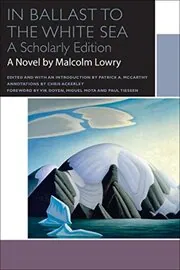
In Ballast to the White Sea
by Malcolm Lowry
1936
Long thought lost, this early Lowry novel follows Sigbjørn Wilderness through Liverpool and toward the White Sea, where politics, memory, and spiritual longing keep colliding. It is broader and more openly searching than Ultramarine, but just as restless.
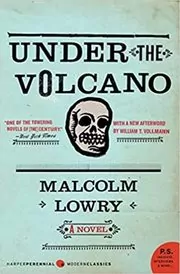
Under the Volcano
by Malcolm Lowry
1947
On the Day of the Dead in 1938, former British consul Geoffrey Firmin drinks his way through a Mexican town while his estranged wife Yvonne tries to reach him. Love, shame, and self-destruction tighten together over the course of one terrible day.
Recommended by
1 person Anthony Bourdain recommended this book
Anthony Bourdain
"One of the truly great books." - Anthony Bourdain
Anthony Bourdain's recommendation of this book

Hear Us O Lord from Heaven Thy Dwelling Place
by Malcolm Lowry
1961
This posthumous collection brings together linked stories and novellas shaped by the sea, travel, marriage, and spiritual unease. Characters recur, places echo one another, and the whole book feels like a wider map of Lowry's fictional world.

Selected Poems
by Malcolm Lowry
1962
A compact introduction to Lowry's poetry, from sea pieces to Mexico poems and intimate late lyrics. The poems carry the same music, melancholy, wit, and spiritual hunger that run through his fiction.
Lunar Caustic
by Malcolm Lowry
1963
Bill Plantagenet, a pianist and former sailor shattered by drink, admits himself to a New York psychiatric hospital. Lowry turns the ward into a haunted, claustrophobic world where madness, memory, and the wish to heal never quite separate.

Letters between Malcolm Lowry & Jonathan Cape
by Malcolm Lowry
1966
This brief volume gathers Lowry's exchange with his publisher about Under the Volcano. It is especially valuable for seeing how fiercely he defended the book's structure, symbolism, and place within his larger plans.

Selected Letters
by Malcolm Lowry
1967
A wide-ranging selection of Lowry's letters, full of literary argument, practical worry, dark jokes, and sudden warmth. They show the daily struggle behind the books and give a vivid sense of him as both craftsman and chaos engine.
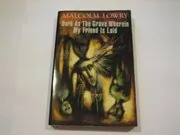
Dark As The Grave Wherein My Friend Is Laid
by Malcolm Lowry
1968
Writer Sigbjørn Wilderness returns to Mexico with his wife, hoping to revisit the ground of his earlier novel and make sense of the past. Instead he finds old fears, old drinking ghosts, and memory turning every stop into a trial.
October Ferry To Gabriola
by Malcolm Lowry
1971
Ethan Llewelyn and his wife, Jacqui, head toward Gabriola Island dreaming of a fresh start. What should be a simple journey becomes a tender, uneasy novel about marriage, money, drink, and the almost impossible hope of beginning again.

The Collected Poetry of Malcolm Lowry
by Malcolm Lowry
1992
This fuller gathering of Lowry's poems is the place to see the range of his verse, from early nautical pieces to late, haunted meditations. It is especially useful for readers who want the poetry beside the novels.
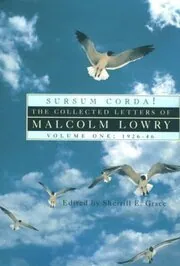
Sursum Corda!
by Malcolm Lowry
1995
This first volume of Lowry's collected letters covers the years from youth to the long making of Under the Volcano. It is part biography, part workshop notebook, and part travel record, with Lowry thinking on the page.
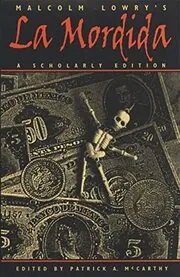
La Mordida
by Malcolm Lowry
1996
This unfinished late work follows Sigbjørn and Primrose Wilderness through Mexico, where petty corruption, bad luck, and creative paralysis close in. Even in fragmentary form, it shows Lowry turning travel, fear, and self-doubt into fiction.
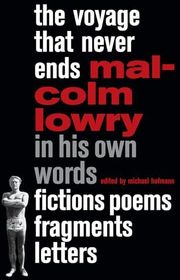
The Voyage That Never Ends
by Malcolm Lowry
2002
This generous selection gathers stories, poems, fragments, and letters from across Lowry's career, including work unpublished in his lifetime. It is one of the best single books for seeing how large and unfinished his literary project really was.
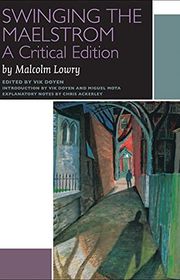
Swinging the Maelstrom
by Malcolm Lowry
2013
This critical edition traces an important earlier version of the work that later became Lunar Caustic. It lets readers watch Lowry revise the same breakdown story across different drafts, titles, and shapes.
Where to start with Malcolm Lowry
If you want the essential Lowry: Under the Volcano
If you want to start at the beginning: Ultramarine → In Ballast to the White Sea
If you prefer a shorter, intense read: Lunar Caustic → Hear Us O Lord from Heaven Thy Dwelling Place
If you want the later, haunted books: Dark As The Grave Wherein My Friend Is Laid → October Ferry To Gabriola → La Mordida
If you want the writer behind the fiction: Selected Letters → Sursum Corda! → The Voyage That Never Ends
Malcolm Lowry collections, short stories, and related book types
Short Stories/Novellas
Non-Fiction
Collections
Standalone Malcolm Lowry books
Author bio
Malcolm Lowry was born in New Brighton, near Liverpool, in 1909, the youngest of four sons in a well-off family. He grew up on the Wirral, was raised largely by nannies, and from early on seemed pulled between comfort and escape.
One way out was the sea.
Before going up to Cambridge, he signed on as a deckhand and trimmer aboard the merchant ship Pyrrhus for a voyage east. That rough stretch at sea gave him material for Ultramarine, his first novel, a book about a young man trying to earn respect on board and figure out what adulthood will cost him.
He studied at the Leys School and then at St Catharine's College, Cambridge, but the classroom was never the whole story. In his twenties he kept moving through Europe, the United States, Mexico, and later Canada. Conrad Aiken became an important mentor, and Lowry kept writing, revising, and starting over. Mexico, and his first marriage to Jan Gabrial, would both feed directly into the fiction.
He published very little while he was alive.
That can make his career look smaller than it was. In truth, he spent years building and rebuilding a body of work out of the same obsessions: drink, guilt, exile, the hope of redemption, the comic absurdity of disaster, and the way a place can get under a person's skin. The sea mattered enormously to him. So did Mexico. So did the fragile idea that art might rescue a wrecked life, even if only for a page or two.
His best-known book is Under the Volcano, published in 1947 after a long fight through drafts, revisions, and rejections. Set in Mexico on the Day of the Dead, it follows Geoffrey Firmin, a former British consul drinking his way toward ruin while his wife, Yvonne, and half-brother, Hugh, circle around him. Readers who stay with Lowry usually respond not just to the density of the writing, but to the way terror, farce, pity, and self-knowledge all live in the same paragraph.
The rest of the bibliography helps fill in the map. Lunar Caustic turns a stay in a New York psychiatric ward into a short, jagged study of breakdown and recovery. Hear Us O Lord from Heaven Thy Dwelling Place gathers linked stories and novellas shaped by travel, marriage, memory, and the West Coast world he made his own. In Ballast to the White Sea, long thought lost and published much later from an early manuscript, shows how ambitious he already was in the 1930s. The poems and letters matter too. They show the same restless intelligence, only with the guard down a bit.
For some of his best years as a writer, Lowry lived with his second wife, Margerie Bonner, in a shack near Dollarton, British Columbia, just outside Vancouver. That patch of coast fed both his fiction and his imagination. It also gave him no protection from alcoholism, money trouble, or the chaos that kept interrupting his work. A fire in 1944 destroyed the manuscript of In Ballast to the White Sea, though Under the Volcano survived and kept moving toward print.
He died in England in 1957, only forty-seven years old. Maybe that is why Lowry still feels unfinished in the best and saddest way. There are the novels, the fragments, the rewrites, the letters, and the books rescued after his death. Read straight through, they feel like one long argument between wreckage and grace.










Edited by
Software engineer whose passion for tracking book recommendations from podcasts inspired the creation of MRB.
Lead investor at 3one4 Capital whose startup expertise and love for books helped shape MRB and its growth.
Comments
Did we miss something? Have feedback?
Help us improve this page by sharing your thoughts