
Louise Welsh Books in Order
Explore Louise Welsh books in order, with short summaries, reading paths, and quick guides to her Glasgow noir, standalones, and Plague Times novels.
Last updated: 1 new book added
As an Amazon Associate, we earn from qualifying purchases (at no extra cost to you).
Louise Welsh books in publication order
11 books
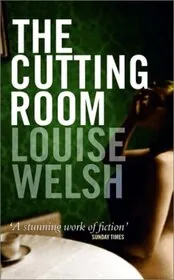
The Cutting Room
by Louise Welsh
2002
Auctioneer Rilke discovers a hidden cache of violent photographs while clearing a dead man's estate. His curiosity pulls him into Glasgow's sexual underworld, where every clue points toward cruelty, exploitation and people with far too much to hide.
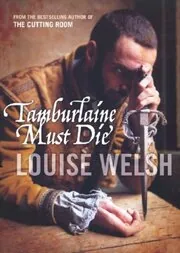
Tamburlaine Must Die
by Louise Welsh
2004
In plague-ridden London of 1593, Christopher Marlowe has three days to find a killer called Tamburlaine. Welsh turns the dramatist's last days into a tight historical thriller full of spies, suspicion and streets ready to erupt.
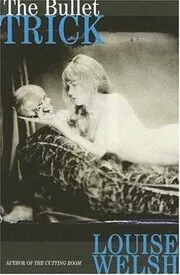
The Bullet Trick
by Louise Welsh
2006
When struggling Glasgow magician William Wilson lands cabaret work in Berlin, he thinks his luck may finally be turning. Instead he gets drawn into the city's burlesque underworld, where sex, money and stagecraft blur into real danger.
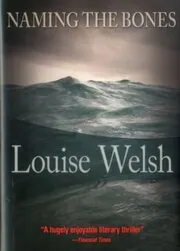
Naming the Bones
by Louise Welsh
2010
Academic Murray Watson becomes obsessed with the life and death of a long-dead poet, Archie Lunan. His research pulls him from university libraries to the island of Lismore, where literary curiosity turns into something far more dangerous.
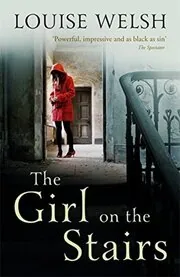
The Girl on the Stairs
by Louise Welsh
2012
Six months pregnant and newly arrived in Berlin with her partner Petra, Jane Logan grows obsessed with the troubled family next door. What begins as concern becomes a claustrophobic, dangerous tangle of suspicion, memory and fear.
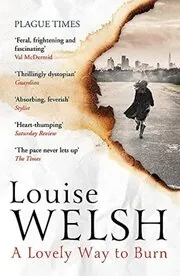
A Lovely Way to Burn
by Louise Welsh
2014
As the Sweats tear through London, Stevie Flint refuses to believe her boyfriend died of natural causes. Her search for answers pulls her deeper into a city choking on panic, roadblocks and the first cracks of social collapse.
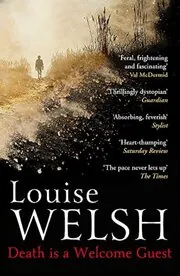
Death Is a Welcome Guest
by Louise Welsh
2015
Stand-up comic Magnus McFall is on the verge of a break when pandemic collapse turns Britain savage. Fleeing north with the escaped convict Jeb, he must survive a road trip where food, weapons and trust are all in short supply.
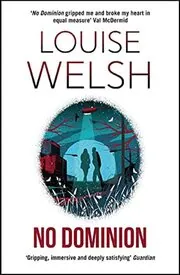
No Dominion
by Louise Welsh
2017
Seven years after the Sweats, Stevie Flint and Magnus McFall are helping build a fragile community in Orkney. When several young people vanish, they must head back to a brutal mainland where gangs and fanatics now set the rules.
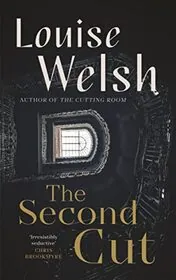
The Second Cut
by Louise Welsh
2022
Trying to keep life respectable, Glasgow auctioneer Rilke takes a promising house-clearance job from an old friend. When that friend turns up dead, he follows the trail through a city of indifference, prejudice and dangerous secrets.

To the Dogs
by Louise Welsh
2024
Professor Jim Brennan seems to have escaped his rough beginnings and built a polished life in Glasgow academia. When his son is arrested on drug charges, men from Jim's past return and test how far respectability can stretch.
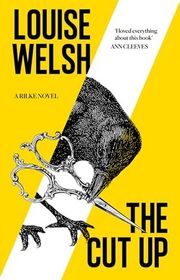
The Cut Up
by Louise Welsh
2026
Glasgow auctioneer Rilke benefits from a growing demand for discreet cash transactions while trying to avoid an acquaintance newly released from prison. When a customer dies outside the auction house, his friends’ attempts to help threaten to complicate matters.
Where to start with Louise Welsh
If you want Glasgow noir: The Cutting Room → The Second Cut
If you want plague era suspense: A Lovely Way to Burn → Death Is a Welcome Guest → No Dominion
If you want psychological tension: The Girl on the Stairs
If you want literary and historical mystery: Tamburlaine Must Die → Naming the Bones
If you want campus crime and moral pressure: To the Dogs
Louise Welsh sub-series and character series
Plague Times Trilogy books in order
Explore this seriesPlague Times Trilogy books in chronological order
Rilke books in order
Explore this seriesStandalone Louise Welsh books
Author bio
Louise Welsh was born in London in 1965 and grew up in Edinburgh, the older of two sisters. Her father was in the RAF, and her mother later went back to university to study history. Welsh has said she was an omnivorous reader as a child, and that early mix of curiosity, dark humour, and interest in the past still shows up all through her fiction.
Before writing took over, she spent two years working at Standard Life, a job that helped confirm she did not want an office life forever. She went on to study history at the University of Glasgow, and later completed an MLitt in creative writing through Glasgow and Strathclyde. Medieval history especially stayed with her. You can feel that in the way plague, power, superstition and public fear keep surfacing in her books.
Then came the second-hand bookshop.
After graduating into the recession, Welsh opened her own shop in Glasgow's west end. She has described it as an attempt to get closer to the book itself. The move into fiction was gradual, then suddenly very real: a creative writing course sharpened her focus, a tutor nudged her toward the novel she had been circling for years, and friends pushed her to talk to a publisher. That long build led to The Cutting Room in 2002, a dark Glasgow mystery that won the John Creasey Dagger and the Saltire First Book Award.
That debut also set out a lot of what readers now look for in Welsh. She likes cities with rough edges, people living slightly off to the side of respectable life, and mysteries that are really about obsession, class, desire and the stories people tell themselves. In The Cutting Room, and later in The Second Cut, Glasgow is grubby, funny, dangerous and oddly tender at the same time. Her characters are rarely neat heroes, which is part of the appeal.
She also changes gear well. The Bullet Trick heads into Berlin's cabaret underworld with a struggling magician at the center. The Girl on the Stairs turns Berlin into a place of pregnancy, paranoia and old shadows. Tamburlaine Must Die imagines the last days of Christopher Marlowe as a historical murder story, while Naming the Bones follows an academic whose research into a dead poet becomes something much darker. Later, in To the Dogs, she brings that same moral pressure to a university setting and asks how far a man will go to protect the life he has made.
Her Plague Times books widened the canvas again. A Lovely Way to Burn, Death Is a Welcome Guest and No Dominion use pandemic fiction, road story and survival thriller to ask what happens when institutions fail and ordinary people have to improvise new rules. Even at their biggest in scale, the books stay close to character. Welsh is interested in what fear does to people, but also in loyalty, resourcefulness and the odd joke that keeps someone moving.
She never seems interested in writing the same book twice.
That range extends beyond novels. Welsh has written short stories, plays, radio work and opera libretti, and she has edited anthologies too. These days she lives in Glasgow and is Professor of Creative Writing at the University of Glasgow, which gives her career a nice full-circle shape. Readers often come to her for atmosphere, but they stay for the human mess underneath: the compromised choices, the sharp dialogue, the uneasy humour, and the sense that danger is never far away.



Edited by
Software engineer whose passion for tracking book recommendations from podcasts inspired the creation of MRB.
Lead investor at 3one4 Capital whose startup expertise and love for books helped shape MRB and its growth.
Comments
Did we miss something? Have feedback?
Help us improve this page by sharing your thoughts