
Leon Uris Books in Order
Browse all Leon Uris books in order, with short summaries, series information, and reading-order tips for his WWII epics, Israel novels, and Irish sagas.
Last updated:
As an Amazon Associate, we earn from qualifying purchases (at no extra cost to you).
Leon Uris books in publication order
17 books

Battle Cry
by Leon Uris
1953
Battle Cry follows a diverse radio squad of young Marines from boot camp in San Diego through brutal campaigns at Guadalcanal, Tarawa, and Saipan, showing how war forges camaraderie, tests courage, and leaves lasting scars on each man.

The Angry Hills
by Leon Uris
1955
In The Angry Hills, American writer Mike Morrison arrives in Greece on simple business and is handed a secret letter vital to the resistance. As the Germans invade, he is hunted across the country by occupiers, collaborators, and traitors.
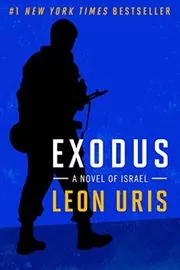
Exodus
by Leon Uris
1958
Exodus begins in a Cyprus detention camp and follows Jewish refugees, Israeli fighters, and an American nurse drawn into their cause, weaving their personal histories into a dramatic account of the struggle that leads to the founding of modern Israel.
Recommended by
1 person Ben Shapiro recommended this book
Ben Shapiro
"A really terrific book. [...] It's sort of the history of the founding of Israel." - Ben Shapiro
Ben Shapiro's recommendation of this book
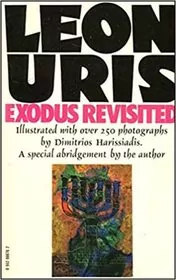
Exodus Revisited
by Leon Uris
1960
Exodus Revisited returns Uris to Israel, where his commentary is paired with Dimitrios Harissiadis’s photographs to explore the country’s deserts, farms, cities, and holy places, capturing the contrasts of a young nation with an ancient, often painful past.
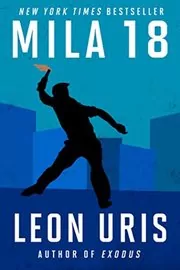
Mila 18
by Leon Uris
1961
Mila 18 centers on a foreign correspondent and a group of Jewish leaders in Warsaw as Nazi occupation closes in. Inside the ghetto, secret meetings and smuggled weapons build toward the desperate, heroic uprising around the bunker at 18 Mila Street.
Recommended by
1 person- Ben Shapiro recommended this book
Ben Shapiro
"My favorite book by [this author]." - Ben Shapiro
Ben Shapiro's recommendation of this book
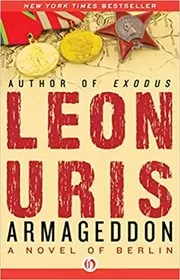
Armageddon
by Leon Uris
1964
Armageddon: A Novel of Berlin follows American officer Sean O’Sullivan and his colleagues from war‑torn Germany into the tense years of Allied occupation and the Berlin Blockade, where rebuilding, denazification, and Cold War maneuvering collide.
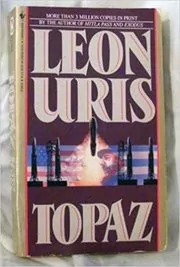
Topaz
by Leon Uris
1967
Topaz is a Cold War espionage tale in which French intelligence chief André Devereaux and his American partners uncover Soviet plans to ship missiles to Cuba and a secret spy ring inside France, forcing dangerous missions and uneasy alliances.
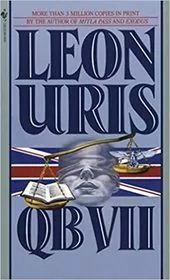
QB VII
by Leon Uris & Jill Uris
1970
In QB VII, author Abraham Cady is sued for libel after accusing eminent surgeon Sir Adam Kelno of crimes in a Nazi camp. The London trial slowly reveals what happened at Jadwiga and how far the law can go in naming the truth.

Ireland, A Terrible Beauty
by Leon Uris
1975
Ireland, A Terrible Beauty blends Leon Uris’s essays with Jill Uris’s photographs from journeys across the Republic and Northern Ireland in the 1970s, portraying haunting landscapes, everyday communities, and the political and sectarian tensions of the Troubles.

Trinity
by Leon Uris
1976
Trinity follows Conor Larkin, his family, and their Protestant neighbors from rural Donegal to the streets of Derry and Belfast, tracing land disputes, strikes, and secret organizing as Ireland’s long struggle for independence pulls everyone into its orbit.
Jerusalem: A Song of Songs
by Jill Uris & Leon Uris
1981
Jerusalem: A Song of Songs is a photo‑rich portrait of Jerusalem, combining Leon Uris’s narrative with Jill Uris’s color and black‑and‑white images to show the city’s markets, holy sites, and neighborhoods and the layered histories that shape them.
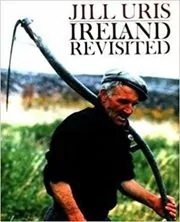
Ireland Revisited
by Jill Uris & Leon Uris
1982
Ireland Revisited revisits the island a decade after A Terrible Beauty, using Jill Uris’s photographs and short texts to capture farms, cities, coastlines, and street life, offering a quieter, more reflective look at a country still marked by change and conflict.
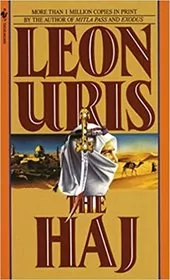
The Haj
by Leon Uris
1984
The Haj tells the story of Ibrahim al‑Soukori, leader of a Palestinian village, and his son Ishmael from the 1920s through Israel’s birth, charting uneasy ties with Jewish neighbors, forced flight, refugee camps, and the burdens of honor and resentment.
Recommended by
1 person Donald Knuth recommended this book
Donald Knuth
"Great to read on a trip to Israel." - Donald Knuth
Donald Knuth's recommendation of this book
Mitla Pass
by Leon Uris
1988
Mitla Pass follows American writer Gideon Zadok, who joins Israeli paratroopers in the 1956 Sinai campaign, intercut with the saga of his immigrant parents and his own Marine past, as he wrestles with identity, ambition, and inherited trauma.
Redemption
by Leon Uris
1995
Redemption continues the Trinity saga into the early twentieth century, following the extended Larkin family as some emigrate to New Zealand, others become priests or soldiers, and Rory Larkin fights at Gallipoli amid war, loyalty, and the price of rebellion.
A God in Ruins
by Leon Uris
1999
A God in Ruins traces the life of Quinn Patrick O’Connell, an adopted Irish American Marine veteran who becomes Colorado governor and a 2008 presidential contender, only to have his campaign shaken by a revelation about his birth family and America’s prejudices.
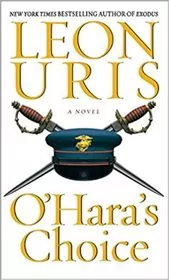
O'Hara's Choice
by Leon Uris
2003
O’Hara’s Choice is set after the Civil War, as Irish American officer Zachary O’Hara fights to secure the future of the U.S. Marine Corps while confronting Washington politics, old loyalties, and a complicated love for ambitious heiress Amanda Blanton Kerr.
Where to start with Leon Uris
If you want his Israel epics: Exodus → Mila 18 → The Haj → Mitla Pass
If you’re drawn to Irish history and rebellion: Ireland, A Terrible Beauty → Trinity → Redemption
If you prefer frontline war stories: Battle Cry → The Angry Hills → Armageddon
If courtroom and political drama appeal: QB VII → A God in Ruins → O’Hara’s Choice
If you like photo‑rich journeys: Exodus Revisited → Jerusalem: A Song of Songs → Ireland Revisited
Leon Uris sub-series and character series
Trinity & Redemption books in order
Explore this seriesTrinity & Redemption books in chronological order
Leon Uris collections, short stories, and related book types
Non-Fiction
Standalone Leon Uris books
Author bio
Leon Uris grew up between Baltimore row houses and the memories his immigrant parents carried from Eastern Europe. An avid storyteller from childhood, he was drawn less to classrooms than to the drama of real people under pressure.
He was born in Baltimore, Maryland, in 1924 to Wolf William and Anna Uris, a Jewish family marked by his father’s rough experiences in Czarist Russia and a brief stay in Palestine after World War I. He attended schools in Norfolk, Virginia, and back in Baltimore, failed English more than once, and left high school without graduating.
At seventeen, in the wake of the attack on Pearl Harbor, Uris enlisted in the United States Marine Corps. He served as a radioman with the 2nd Battalion, 6th Marines in the South Pacific, seeing combat on Guadalcanal and Tarawa and spending time stationed in New Zealand before recurrent malaria, dengue fever, and asthma sent him stateside for treatment. While recovering in San Francisco he met fellow Marine Betty Beck, whom he married in 1945.
After the war he worked for a newspaper and wrote on the side, selling an article to a national magazine in 1950 that convinced him writing might be more than a hobby. Drawing directly on his Marine experience, he wrote Battle Cry, a novel about a radio squad in the Pacific that became a bestseller and was adapted for film, with Uris helping to write the screenplay. He followed it with The Angry Hills, set in Nazi‑occupied Greece, signaling his lifelong habit of tying individual fates to major historical crises.
His breakthrough came with Exodus in 1958, a sprawling novel about Holocaust survivors, underground fighters, and British officials caught up in the struggle to create the state of Israel. Uris spent years traveling through Israel, interviewing people and walking the ground, and the book’s mix of research, drama, and clear moral lines turned it into a publishing phenomenon for readers who wanted to understand the new country’s origin story.
He rarely wrote small books.
Over the next decades he kept circling the flashpoints of the twentieth century. Mila 18 focuses on the Warsaw Ghetto uprising; Armageddon: A Novel of Berlin moves from wartime London into the tense Berlin Airlift; Topaz dives into Cold War espionage around the Cuban Missile Crisis; and QB VII turns a real libel case into a tense courtroom drama about a surgeon accused of atrocities in a Nazi camp. Later novels such as Trinity and its sequel Redemption tackle Irish nationalism and diaspora, while The Haj, Mitla Pass, A God in Ruins, and O’Hara’s Choice look at the Middle East, the Suez crisis, American politics, and the U.S. Marine Corps from different angles.
Alongside the fiction, Uris also worked in collaboration with photographer Jill Peabody, his third wife. Together they produced Ireland: A Terrible Beauty and Jerusalem: A Song of Songs, large photo‑text books that combine his commentary with her images, as well as later projects like Ireland Revisited and Exodus Revisited, in which he returned to the scenes and themes of his earlier work.
His personal life was as full of turns as his plots. Uris married three times, had five children, and spent long stretches in Aspen, Colorado, before later settling in the New York area. He was a co‑founder of the pro‑Israel group Writers and Artists for Peace in the Middle East, and by the time of his death from kidney failure in 2003 on Shelter Island, New York, his papers had already begun to be collected at the Harry Ransom Center in Texas.
Readers still come to his books for big, accessible stories that wear their research on the surface—stories where history is not a backdrop but the engine of the plot, and ordinary people are pushed to make choices in the middle of world‑shaping events.














Edited by
Software engineer whose passion for tracking book recommendations from podcasts inspired the creation of MRB.
Lead investor at 3one4 Capital whose startup expertise and love for books helped shape MRB and its growth.
Comments
Did we miss something? Have feedback?
Help us improve this page by sharing your thoughts