
Leon Cazador Books in Order
Part ofNik Morton Books in OrderExplore the Leon Cazador books by Nik Morton in order, with brief summaries, series background, and an easy guide to where to start.
Last updated:
As an Amazon Associate, we earn from qualifying purchases (at no extra cost to you).
Leon Cazador books in publication order
3 books
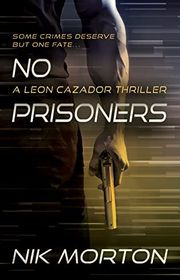
No Prisoners
by Nik Morton
2022
When Leon Cazador finds the body of a fellow investigator, he is pulled into a brutal hunt for a child abuse ring. The case links Spain, British investigators, and predators who have counted on secrecy for far too long.

Organ Symphony
by Nik Morton
2022
While on FBI liaison duty in Charleston, Leon Cazador becomes involved when a dead child is found missing a kidney. The trail leads toward kidnapped children, organ traffickers, and an enemy he has reason to fear and hate.
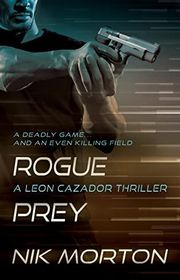
Rogue Prey
by Nik Morton
2022
Leon Cazador takes aim at a Spanish organization that sells the ultimate thrill to rich clients, the chance to hunt human beings. With only a few weapons and little mercy in the field, the prey may have to become the hunter.
Leon Cazador books in chronological order
Series background & context
Leon Cazador is one of Nik Morton's most flexible series characters, because he can carry both short, character-led cases and bigger modern thrillers. He is introduced as a half-English, half-Spanish private investigator, and that mixed identity suits the books well. He moves through Spain with the eye of someone who belongs and observes at the same time.
In the earlier Leon material, especially Spanish Eye and Leon Cazador, P.I., the appeal is the voice as much as the plots. Leon tells the stories himself, and the cases come in different shades. Some are melancholy, some slyly funny, some rooted in old grief, and some plainly dangerous. The focus is not only on solving a puzzle. It is on the people caught inside it. That gives the short fiction a humane edge.
Spain is not just backdrop here. The settings, coastal towns, city streets, bars, graveyards, villages, tourist zones, and old wounds of history all matter to how the stories feel. Leon's world is shaped by local textures, by class and memory, by the friction between appearances and what is actually going on behind them. Even when a case is brief, it often leaves a little bruise.
The later novels turn the stakes up. In Rogue Prey, Leon faces an organization in Spain that sells the thrill of hunting human beings to wealthy clients. In No Prisoners, the murder of a fellow investigator draws him into the pursuit of a child abuse ring with links beyond Spain. In Organ Symphony, while on FBI liaison duty in Charleston, he finds himself up against organ traffickers after a child is discovered with a kidney missing. Those books keep Leon's investigative instincts but move him into broader, harsher territory.
What ties the whole series together is Leon himself. He is neither a polished superhero nor a cozy amateur. He notices details, feels the weight of what he sees, and keeps going when the case turns ugly. The stories do not shy away from cruelty, exploitation, or loss, but they also make room for wit, sympathy, and the odd moment of grace. That balance is a big part of the series' charm.
Readers should expect a private eye framework with more emotional variety than the label sometimes suggests. Leon can investigate a personal sorrow one day and a monstrous criminal enterprise the next. The books are interested in the human condition, but never in a lofty way. They stay close to the street, the witness, the victim, the liar, and the small choice that sets everything else in motion.
Leon sees people clearly.
That is why these stories work.







Edited by
Software engineer whose passion for tracking book recommendations from podcasts inspired the creation of MRB.
Lead investor at 3one4 Capital whose startup expertise and love for books helped shape MRB and its growth.
Comments
Did we miss something? Have feedback?
Help us improve this page by sharing your thoughts