
Kushiel's Legacy Imriel Trilogy Books in Order
Part ofJacqueline Carey Books in OrderFind Jacqueline Carey's Kushiel's Legacy Imriel Trilogy in order, with short summaries, reading advice, and background on Imriel's path through Terre d'Ange.
Last updated:
As an Amazon Associate, we earn from qualifying purchases (at no extra cost to you).
Kushiel's Legacy Imriel Trilogy books in publication order
3 books
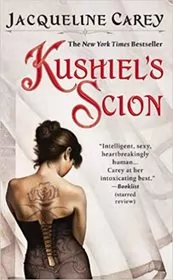
Kushiel's Scion
by Jacqueline Carey
2006
Adopted by Phèdre and Joscelin, young prince Imriel de la Courcel is still marked by his parents' crimes and his own brutal past. A trip abroad turns into a siege, a cult, and a hard test of who he means to become.
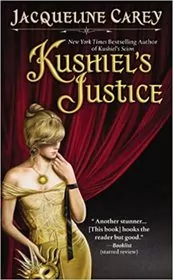
Kushiel's Justice
by Jacqueline Carey
2007
Back from his studies, Imriel finds his forbidden love for Sidonie burning hotter than ever. Duty pulls him toward an arranged marriage, while dark magic in Alba turns desire, politics, and succession into a dangerous trap.
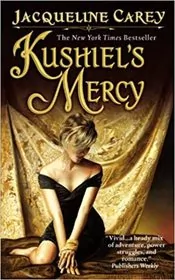
Kushiel's Mercy
by Jacqueline Carey
2008
When Imriel and Sidonie finally claim their love, Terre d'Ange erupts in anger over old betrayals. To win a future together, Imriel must face rebellion, royal politics, and the long shadow of his mother Melisande.
Kushiel's Legacy Imriel Trilogy books in chronological order
Series background & context
The Imriel Trilogy follows a character who grows up in the shadow of everything the earlier Terre d'Ange books set in motion. Imriel de la Courcel is the child of infamous traitors, and by the time these novels begin he has already lived through kidnapping, violence, and a childhood shaped by other people's ambitions. He has rank, protection, and a place among heroes, but none of that makes the past smaller.
That is the engine of this trilogy. Imriel is not simply trying to survive court politics. He is trying to work out whether he can become someone other than the sum of bloodline, scandal, and old damage. Raised by Phèdre and Joscelin, he has living examples of courage and loyalty in front of him. He also knows, better than most, how easily desire, fear, and power can twist a life.
He can't outrun his name.
Like the Phèdre books, these novels are packed with political maneuvering, foreign travel, religious ideas, and dangerous attraction. But the emotional texture is a little different. Imriel is more inward than Phèdre, more bruised, and often less certain of himself. Carey spends a lot of time on guilt, shame, longing, and the slow work of deciding what sort of man he wants to be. When romance enters the picture, it does not simplify anything. It makes everything harder.
The setting still matters enormously. Terre d'Ange remains a place where art, beauty, and ceremony sit right beside espionage and succession struggles, and the story ranges well beyond it into other lands with their own dangers and expectations. Magic feels stranger and more threatening here, especially when it brushes against Imriel's family history and the fears other people project onto him.
These books are best read after the Phèdre trilogy, because Carey assumes you already know the political and emotional ground under Imriel's feet. The reward is that this does not feel like a repeat. It feels like a continuation that asks what happens after the great victories, when the children of those events still have to live with what was broken along the way.
If Phèdre's trilogy is about a brilliant woman learning how to move through power, Imriel's is about a young man learning how not to be ruled by the darkest parts of his own story. The books are romantic, politically tangled, and often painful in a very human way. That blend is what gives them their hold.





Edited by
Software engineer whose passion for tracking book recommendations from podcasts inspired the creation of MRB.
Lead investor at 3one4 Capital whose startup expertise and love for books helped shape MRB and its growth.
Comments
Did we miss something? Have feedback?
Help us improve this page by sharing your thoughts