
Kate Ross Books in Order
Explore Kate Ross books in order, with quick summaries, Julian Kestrel series background, and clear help choosing the best place to start reading.
Last updated:
As an Amazon Associate, we earn from qualifying purchases (at no extra cost to you).
Kate Ross books in publication order
4 books
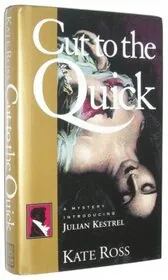
Cut to the Quick
by Kate Ross
1993
At a country house wedding, Julian Kestrel is drawn into family scheming, then jolted by the discovery of a dead woman in his bed. To clear his name, he must cut through polished manners, lies, and a very real killer.
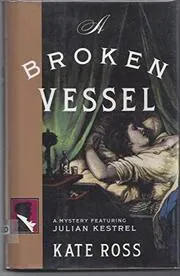
A Broken Vessel
by Kate Ross
1994
When Sally Stokes lifts a desperate letter from a client's pocket, she takes it to Julian Kestrel and Dipper. Their search for its author leads from London's streets to respectable society, where a supposed suicide looks more and more like murder.
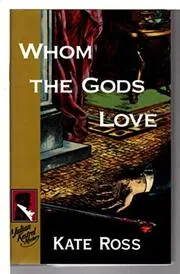
Whom the Gods Love
by Kate Ross
1995
Society favorite Alexander Falkland is murdered during one of his own parties, and his father asks Julian Kestrel to investigate. The deeper Julian digs, the more the victim's glittering life breaks apart into debts, secrets, and dangerous double meanings.
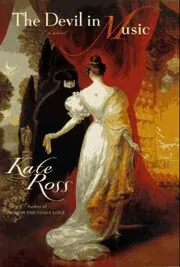
The Devil in Music
by Kate Ross
1997
While traveling on the Continent, Julian Kestrel is pulled into an old murder tied to a gifted English tenor, a noble Italian family, and unrest in Milan. Opera, politics, and hidden loyalties make this his most sweeping case.
Where to start with Kate Ross
If you want the full story: Cut to the Quick → A Broken Vessel → Whom the Gods Love → The Devil in Music
If you want a darker London case: A Broken Vessel → Whom the Gods Love
If you like society secrets and tangled motives: Whom the Gods Love → The Devil in Music
If you want the biggest, most sweeping mystery: The Devil in Music
Kate Ross sub-series and character series
Author bio
Kate Ross grew up in Wellesley, Massachusetts, studied at Wellesley College, and went on to Yale Law School. Before mystery readers met Julian Kestrel, she was working as a trial lawyer in Boston.
Then she changed direction.
After her years at Sullivan & Worcester, Ross left the law and turned to fiction. It was a sharp pivot, but it makes sense when you read her novels. They have the patience of legal reasoning, the pleasure of close observation, and a strong feel for how people hide things when the stakes get high.
Instead of writing courtroom stories, she went back to the 1820s. Her great invention was Julian Kestrel, a beautifully dressed Regency dandy who seems built for wit, clothes, and clever conversation, until murder pulls him into action. Ross uses that contrast wonderfully. Julian can move through polished rooms without rattling anyone, and because people underestimate him, he sees more than they expect.
That contrast is the fun of the series.
Across Cut to the Quick, A Broken Vessel, Whom the Gods Love, and The Devil in Music, Ross mixed social comedy, historical mystery, and genuine feeling. Readers often come for the period detail, but they stay for the people. Julian is vain, funny, and sharper than he lets on. His valet Dipper, once a pickpocket, gives the books a different angle, and recurring figures like Sally Stokes and Dr. Duncan MacGregor help widen the world beyond drawing rooms and dinner parties.
Ross also knew how to shift the mood from book to book. Cut to the Quick begins with a country house wedding and a dead woman in Julian's bed. A Broken Vessel pushes deeper into London's harsher streets and into questions of class and respectability. Whom the Gods Love takes apart the life of a glittering young man whose murder exposes hidden selves everywhere Julian turns. The Devil in Music opens the series outward into Milan, music, and political danger, and it later won the Agatha Award for Best Novel.
She had range.
She was writing historical mysteries, but she never treated history like wallpaper. Money, rank, reputation, and gender expectations are not background decoration in her fiction. They are part of the machinery of every crime. Again and again, she returns to masks, performance, and the gap between how people appear in public and what they are willing to do in private. Even when the plotting grows intricate, the emotional pressure stays clear and human.
Ross later lived in Brookline, Massachusetts. She wrote only four Julian Kestrel novels, along with short stories such as The Lullaby Cheat and The Unkindest Cut, before dying of breast cancer in Boston on March 12, 1998. She was 41, and she was buried in Wellesley.
Her career was brief, but the books do not feel slight. They feel like the start of something that should have gone on much longer. What remains is a compact body of work that mystery readers still pass from one person to another when they want historical crime fiction with brains, charm, and a real sense of place.


Edited by
Software engineer whose passion for tracking book recommendations from podcasts inspired the creation of MRB.
Lead investor at 3one4 Capital whose startup expertise and love for books helped shape MRB and its growth.
Comments
Did we miss something? Have feedback?
Help us improve this page by sharing your thoughts