
Karen Armstrong Books in Order
Karen Armstrong is a series of 17 books written by Karen Armstrong.
Here, you can see them all in order! (publication year included)
Last updated: 16 new books added
As an Amazon Associate, we earn from qualifying purchases (at no extra cost to you).
Karen Armstrong books in publication order
17 books
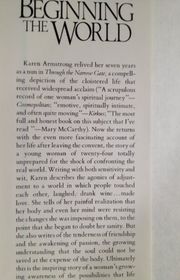
Beginning the World
by Karen Armstrong
1983
Armstrong recounts her difficult return to ordinary life after leaving a convent at twenty-four. Friendship, intimacy, and an unfamiliar freedom challenge the habits of religious seclusion as she struggles to understand the connection between emotional, physical, and spiritual life.
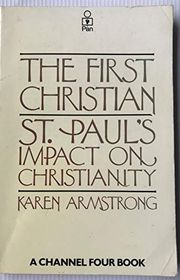
The First Christian
by Karen Armstrong
1983

The Gospel According to Woman
by Karen Armstrong
1986
Armstrong examines how Christianity shaped Western expectations of women through ideals of virginity, martyrdom, marriage, and motherhood. Tracing the influence of these roles, she considers how women might challenge inherited images and redefine their place within religious life.
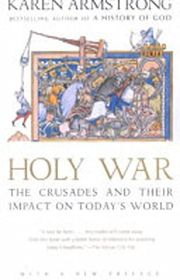
Holy War
by Karen Armstrong
1988
Armstrong traces the Crusades and the religious convictions that sustained their violence, then examines their continuing influence on relations among Christians, Jews, and Muslims. Her history connects medieval conflict with enduring struggles over sacred territory, identity, and political power.

The English Mystics of the Fourteenth Century
by Karen Armstrong
1991
This selection brings together writings by Richard Rolle, Walter Hilton, Julian of Norwich, and the anonymous author of The Cloud of Unknowing. Armstrong translates, edits, and introduces their approaches to medieval English mysticism.
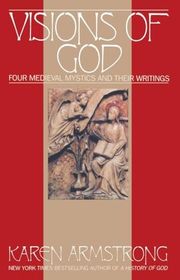
Visions of God
by Karen Armstrong
1994
Armstrong introduces writings by four medieval English mystics, placing their experiences within the search for a more personal encounter with the divine. The selections explore contemplation, spiritual love, and forms of faith that reach beyond formal doctrine.
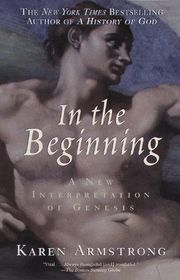
In the Beginning
by Karen Armstrong
1996
Armstrong revisits the stories of Genesis, from creation to the struggles of its founding families, to explore their unresolved moral and spiritual questions. Her interpretation treats the text as a demanding encounter with human vulnerability and religious meaning.
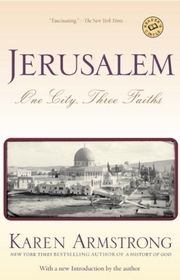
Jerusalem
by Karen Armstrong
1996
Armstrong traces Jerusalem's history through the Jewish, Christian, and Muslim communities that have claimed it as sacred. Their changing ideas of holiness illuminate centuries of conquest, devotion, rebuilding, and conflict over a city central to three religious traditions.
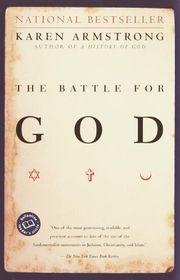
The Battle for God
by Karen Armstrong
2000
Armstrong explores the rise of modern fundamentalism in American Protestantism, Israeli Judaism, and Islam in Egypt and Iran. She examines how rapid social change and perceived threats helped shape movements whose relationship with secular society remains deeply contested.
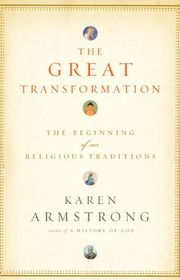
The Great Transformation
by Karen Armstrong
2006
Examining ancient China, India, Israel, and Greece, Armstrong traces the emergence of enduring religious and philosophical traditions. She explores how thinkers responded to violence and suffering, and what their emphasis on ethical transformation might offer contemporary society.
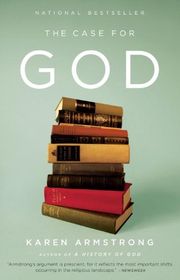
The Case for God
by Karen Armstrong
2009
Armstrong surveys humanity's attempts to encounter sacred reality and argues that modern arguments about belief often misunderstand earlier religious practice. Focusing especially on Christianity, she explores faith as a discipline shaped by compassion, uncertainty, and experiences beyond rational explanation.
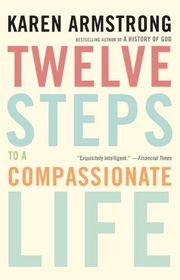
Twelve Steps to a Compassionate Life
by Karen Armstrong
2010
Armstrong proposes twelve practices for developing compassion, drawing on religious traditions and everyday experience. The steps connect self-understanding, mindfulness, and attention to others with deliberate action, encouraging readers to extend concern beyond familiar relationships and communities.

A Letter To Pakistan
by Karen Armstrong
2011
Addressing Pakistan, Karen Armstrong argues for compassion as a response to religious and cultural conflict. Drawing on the Qur’an and other religious writings, she connects changes in daily conduct with the possibility of a more humane society.
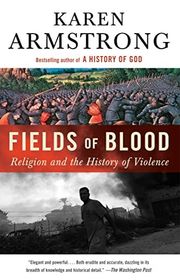
Fields of Blood
by Karen Armstrong
2014
Armstrong examines the relationship between religion and violence across major traditions and historical periods. Challenging the assumption that faith uniquely causes warfare, she explores how political power, social structures, and modern conflicts have shaped religious identities and actions.
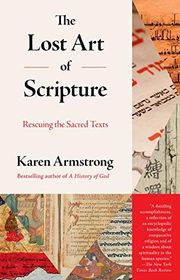
The Lost Art of Scripture
by Karen Armstrong
2019
Karen Armstrong traces how sacred texts have been used across the world’s major religions. She contrasts traditions of spiritual practice and compassionate engagement with modern literal readings, exploring how scripture can connect people rather than deepen their divisions.
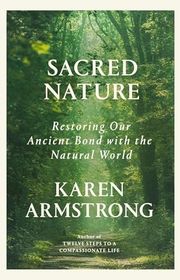
Sacred Nature
by Karen Armstrong
2022
Drawing on religious traditions across centuries, Karen Armstrong explores how people have understood nature as sacred. She considers what has been lost through modern detachment from the natural world and how spiritual attention might renew that connection.

A History of God
by Karen Armstrong
Karen Armstrong traces changing ideas of God across Judaism, Christianity, and Islam. Spanning ancient beginnings, philosophy, mysticism, and religious reform, she examines how these traditions influenced one another and adapted belief to different social and political circumstances.











Edited by
Software engineer whose passion for tracking book recommendations from podcasts inspired the creation of MRB.
Lead investor at 3one4 Capital whose startup expertise and love for books helped shape MRB and its growth.
Comments
Spotted a missing book, a wrong order or a mistake? Tell us and we'll fix this page.
We're a reading guide, not the author or publisher, so we can't send books or pass on messages.