
Julia Cooke Books in Order
Browse Julia Cooke books in order, with short summaries, where to start advice, and background on her Cuba reporting, Pan Am history, and nonfiction.
Last updated:
As an Amazon Associate, we earn from qualifying purchases (at no extra cost to you).
Julia Cooke books in publication order
3 books
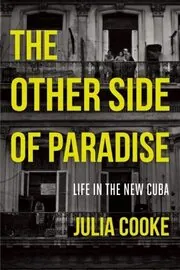
The Other Side of Paradise: Life in the New Cuba
by Julia Cooke
2014
Over years of reporting in Havana, Cooke follows young Cubans as the post-Fidel era begins to shift daily life. Through students, artists, workers, and hustlers, she shows what change looks like up close.
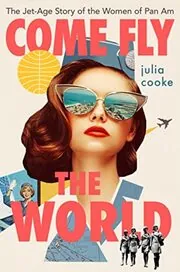
Come Fly the World: The Jet-Age Story of the Women of Pan Am
by Julia Cooke
2021
Cooke traces the lives of Pan Am stewardesses in the jet age, balancing glamour with strict rules, sexism, and real danger. Their stories open onto Vietnam, global travel, and the freedoms women were starting to claim.

Starry and Restless
by Julia Cooke
2026
A group biography of Rebecca West, Emily Hahn, and Martha Gellhorn, this book follows three restless reporters across war zones, love affairs, and decades of change. Cooke explores how they reshaped journalism while fighting for room to live and work on their own terms.
Where to start with Julia Cooke
If you want the best entry point: Come Fly the World: The Jet-Age Story of the Women of Pan Am
If you want immersive international reportage: The Other Side of Paradise: Life in the New Cuba → Come Fly the World: The Jet-Age Story of the Women of Pan Am
If you're most interested in women's history: Come Fly the World: The Jet-Age Story of the Women of Pan Am → Starry and Restless
If you want the full arc of her work: The Other Side of Paradise: Life in the New Cuba → Come Fly the World: The Jet-Age Story of the Women of Pan Am → Starry and Restless
Julia Cooke collections, short stories, and related book types
Non-Fiction
Author bio
Julia Cooke grew up in Portland, Oregon, in a family where travel was part of everyday conversation. Her father worked for Pan Am, so airports, routes, and far-off cities were already in the background long before she wrote about them herself. She studied at Georgetown University, later earned an MFA in creative nonfiction from Columbia University, and built a career that moves between reporting, essays, and narrative history.
She tends to follow people and places that are in motion.
A turning point came when she studied in Cuba as a college student. The trip pushed past the usual headlines and slogans and made her want to understand how ordinary life actually worked on the ground. She kept returning, spent extended time in Havana, and turned years of reporting into The Other Side of Paradise, a book about young Cubans living through political and economic change in the post-Fidel era.
That first book says a lot about how Cooke works. She likes close observation, patient reporting, and scenes that make big systems feel personal. Instead of writing only about policy or ideology, she writes about apartments, jobs, friendships, racial tension, small hustles, and the private hopes people carry through public change. Readers who pick up The Other Side of Paradise usually come away with a more lived-in sense of modern Cuba.
Her second book, Come Fly the World, brought her back to a subject that was close to home but much bigger than family memory. Drawing on the lives of Pan Am flight attendants between 1966 and 1975, Cooke wrote about glamour, labor, sexism, travel, and the odd mix of polish and danger built into the job. The book looks at a world of layovers and strict grooming rules, but also at Vietnam-era flights, Operation Babylift, and the freedoms some women found through work that was often dismissed from the outside.
She is especially interested in women who step into systems built to underestimate them.
That thread continues in Starry and Restless, her group biography of Rebecca West, Emily Hahn, and Martha Gellhorn. The book follows three reporters across decades and continents, tracing ambition, love, war, travel, and the cost of refusing a smaller life. Across all three books, Cooke returns to similar questions: who gets to move freely, who gets heard, and what it takes for women to claim room for work that matters. Readers who like her books often mention the same thing, that they feel well reported but never stiff, with history carried by people rather than lecture.
Outside her books, Cooke has published journalism and essays in a long list of magazines and newspapers, and her work has been anthologized in travel and essay collections. She was a finalist for the Livingston Award in International Reporting, won a New York Press Club Award for a piece on Havana design, received fellowships from the Norman Mailer Center, the Constance Saltonstall Foundation, and Columbia University, and has taught writing at both The New School and Columbia University. She is also a contributing editor at Virginia Quarterly Review.
These days, Vermont appears to be home. She continues to write across history, travel, and reportage, usually with an eye for the moment when a distant subject stops feeling distant. That mix of curiosity and legwork is what brings readers to her work: the sweep of history is there, but so are the people inside it.






Edited by
Software engineer whose passion for tracking book recommendations from podcasts inspired the creation of MRB.
Lead investor at 3one4 Capital whose startup expertise and love for books helped shape MRB and its growth.
Comments
Did we miss something? Have feedback?
Help us improve this page by sharing your thoughts