
Josephine Tey Books in Order
This page gathers Josephine Tey's novels and Nicola Upson's Josephine Tey mysteries in order, with book summaries, series background and straightforward guidance on where to start reading.
Last updated:
As an Amazon Associate, we earn from qualifying purchases (at no extra cost to you).
Josephine Tey books in publication order
14 books

Kif
by Josephine Tey
1929
Kif follows a restless stable boy from harsh farm work to the trenches of the First World War and a bruising return to civilian life. His choices drag him toward poverty and crime in a stark, compassionate portrait of a generation damaged by war.
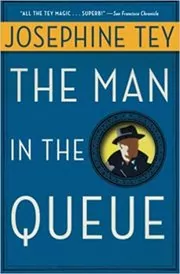
The Man in the Queue / Killer in the Crowd
by Josephine Tey
1929
A packed theatre queue turns into a crime scene when a young man is stabbed in the back, seemingly unnoticed by anyone. Inspector Alan Grant must untangle false leads, stage gossip and shaky eyewitness accounts to identify a killer hidden in plain sight.
The Expensive Halo
by Josephine Tey
1931
In 1920s London, rich, bored Ursula Deane becomes infatuated with a penniless violinist whose sensible sister catches the eye of Ursula’s aristocratic brother. Their tangled flirtations turn into a witty fable about class, desire and the true cost of trying to be good.
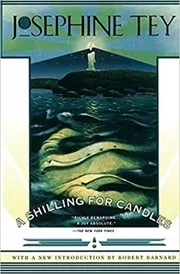
A Shilling for Candles
by Josephine Tey
1936
When beloved film star Christine Clay is found dead on an English beach, it first looks like suicide. Inspector Alan Grant soon discovers jealous colleagues, a mysterious houseguest and a vindictive astrologer in a case where fame attracts both devotion and danger.

Claverhouse
by Josephine Tey
1937
Written as Gordon Daviot, Claverhouse is a narrative biography of John Graham of Claverhouse, the 17th‑century soldier later known as Bonnie Dundee. Tey traces his campaigns, loyalties and reputation, arguing for a more sympathetic view of a man long branded a villain.

Richard of Bordeaux
by Josephine Tey
1939
This is the text of Josephine Tey’s breakthrough play, a modern‑spoken portrait of King Richard II and his queen, Anne of Bohemia. It focuses on a sensitive, peace‑minded king struggling to hold his country together, balancing politics, marriage and the weight of the crown.
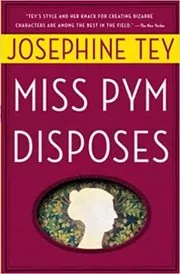
Miss Pym Disposes
by Josephine Tey
1946
Psychologist and popular author Lucy Pym visits a women’s physical training college to give a talk and stays on for the end‑of‑term exams. After she quietly stops a student from cheating, a brutal accident forces her to decide how far the truth should go.
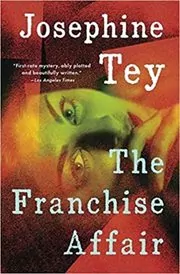
The Franchise Affair
by Josephine Tey
1948
A shy country solicitor is drawn out of his comfortable routine when two women, Marion Sharpe and her mother, are accused of kidnapping a teenage girl. As gossip and newspapers turn vicious, he fights to uncover whether the alleged victim is lying.
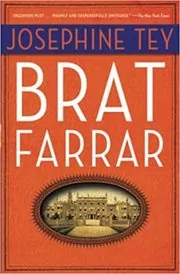
Brat Farrar / Come and Kill Me
by Josephine Tey
1949
Drifter Brat Farrar is persuaded to impersonate a long‑lost heir and claim an English horse‑breeding estate as his own. Once inside the Ashby family, he falls in love with their life and begins to suspect the truth about the twin whose place he has taken.
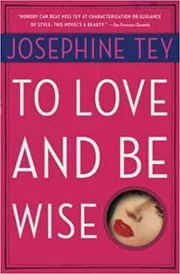
To Love and Be Wise
by Josephine Tey
1950
At a lively London party, Inspector Alan Grant meets a magnetic young American photographer who is invited to stay in a fashionable village. When the man vanishes near a river path, Grant’s search exposes jealousies, tangled love affairs and a puzzle of identity.
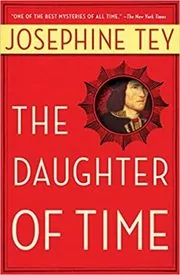
The Daughter of Time
by Josephine Tey
1951
Confined to a hospital bed with a broken leg, Inspector Alan Grant distracts himself by re‑examining the centuries‑old case against King Richard III. Treating history like a murder file, he questions whether the monster who killed the Princes in the Tower ever existed.
The Privateer
by Josephine Tey
1952
This sweeping historical novel follows Henry Morgan from bondage in Barbados to his rise as a famed privateer raiding Spanish strongholds in the Caribbean. Battles, intrigues and a stubborn love match trace the making of a controversial hero of sea‑warfare.
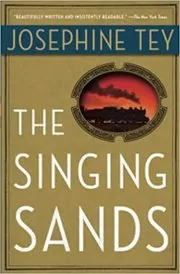
The Singing Sands
by Josephine Tey
1952
Exhausted and suffering from claustrophobia, Inspector Alan Grant travels to the Scottish Highlands on sick leave and stumbles on a fellow passenger’s death in a train compartment. A scrap of verse about the singing sand lures him into a quiet, haunting investigation.

Dickon
by Josephine Tey
1966
First staged under the Gordon Daviot name, Dickon is a stage play about Richard III that offers a revisionist, sympathetic view of the king. Covering the turbulent years 1483–1485, it explores how ambition, loyalty and rumour shape both a reign and a reputation.
Where to start with Josephine Tey
If you want her most famous mystery: The Daughter of Time.
If you’re starting the Inspector Alan Grant novels: The Man in the Queue → A Shilling for Candles → The Franchise Affair.
If you prefer stand‑alone psychological suspense: Brat Farrar → Miss Pym Disposes.
If you enjoy historical drama and biography: Richard of Bordeaux → Claverhouse → The Privateer.
If you’re curious about modern Josephine Tey spin‑offs: An Expert in Murder → Angel with Two Faces → Two for Sorrow.
Josephine Tey sub-series and character series
Inspector Alan Grant books in order
Explore this seriesInspector Alan Grant books in chronological order
Josephine Tey collections, short stories, and related book types
Non-Fiction
Plays
Standalone Josephine Tey books
Author bio
Josephine Tey was the pen name of Elizabeth MacKintosh, born on 25 July 1896 in Inverness in the north of Scotland. The eldest of three daughters of a fruiterer and a former schoolteacher, she grew up in Inverness and went to the local academy before training as a physical education teacher.
She studied at Anstey Physical Training College near Birmingham during the First World War, then spent several years teaching in schools across England and Scotland. In her holidays she worked as a Voluntary Aid Detachment nurse in a convalescent home, and a wartime romance ended when the man she loved was killed on the Somme. The discipline, injuries and small dramas of gym life later fed directly into the world she created in Miss Pym Disposes.
In the early 1920s MacKintosh returned permanently to Inverness to care for her widowed father. While keeping house she began to publish poems and short stories under the pseudonym Gordon Daviot, and soon moved on to novels and plays. Her first novel, Kif: An Unvarnished History, followed a working‑class boy through the trenches of the First World War and was well received, but it was the theatre that first brought her wider notice.
Writing as Gordon Daviot, she scored a major hit with the historical play Richard of Bordeaux, a fresh, intimate portrait of Richard II that ran for more than a year in London and made its star, John Gielgud, a household name. Other plays followed, along with a biography, Claverhouse, which set out to rescue the reputation of the controversial Jacobite soldier John Graham of Dundee.
Her crime fiction, written as Josephine Tey, grew alongside this theatrical work. The Man in the Queue (1929) introduced Scotland Yard inspector Alan Grant, a quiet, sharp‑eyed professional who cares as much about character and motive as about alibis. Over six novels Grant moves through West End theatres, seaside cliffs, country houses and even a hospital bed, bringing a thoughtful, questioning mind to each case.
Tey also wrote stand‑alone mysteries that many readers return to just as often as the Grant books. Brat Farrar is a tense, compassionate story about an impostor who comes to care for the family he is meant to deceive. Miss Pym Disposes turns a girls’ training college into the setting for a slow‑burn moral crisis. The Franchise Affair and To Love and Be Wise use small‑town gossip, tabloid outrage and bohemian village life to explore how reputations are built and broken.
Her most famous novel, The Daughter of Time, sends the bedridden Grant back into the past to re‑examine whether Richard III really murdered the Princes in the Tower. Mixing police procedure with archival detective work, it reshaped popular views of Richard and was later voted the greatest crime novel of all time by the Crime Writers’ Association. Her final Grant story, The Singing Sands, published after her death, follows a fragile, exhausted detective on leave in the Scottish Highlands, chasing the meaning of a half‑finished poem.
Away from the page MacKintosh was intensely private. She avoided publicity, guarded her personal life and preferred her pseudonyms to stand between herself and the literary world. In her final year she knew she was seriously ill but told almost no one, continuing to write until she could not. She died in London on 13 February 1952, aged fifty‑five.
In her will she left the royalties from her books to the National Trust, a quiet gesture that still echoes every time a new reader discovers her work. Today her novels are cherished for their clean prose, psychological insight and sideways approach to crime, bridging the gap between classic Golden Age puzzles and the more character‑driven mysteries that followed.

Edited by
Software engineer whose passion for tracking book recommendations from podcasts inspired the creation of MRB.
Lead investor at 3one4 Capital whose startup expertise and love for books helped shape MRB and its growth.
Comments
Did we miss something? Have feedback?
Help us improve this page by sharing your thoughts