
John Masters Books in Order
Explore John Masters books in order, with short summaries, Savage family background, memoirs, and simple guidance on where to start reading.
Last updated:
As an Amazon Associate, we earn from qualifying purchases (at no extra cost to you).
John Masters books in publication order
26 books
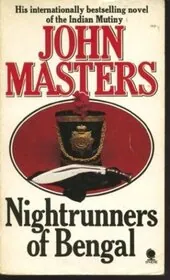
Nightrunners Of Bengal
by John Masters
1951
Captain Rodney Savage serves in Bhowani as the unrest of 1857 gathers around him. Loyalty between British officers, Indian soldiers, and local rulers fractures into violence as rebellion sweeps through Bengal.
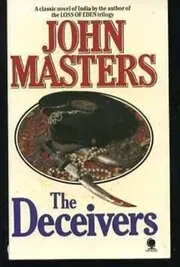
The Deceivers
by John Masters
1952
British officer William Savage goes undercover to investigate the Thuggee murders in 19th-century India. To stop the killers, he must learn their codes and rituals without losing himself inside the deception.
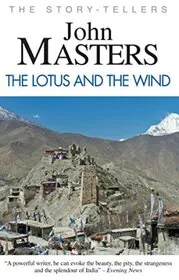
The Lotus and the Wind
by John Masters
1953
During the Second Anglo-Afghan War, Robin Savage is accused of cowardice and pulled into secret work on the frontier. Espionage, marriage, and the Great Game test his love of freedom and his sense of duty.
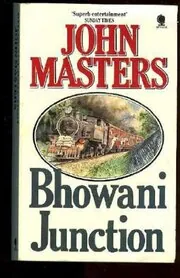
Bhowani Junction
by John Masters
1954
In 1946 and 1947, Anglo-Indian railway worker Victoria Jones is caught between communities as British rule ends. Colonel Rodney Savage, political unrest, and the coming partition make Bhowani a place where identity becomes dangerous.
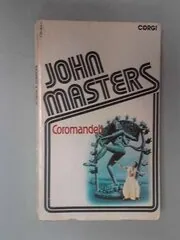
Coromandel!
by John Masters
1955
Jason Savage flees 17th-century Wiltshire with a map that promises treasure on India's Coromandel Coast. His journey brings ships, court intrigue, violence, romance, and the first roots of the Savage family story.
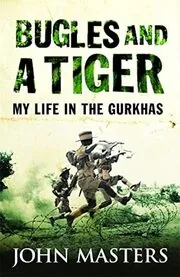
Bugles and a Tiger
by John Masters
1956
Masters opens his autobiography with Sandhurst, the Gurkhas, and service on India's North-West Frontier before World War II. The memoir is rich in regimental detail, frontier danger, and the making of a young officer.

Far, Far the Mountain Peak
by John Masters
1957
Peter Savage, a gifted civil servant and mountaineer, is determined to rise at almost any cost. From Cambridge to India and the high mountains, ambition drives him forward while damaging the people closest to him.
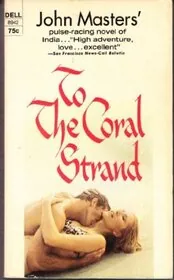
To the Coral Strand
by John Masters
1959
After Indian independence, Rodney Savage tries to remain in the country his family served for generations. Failure, love, and changing politics force him to ask whether he belongs to the old empire or the new India.
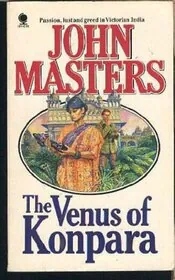
The Venus of Konpara
by John Masters
1960
In late 19th-century India, a Western-educated Rajput prince begins an excavation after an ancient statue is found. Desire, archaeology, palace intrigue, and local unrest turn the discovery into a threat to his future.
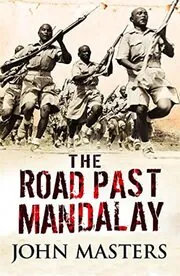
The Road Past Mandalay
by John Masters
1961
The second volume of Masters' autobiography carries him through World War II and the Burma campaign. It is a frank account of Chindit operations, command pressure, jungle fighting, and the difficult road from war toward peace.
Trial at Monomoy
by John Masters
1964
A Cape Cod town is cut off by a brutal winter storm, forcing residents into the Longships Hotel as water, power, and tempers rise. The disaster strips away manners and exposes old grudges, fear, and selfishness.
Fourteen Eighteen
by John Masters
1970
Masters gives a compact illustrated account of World War I and its aftermath. More than a battle summary, it treats the war as a turning point that reshaped politics, society, and the modern world.
Pilgrim Son
by John Masters
1971
The third volume of Masters' autobiography follows his move from soldiering into civilian life and writing. After the war, a failed Himalayan walking-tour venture and a new life in America push him toward becoming a novelist.
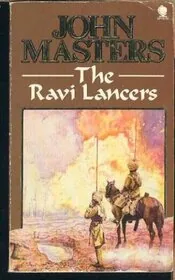
The Ravi Lancers
by John Masters
1972
An Indian cavalry regiment is sent to Europe in World War I and forced into the mud of trench warfare. Prince Krishna Ram and his British commander clash over duty, custom, pride, and what loyalty really means.
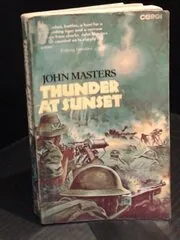
Thunder at Sunset
by John Masters
1974
In the fictional Southeast Asian queendom of Mingora, Brigadier David Jones faces mutiny, communist unrest, and a British withdrawal policy he believes will doom the country. His love for Princess Kumara only sharpens the crisis.

The Field Marshal's Memoirs
by John Masters
1975
When an elderly British field marshal announces plans to write his World War II memoirs, governments and former colleagues panic. Secrets buried in the Balkans threaten reputations, alliances, and families that prefer the past to stay quiet.
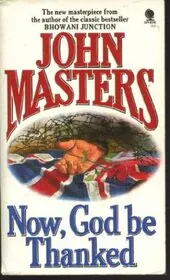
Now, God Be Thanked
by John Masters
1979
The Loss of Eden trilogy opens as Britain moves from Edwardian confidence into World War I. The Rowlands, Strattons, Cates, and Gorses face class strain, family pressure, and the first brutal lessons of modern war.
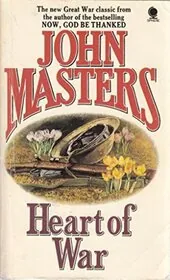
Heart of War
by John Masters
1980
The Loss of Eden saga continues through 1916 and 1917, as the Somme, Passchendaele, and conscription tear into British life. At home and at the front, every family learns that war reaches far beyond the trenches.
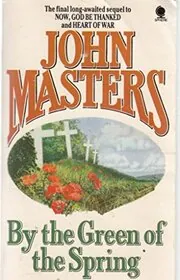
By The Green Of The Spring
by John Masters
1981
As 1918 grinds toward the armistice, the Cates, Rowlands, Strattons, and Gorses face the last violence of war and the troubled peace after it. Survival does not mean returning to the old world.
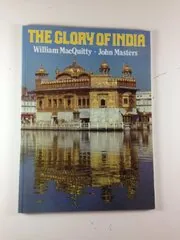
The Glory of India
by John Masters
1982
This illustrated volume offers a compact portrait of India through its landscapes, monuments, traditions, and daily life. It fits Masters' lifelong interest in India as a place of beauty, conflict, memory, and historical change.
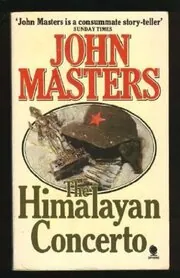
The Himalayan Concerto
by John Masters
1982
Composer Rodney Bateman travels to Kashmir to gather music for a new concerto, while secretly working for Indian intelligence. Rumors of Chinese moves in the mountains pull him into a Cold War tangle of agents and divided loyalties.

Man Of War
by John Masters
1983
Miller is a career soldier fighting his way from World War I trenches to India, Spain, and Dunkirk. Tactical nerve helps him rise, but class prejudice, love, and ambition make every victory cost more than expected.

Fandango Rock
by John Masters
1988
In Franco-era Spain, American Kit Fremantle is drawn to César Aguirre, a proud Spanish bullfighter with dangerous political ties. Their romance plays out against suspicion, religion, nationalism, and tension around a U.S. air base.
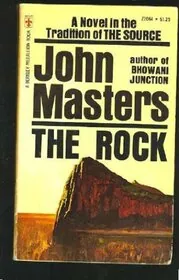
The Rock
by John Masters
1989
Masters blends fiction and history to tell the story of Gibraltar across centuries. Through linked episodes and imagined lives, the Rock becomes a stage for conquest, trade, siege, politics, and stubborn survival.

Casanova
by John Masters
1999
Masters looks past the legend of Giacomo Casanova as a lover and follows him as adventurer, schemer, writer, and survivor. The result is a brisk life of an 18th-century European figure who was rarely just one thing.
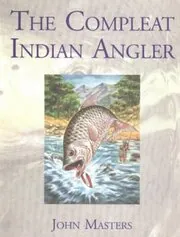
The Compleat Indian Angler
by John Masters
2003
A lighthearted but practical guide to freshwater fishing in India, written as a playful nod to the classic angling tradition. Masters mixes field experience, fish lore, and outdoor enthusiasm into a small book for patient readers and anglers.
Where to start with John Masters
If you want the India saga: Coromandel! → The Deceivers → Nightrunners Of Bengal → The Lotus and the Wind.
If you want the best-known Raj novel first: Bhowani Junction → To the Coral Strand.
If you prefer memoir: Bugles and a Tiger → The Road Past Mandalay → Pilgrim Son.
If you want a World War I family saga: Now, God Be Thanked → Heart of War → By The Green Of The Spring.
John Masters sub-series and character series
Masters Autobiography Trilogy books in order
Explore this seriesMasters Autobiography Trilogy books in chronological order
The Savage Family Chronicles books in order
Explore this seriesThe Savage Family Chronicles books in chronological order
John Masters collections, short stories, and related book types
Non-Fiction
Standalone John Masters books
Author bio
John Masters was born in Calcutta, now Kolkata, in 1914, into a family tied closely to the British Indian Army. His father was a lieutenant-colonel, and army service in India ran deep in the family. Masters spent his early years in the world of British India, then followed the familiar route to English schooling, Wellington College and the Royal Military College, Sandhurst.
The Army came first.
After Sandhurst, Masters served briefly with the Duke of Cornwall's Light Infantry before joining the 4th Prince of Wales's Own Gurkha Rifles. He served on the North-West Frontier, learned the habits and pressures of regimental life, and stored away details that would later feed both his fiction and his memoirs. One of the stories that followed him was the killing of a tiger at Bakloh, an episode that became part of his Gurkha legend.
World War II gave him harder material. Masters served in Iraq, Syria, Persia, and Burma. In Burma he worked with the Chindits, commanded part of the 111th Indian Infantry Brigade, and took part in the bitter fighting around the position code-named Blackpool near Mogaung. His later account of that campaign in The Road Past Mandalay is blunt about fear, exhaustion, command, and the awful decisions war can force on people.
Then the walking-tour business failed.
After leaving the army in 1948 as a lieutenant-colonel, Masters moved to the United States and tried to build a business around Himalayan walking tours. It did not work. Writing did. His first novel, Nightrunners Of Bengal, appeared in 1951 and began the Savage family sequence, a long fictional look at British rule in India through one family and several generations.
Readers often start with Bhowani Junction, his best-known novel, set in the tense years just before Indian independence. Others prefer The Deceivers, The Lotus and the Wind, or The Ravi Lancers, where espionage, soldiering, family pride, and imperial politics are tangled together. His books can be old-fashioned in their assumptions, but they are also full of people under pressure, trying to decide what duty means when the world around them is changing.
Masters also wrote about his own life in three volumes: Bugles and a Tiger, The Road Past Mandalay, and Pilgrim Son. Together they move from Sandhurst and the Gurkhas to Burma and then to the uneasy business of becoming a writer in America.
In later life, Masters lived in Santa Fe, New Mexico, with his wife Barbara. He kept writing, hiking, and returning on the page to India, mountains, soldiers, families, and the end of old certainties. He died in 1983 after complications from heart surgery.





Edited by
Software engineer whose passion for tracking book recommendations from podcasts inspired the creation of MRB.
Lead investor at 3one4 Capital whose startup expertise and love for books helped shape MRB and its growth.
Comments
Did we miss something? Have feedback?
Help us improve this page by sharing your thoughts