
John Lewis Books in Order
Browse John Lewis books in order, from March and Run to his memoirs, with summaries, series background, reading order help, and where to start guidance.
Last updated:
As an Amazon Associate, we earn from qualifying purchases (at no extra cost to you).
John Lewis books in publication order
8 books
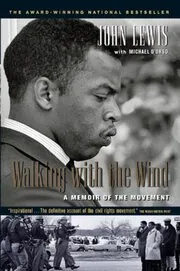
Walking with the Wind
by John Lewis
1998
Lewis's full memoir traces his journey from rural Alabama to the front lines of the civil rights movement and then into Congress. It offers a close, human view of the Freedom Rides, Selma, and the long work behind public change.
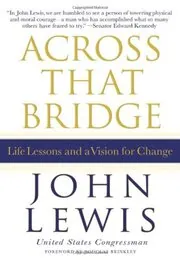
Across That Bridge
by John Lewis
2012
John Lewis blends memoir, moral reflection, and practical lessons on how change happens. Drawing on decades of activism, he writes about truth, faith, patience, and the inner discipline needed to challenge injustice.
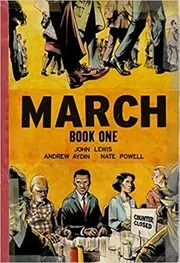
March: Book One
by John Lewis
2013
John Lewis looks back on his childhood in rural Alabama and his first steps into the civil rights movement. The book follows the Nashville sit-ins and shows how a young student became an organizer.
Recommended by
1 person Brad Feld recommended this book
Brad Feld
"A comic book trilogy that is the story of the Civil Right Movement through Congressman Lewis’ eyes." - Brad Feld
Brad Feld's recommendation of this book
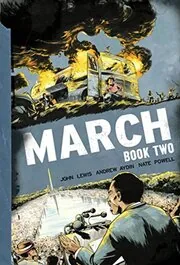
March: Book Two
by John Lewis
2015
The story widens as Lewis and fellow activists ride into the Deep South, facing beatings, jail, and deadly resistance. It tracks the Freedom Rides, SNCC's rise, and Lewis's path to the March on Washington.
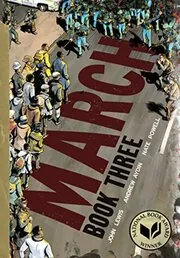
March: Book Three
by John Lewis
2016
The final volume follows Lewis through the most dangerous stretch of the movement, from Birmingham and Mississippi to Selma and the Voting Rights Act. It shows how courage, strategy, and sacrifice turned protest into lasting change.
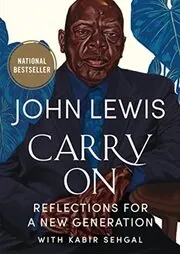
Carry On
by John Lewis
2021
Written during the last months of his life, this book gathers John Lewis's reflections on justice, faith, courage, mentorship, and hope. Part memoir and part guide, it distills a lifetime of hard-earned advice for the next generation.
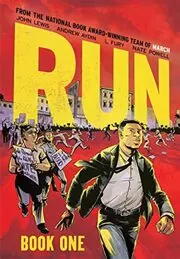
Run: Book One
by John Lewis
2021
After the Voting Rights Act, John Lewis faces the harder truth that legal victories do not end injustice. As SNCC wrestles with backlash, violence, and internal strain, he has to decide how to keep moving forward.
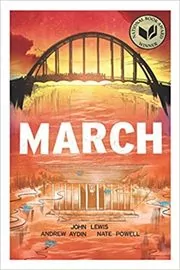
March
by John Lewis
This graphic memoir trilogy recounts John Lewis's experiences in the civil rights movement, from his early years to nonviolent activism and voting-rights campaigns. Andrew Aydin's co-writing and Nate Powell's artwork trace the personal costs and collective work behind the struggle.
Recommended by
1 person Tim Cook recommended this book
Tim Cook
"My hope is that everyone reads this, and I would love to see the day that it is required reading in every school." - Tim Cook
Tim Cook's recommendation of this book
Where to start with John Lewis
If you want the graphic memoir first: March: Book One → March: Book Two → March: Book Three
If you want the story in full prose: Walking with the Wind
If you want the next chapter after Selma: March: Book Three → Run: Book One
If you want Lewis's reflections on activism and public life: Across That Bridge → Carry On
John Lewis sub-series and character series
John Lewis collections, short stories, and related book types
Non-Fiction
Standalone John Lewis books
Author bio
John Lewis was born on February 21, 1940, outside Troy, Alabama, and grew up in Pike County on his family's farm. He was one of ten children, raised in a world where segregation shaped schools, travel, voting, and everyday routines. Those early experiences stayed with him, and they gave his writing its clear sense of what injustice looked like up close.
As a young man, Lewis thought seriously about the ministry. He studied at the American Baptist Theological Seminary in Nashville and later earned a degree in religion and philosophy from Fisk University. In Nashville he found more than classrooms. He also found the student movement, the workshops on nonviolent protest led by James Lawson, and the kind of disciplined organizing that would shape the rest of his life.
Meeting Rosa Parks and Martin Luther King Jr. helped turn that sense of calling into action.
Lewis joined the Nashville sit-ins, became one of the original Freedom Riders, helped found the Student Nonviolent Coordinating Committee, and by age twenty-three was speaking at the March on Washington. He was beaten, jailed, and threatened again and again, but he kept coming back to the same idea: change had to be pushed by ordinary people working together. That belief runs through his public life, from the Selma campaign and Bloody Sunday to voter registration work in the South and, later, his years representing Georgia in Congress from 1987 until his death in 2020.
He did not start out as a career author, but books became another way to do the work. His prose memoir Walking with the Wind tells the civil rights movement from the inside, with room for fear, disagreement, planning, humor, and exhaustion, not just the famous photographs. Later, Across That Bridge pulled back from memoir to talk more directly about conscience, patience, service, and the inner habits that help people stay steady when the world is not.
Then Lewis found a new form. With Andrew Aydin and artist Nate Powell, he turned his life story into the graphic memoir trilogy March, beginning with March: Book One and building through the Freedom Rides, the March on Washington, and Selma to March: Book Three. The books are readable, vivid, and deeply personal. They show lunch counters, church basements, buses, jail cells, and crowded meeting rooms, not as symbols, but as places where young people had to decide what they were willing to risk. For many readers, March is the point where history stops feeling distant and starts feeling lived.
That story did not end with Selma, and Lewis knew it.
Run: Book One, created with Aydin, Nate Powell, and L. Fury, picks up after the Voting Rights Act and looks at the harder years that followed, when the movement faced backlash, strategic disagreements, and fresh uncertainty. His final published book, Carry On, was assembled from reflections written during the last months of his life. It feels like a short conversation with someone who had seen the worst of American politics and still chose hope.
Readers usually come to Lewis for history, but they stay for his steadiness. Across his books, the recurring themes are nonviolence, voting rights, moral courage, faith, mentorship, and the patient work of organizing. He writes about big national events, but he keeps his attention on students, local leaders, bus riders, church members, and neighbors. Even at his most political, he sounds like he is talking to one person at a time. That plain, direct style is a big part of why his work still reaches new readers.




%20-%20A%20Miscellany%20of%20Advice%20and%20Opinions.jpg)





Edited by
Software engineer whose passion for tracking book recommendations from podcasts inspired the creation of MRB.
Lead investor at 3one4 Capital whose startup expertise and love for books helped shape MRB and its growth.
Comments
Did we miss something? Have feedback?
Help us improve this page by sharing your thoughts