
Run Books in Order
Part ofJohn Lewis Books in OrderExplore the Run series by John Lewis in order, with summaries, reading order help, series background, and where to start with this follow-up graphic memoir.
Last updated:
As an Amazon Associate, we earn from qualifying purchases (at no extra cost to you).
Run books in publication order
1 book
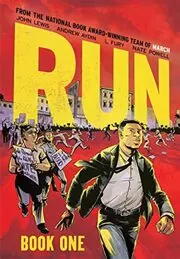
Run: Book One
by John Lewis
2021
After the Voting Rights Act, John Lewis faces the harder truth that legal victories do not end injustice. As SNCC wrestles with backlash, violence, and internal strain, he has to decide how to keep moving forward.
Run books in chronological order
Series background & context
Run picks up where March leaves off. If the earlier trilogy tells the story of how John Lewis entered the movement, this series asks what came after the headline victories, when the cameras moved on and the work got even more complicated. Written by Lewis and Andrew Aydin, with art by Nate Powell and L. Fury, it continues his life story in graphic form.
This is the chapter after celebration.
The story begins after the Selma voting rights campaign and the passage of the Voting Rights Act, a moment many people like to treat as a neat ending. Run pushes back on that idea. Lewis is still young, but he is already carrying national responsibilities as chairman of SNCC. The books follow him and the people around him as they deal with white backlash, ongoing violence, voter registration work, church integration efforts, and the daily strain of keeping an organization moving.
One of the series' biggest strengths is that it makes politics feel physical. A lot of the tension comes not from a single showdown but from meetings, road trips, strategy fights, and tired conversations after long days. Churches, buses, campaign offices, convention halls, streets, and back roads all matter here. The setting is a movement in motion, trying to hold itself together while the country congratulates itself too early.
Just as important, Run shows conflict inside the movement. Lewis remains committed to nonviolence, but many younger activists are exhausted, angrier, and less convinced that old tactics are enough. That gives the series a different mood from March. It is still clear and accessible, but it is rougher around the edges, more politically tangled, and more interested in how victories can open new arguments instead of closing them.
The art helps sell that feeling. Powell and Fury keep crowds dense, rooms tense, and quiet moments heavy with thought. Because the story is told as a graphic memoir, big historical shifts stay attached to faces, expressions, and small choices. You are never far from the people doing the work, or from the cost of asking them to keep doing it.
Readers coming to Run should expect a continuation, not a repeat. The series is less about how a hero is made and more about what leadership feels like once the movement changes around you. It is a good fit for anyone who finished March and wanted the harder, messier answer to what happened next.


Edited by
Software engineer whose passion for tracking book recommendations from podcasts inspired the creation of MRB.
Lead investor at 3one4 Capital whose startup expertise and love for books helped shape MRB and its growth.
Comments
Did we miss something? Have feedback?
Help us improve this page by sharing your thoughts