
John Fowles Books in Order
This page lists John Fowles books in order, with short summaries, notes on his major novels and nonfiction, and helpful ideas on where to start.
Last updated:
As an Amazon Associate, we earn from qualifying purchases (at no extra cost to you).
John Fowles books in publication order
21 books
The Collector
by John Fowles
1963
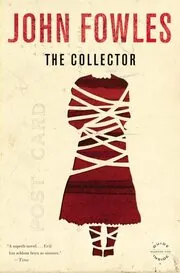
Frederick Clegg, a lonely clerk who collects butterflies, wins money and kidnaps Miranda, an art student he has been watching from afar. Fowles turns that stark setup into a deeply unsettling study of obsession and power.
The Aristos
by John Fowles
1964
Part notebook, part philosophy book, this volume gathers Fowles's aphorisms and arguments about freedom, culture, religion, pleasure, pain, and art. It offers a direct route into the ideas that sit behind much of his fiction.
The Magus
by John Fowles
1965
Nicholas Urfe takes a teaching job on a Greek island and falls under the spell of a wealthy, manipulative recluse. What begins as fascination turns into a psychological game in which reality, performance, and identity all start to blur.
Recommended by
2 people Emma Watson recommended this book
Emma Watson
"Russell Crowe, who I am working with on a film, gave me [this book]." - Emma Watson
Emma Watson's recommendation of this book  Matt Mullenweg recommended this book
Matt Mullenweg
Matt Mullenweg mentioned this book on "The Tim Ferriss Show" podcast.
Matt Mullenweg's recommendation of this book
The French Lieutenant's Woman
by John Fowles
1969
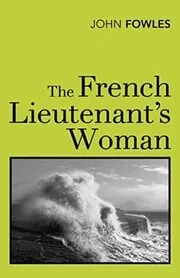
In Lyme Regis, the engaged Charles Smithson becomes drawn to Sarah Woodruff, a woman marked by rumor and exile. Their story begins like Victorian romance, then opens into questions about freedom, desire, and who controls a novel.
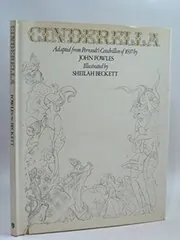
Cinderella
by John Fowles
1974
Fowles retells the familiar fairy tale with clear, graceful simplicity. The cruel stepfamily, the ball, and the glass slipper are all here, shaped into a version that feels gentle, witty, and easy to read aloud.
Shipwreck
by John Fowles
1974
This book pairs Fowles's text with historic photographs by the Gibsons of Scilly, who recorded wrecks around the Isles of Scilly and Cornwall over generations. It is about disaster at sea, but also rescue, memory, and the pull of the coast.

The Ebony Tower
by John Fowles
1974
This collection brings together five novellas and stories about art, sex, disappearance, class, and private obsession. The title piece, about a younger artist visiting an older painter in rural France, gives the whole book its electric tension.
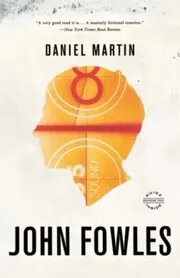
Daniel Martin
by John Fowles
1977
When a successful screenwriter returns from America to England to see a dying friend, old loyalties and unfinished love rise back to the surface. The novel ranges widely, but its emotional heart is memory, regret, and second chances.
Islands
by John Fowles
1978
With photographs by Fay Godwin, Fowles reflects on the pull of islands, especially the Isles of Scilly. The book is both landscape meditation and travel piece, full of silence, remoteness, and the idea of islandness.
Steep Holm
by John Fowles
1978
This short study looks at the Bristol Channel island of Steep Holm as a place shaped by isolation, ecology, and long human history. Fowles uses the island to think about evolution, rarity, and the strange life of small places.
The Tree
by John Fowles
1979
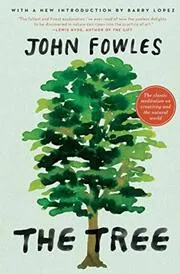
In this personal essay, Fowles writes about childhood, gardening, wildness, and the link between nature and imagination. It is a compact statement of why untidy, living landscapes mattered so much to his fiction.
The Enigma of Stonehenge
by John Fowles
1980
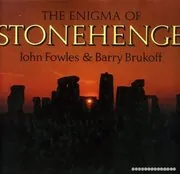
Fowles explores what can and cannot be known about Stonehenge, moving between archaeology, speculation, and wonder. Paired with striking photographs, the book treats the monument as both a historical puzzle and a work of art.
A Short History of Lyme Regis
by John Fowles
1982
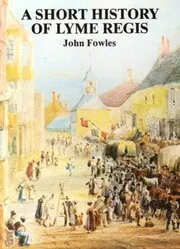
This slim history follows Lyme Regis from its early roots as a working port to its later life as a seaside town. Fowles writes with affection, keeping local detail and larger history in clear balance.
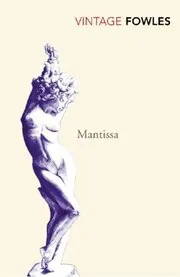
Mantissa
by John Fowles
1982
A novelist wakes in a hospital room with no clear memory and finds himself locked in a battle with his own muse. Fowles turns that premise into a sly, talky novel about desire, authorship, and creative control.
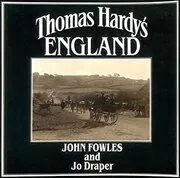
Thomas Hardy's England
by John Fowles
1984
Built around rare photographs and informed commentary, this book explores the landscapes and communities behind Hardy's Wessex. It is part literary guide, part social history, and a vivid portrait of rural southern England.
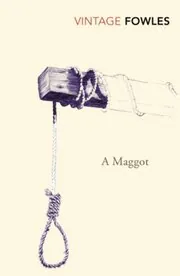
A Maggot
by John Fowles
1985
A gentleman disappears after a baffling journey across eighteenth-century England, and an investigator must sort through conflicting testimonies to learn why. The novel becomes a historical mystery about belief, power, and stories that refuse to settle.
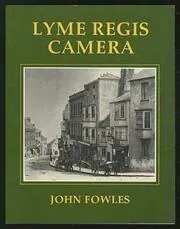
Lyme Regis Camera
by John Fowles
1990
Fowles uses old photographs to trace the life of Lyme Regis, the seaside town he loved and used in his fiction. The book blends local history with a sharp eye for streets, shops, work, and change over time.

Behind the Magus
by John Fowles
1994
In this brief reflective essay, Fowles looks back at how The Magus was written, revised, and argued with over many years. It is part memoir, part self-critique, and a useful map of the novel's strange design.
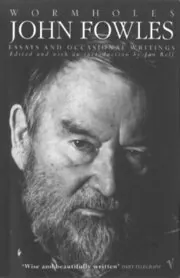
Wormholes
by John Fowles
1998
This essay collection gathers thirty pieces on writing, culture, literature, and the natural world. It shows Fowles thinking aloud about fiction, freedom, criticism, and the habits of mind behind his novels.

The Journals: Volume 1
by John Fowles
2003
Beginning in his last Oxford years and ending after the success of The Collector, this volume tracks Fowles in France, Greece, and London as he learns how to become a writer. It shows ambition, uncertainty, love, and hard-earned momentum.

The Journals: Volume 2
by John Fowles
2005
Covering 1966 to 1990, this volume follows Fowles through fame, film work, marriage strains, illness, and life in Lyme Regis. It is candid about success, but even more revealing about solitude, doubt, and the natural world.
Where to start with John Fowles
If you want the breakthrough thriller: The Collector → The Magus
If you want his best-known historical novel: The French Lieutenant's Woman → A Maggot
If you want the broadest, most personal novel: Daniel Martin
If you want shorter fiction first: The Ebony Tower
If you want essays and nature writing: The Tree → Wormholes
John Fowles collections, short stories, and related book types
Non-Fiction
Collections
Standalone John Fowles books
Author bio
John Fowles was born in Leigh-on-Sea, Essex, on March 31, 1926, and grew up in the neat, middle-class world of suburban Essex. He later wrote about that kind of upbringing as something confining, which helps explain why escape, freedom, and self-invention show up so often in his books.
He was a strong student and athlete at Bedford School. After a short spell at the University of Edinburgh and wartime service in the Royal Marines, he went on to New College, Oxford, where he studied French and spent part of his course on German before settling mainly on French.
Oxford mattered.
Fowles later described those years as heaven in an intellectual sense. He read widely, argued with big ideas, and absorbed the mix of philosophy, myth, history, and moral doubt that would feed his fiction for decades. Writing did not arrive as a straight path, though. In his twenties he taught in France and then on the Greek island of Spetses, where he met Elizabeth Whitton, who later became his first wife, and where he filled notebooks with poems, reflections, and long drafts.
Greece was the turning point.
The island gave him more than a setting. It gave him atmosphere, erotic tension, a feeling for masks and performance, and a sharper sense of how freedom can turn into manipulation. Years later all of that would reappear, transformed, in The Magus. Back in England, he spent years teaching in London while writing in the margins of ordinary working life, slowly shaping the books that would make his name.
Then The Collector appeared in 1963. Its story of Frederick Clegg, a butterfly collector who kidnaps the art student Miranda, was chillingly simple on the surface and much more disturbing underneath. The book sold well enough for Fowles to leave teaching and write full time, which is usually where his public literary career really begins.
Many readers start with The Magus or The French Lieutenant's Woman, and that makes sense. The Magus turns a young English teacher's time on a Greek island into a psychological maze. The French Lieutenant's Woman begins like a Victorian love story in Lyme Regis, then keeps pulling the rug away, asking who controls a story and whether any ending can be final. Later, Daniel Martin showed a broader, more reflective side of him, while The Ebony Tower and A Maggot proved how well he could work at shorter length and in stranger historical forms.
He also had a strong nonfiction side. The Aristos lays out his ideas in fragments and aphorisms, and The Tree remains one of the clearest guides to what mattered to him, wildness, imagination, and the damage done by over-tidying the world. Readers who like the essays in Wormholes often find the same habits of mind there that drive the novels, curiosity, resistance to easy answers, and a suspicion of anything too neat.
Lyme Regis became the center of his adult life. He moved to the Dorset coast in the 1960s and stayed there for the rest of his days, using the town and its surroundings in both fiction and nonfiction. He also served as curator of the Lyme Regis Museum from 1979 to 1988, which suited his love of local history, fossils, coastline, and place.
Success did not turn him into a grand public literary figure. He kept his distance, preferred privacy, and often seemed more at ease with books, sea air, and countryside than with literary society. After Elizabeth died in 1990, he later married Sarah Smith. He died in 2005, still closely linked with Lyme Regis and with a body of work that keeps asking how free any of us really are.


Edited by
Software engineer whose passion for tracking book recommendations from podcasts inspired the creation of MRB.
Lead investor at 3one4 Capital whose startup expertise and love for books helped shape MRB and its growth.
Comments
Did we miss something? Have feedback?
Help us improve this page by sharing your thoughts