
Wadsworth Camp Books in Order
Explore Wadsworth Camp books in order, from eerie mysteries to World War I nonfiction, with concise summaries and straightforward advice on where to begin.
Last updated:
As an Amazon Associate, we earn from qualifying purchases (at no extra cost to you).
Wadsworth Camp books in publication order
9 books
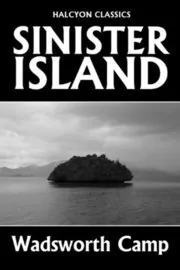
Sinister Island
by Wadsworth Camp
1915
Miller travels aboard the Dart to Captain's Island after receiving a troubling message from his friend Anderson. Locals speak of a curse, his friends behave strangely, and Miller tries to find the human cause behind the island's fearful reputation.
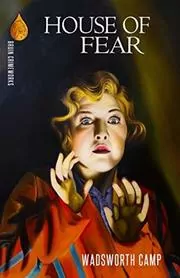
House of Fear
by Wadsworth Camp
1916
Decades after an actor dies onstage, a producer revives the cursed play at the abandoned Woodford Theater. Strange warnings, fearful performers, and another death force the company to confront whether a killer, or a ghost, stalks the wings.
The Abandoned Room
by Wadsworth Camp
1917
When Silas Blackburn dies in a locked room at the Cedars, suspicion falls on his troubled grandson Bobby. With missing memories, family secrets, and a house steeped in dread, Bobby must clear his name and solve an apparently impossible murder.
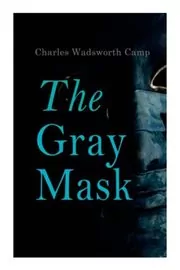
The Gray Mask
by Wadsworth Camp
1920
Young detective Garth is ordered to impersonate Simmons, a scarred criminal known for his gray mask. His undercover role brings him into a dangerous gang, where one wrong move could expose him before he learns what they are planning.
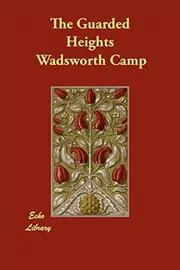
The Guarded Heights
by Wadsworth Camp
1921
After his family's livery business collapses, George Morton works on the wealthy Planter estate and falls for Sylvia Planter. Determined to rise beyond his circumstances, he faces class barriers, ambition, and the hard cost of trying to belong.
The Hidden Road
by Wadsworth Camp
1922
After returning from the war, aspiring painter Nicholas Aldrich finds New York's old glamour hollow. As family finances falter and an unexpected newcomer unsettles his circle, he must sort out loyalty, love, and the life he actually wants.
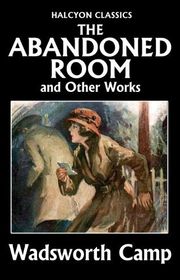
The Abandoned Room and Other Works by Wadsworth Camp
by Wadsworth Camp
2010
This collection brings together three Wadsworth Camp mysteries, including *The Abandoned Room*, *The Gray Mask*, and *Sinister Island*. It offers locked-room suspense, undercover crime, and an isolated island haunted by an unnerving reputation.
History of the 305th Field Artillery
by Wadsworth Camp
2015
Camp records the 305th Field Artillery's World War I journey from organization and training to service in France. Drawing on the regiment's memories and records, he follows daily life, combat, losses, and the people who served together.
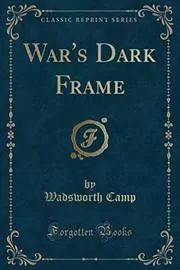
War's Dark Frame
by Wadsworth Camp
2018
A nonfiction account of World War I Europe, following Camp's visits to England, France, hospitals, artillery positions, and battle zones. He focuses on the uneasy routines, destruction, and human strain that surrounded life near the front.
Where to start with Wadsworth Camp
For a classic locked-room mystery: The Abandoned Room.
For an eerie island mystery: Sinister Island → The House of Fear.
For undercover detective action: The Gray Mask.
For social drama and romance: The Guarded Heights → The Hidden Road.
For World War I nonfiction: War's Dark Frame → History of the 305th Field Artillery.
Wadsworth Camp collections, short stories, and related book types
Collections
Non-Fiction
Standalone Wadsworth Camp books
Author bio
Wadsworth Camp was the working name of Charles Wadsworth Camp, a journalist, novelist, playwright, and war correspondent whose fiction often put ordinary people in deeply unsettling situations. He was born in Philadelphia, Pennsylvania, in 1879, and attended Princeton University, graduating in 1902.
Writing was part of his working life from the start. Camp reported and served as a correspondent for the New York Evening Sun, worked in the editorial department at McClure's Magazine, and later became managing editor of Metropolitan Magazine. In 1916, he reported from Europe for Collier's.
That background shows up in his books. Camp liked momentum, sharp turns of circumstance, and characters who have to keep their heads while the facts around them refuse to add up.
He also knew the theater world from the inside.
In 1906, Camp married pianist Madeleine Barnett. Their only child, Madeleine L'Engle Camp, was born in New York City in 1918 and would become the author known as Madeleine L'Engle. The family later spent time in Europe and, in Camp's final years, lived near Jacksonville, Florida.
World War I became a major part of Camp's life and work. After serving as a correspondent, he trained as an officer and served as a second lieutenant with the 305th Field Artillery. His service included the Vosges and Oise-Aisne campaigns in France. The experience gave him material that was immediate, practical, and far removed from the drawing-room puzzles of his fiction.
His nonfiction includes War's Dark Frame, a firsthand account of wartime Europe and the front, and History of the 305th Field Artillery, a record of his regiment's training, travel, and combat service. These books pay attention to soldiers' routines as well as the larger machinery of war.
Camp is best remembered for his mysteries. Sinister Island sends a skeptical visitor toward an isolated place with a troubling reputation. The House of Fear turns an old Broadway theater and a doomed production into a stage for murder, rumor, and apparent hauntings. Its story later reached the stage and screen in adaptations connected with The Last Warning.
The Abandoned Room is his clearest locked-room puzzle, built around the death of Silas Blackburn at the family estate known as the Cedars and the suspicion falling on his grandson, Bobby. In The Gray Mask, detective Garth takes on a dangerous impersonation assignment. Both books blend investigation with menace and a steady sense that someone knows more than they are saying.
Not every Camp novel is a mystery. The Guarded Heights follows a young man trying to cross a rigid social divide, while The Hidden Road looks at love, friendship, money, and postwar disillusionment among people whose old expectations no longer fit.
Camp died in Florida in 1936, aged fifty-seven. His bibliography is compact, but it moves easily from eerie crime stories to romances and war writing, making it a good fit for readers who like early twentieth-century fiction with real forward pull.









Edited by
Software engineer whose passion for tracking book recommendations from podcasts inspired the creation of MRB.
Lead investor at 3one4 Capital whose startup expertise and love for books helped shape MRB and its growth.
Comments
Did we miss something? Have feedback?
Help us improve this page by sharing your thoughts