
Jim Stanley Books in Order
Part ofLester Del Rey Books in OrderSee the Jim Stanley series by Lester Del Rey in order, with summaries, moon-era background, connected characters, and a simple place to start.
Last updated:
As an Amazon Associate, we earn from qualifying purchases (at no extra cost to you).
Jim Stanley books in publication order
3 books

Step to the Stars
by Lester Del Rey
1954
Jim Stanley joins the effort to build humanity's first space station. As sabotage, political tension, and a perilous accident threaten the project, he must prove he belongs among the people opening the way to space.

Mission to the Moon
by Lester Del Rey
1956
Jim Stanley returns to the space station to help prepare ships for the first journey to the Moon. International rivalry and an impulsive stowaway turn a bold mission into a race to prevent disaster.
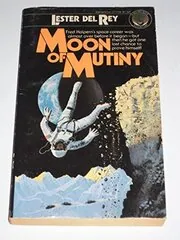
Moon of Mutiny
by Lester Del Rey
1961
Expelled from space academy despite his talent, Fred Halpern gets one last chance on a lunar expedition. When accidents and suspicion turn the crew against him, he must show he has learned responsibility as well as piloting.
Jim Stanley books in chronological order
Series background & context
Lester Del Rey's Jim Stanley books are old-school space adventures built around a near-future dream: people are finally learning how to live and work beyond Earth. The series begins with Step to the Stars, moves through Mission to the Moon, and ends with Moon of Mutiny. They are connected by a growing lunar program, recurring people, and the idea that spaceflight demands more than technical skill.
Jim Stanley begins as a capable but isolated young man on Earth. He is recruited into work on a new space station, where routine labor quickly turns into a test of nerve, judgment, and trust. The station matters because it is not just a scientific project. In a world uneasy about international rivalry and the military uses of space, it could become either a hopeful symbol or a dangerous weapon.
The books take their science seriously in the way many 1950s and early 1960s juvenile novels did. There are rockets, orbital mechanics, spacesuits, construction problems, and the daily dangers of working where a small mistake can become fatal. Del Rey keeps the explanations tied to action, so the technical details usually arrive because somebody has a problem to solve.
In Mission to the Moon, Jim returns to the space program as plans shift from orbit to a lunar landing and settlement. Competition with a rival political bloc adds pressure, while an impulsive young would-be astronaut turns the mission into an emergency. The story is about a large project under strain, but it also asks whether people can grow up enough to carry the responsibility that new technology gives them.
The final book, Moon of Mutiny, is more loosely connected. Jim appears only briefly, while the focus shifts to Fred Halpern, a talented young pilot whose confidence and recklessness have cost him dearly. Given another chance on a lunar expedition, Fred has to prove that ability is not the same thing as maturity.
That change of focus gives the trilogy an interesting shape. The first two books follow Jim as he finds a place in the expanding space program. The last watches another young man confront the consequences of his own bad choices.
Expect brisk plotting, practical problems, Cold War-era assumptions, and a strong belief that exploration is teamwork. These are stories of young people trying to earn a future in space, one difficult decision at a time.


















Edited by
Software engineer whose passion for tracking book recommendations from podcasts inspired the creation of MRB.
Lead investor at 3one4 Capital whose startup expertise and love for books helped shape MRB and its growth.
Comments
Did we miss something? Have feedback?
Help us improve this page by sharing your thoughts