
Jim Kelly Books in Order
Explore Jim Kelly books in order, with quick summaries, series guides, and easy advice on where to start with Philip Dryden, Shaw and Valentine, and Nighthawk.
Last updated:
As an Amazon Associate, we earn from qualifying purchases (at no extra cost to you).
Jim Kelly books in publication order
19 books
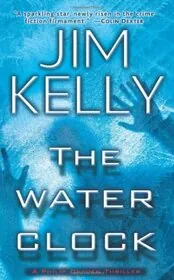
The Water Clock
by Jim Kelly
2002
When a corpse on Ely Cathedral is linked to a mutilated body pulled from icy water, reporter Philip Dryden knows he has a major story. The case also draws him back to the crash that left his wife in a coma.
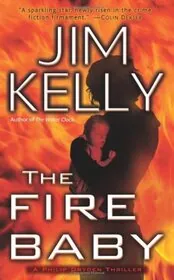
The Fire Baby
by Jim Kelly
2004
A dying woman's confession revives the story of a 1976 plane crash in the Cambridgeshire Fens, where she walked from the flames carrying a baby who was not her own. Philip Dryden follows the secret into murder.
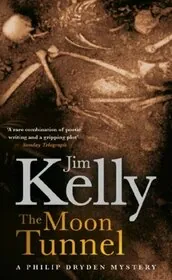
The Moon Tunnel
by Jim Kelly
2005
Archaeologists uncover human remains in an old POW escape tunnel near Ely, and the dead man seems to have been breaking into the camp, not out of it. Dryden's curiosity soon stirs up a second, far more recent body.
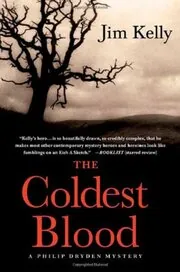
The Coldest Blood
by Jim Kelly
2006
In a brutal Ely winter, a lonely man freezes to death in his flat, but Philip Dryden doubts he died alone. A second frozen corpse leads him toward betrayal, cruelty, and an old mystery from his own childhood.
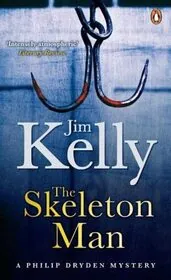
The Skeleton Man
by Jim Kelly
2007
Army exercises in an abandoned Fenland village uncover a hidden cellar and a skeleton hanging inside. When an amnesiac man is pulled from the river soon after, Philip Dryden finds himself chasing a mystery buried for years.
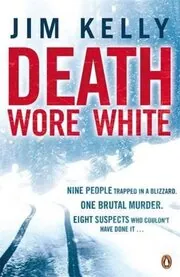
Death Wore White
by Jim Kelly
2008
A man is stabbed inside his truck during a blizzard on the Norfolk coast, with no footprints and no clear escape route. DI Peter Shaw and DS George Valentine, an uneasy new pairing, must solve a locked-room style murder before more witnesses fall.
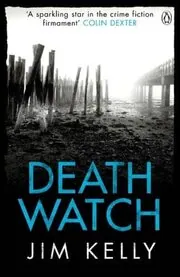
Death Watch
by Jim Kelly
2010
Eighteen years after a teenage girl vanished, her twin brother dies in a hospital incinerator in what is clearly no accident. Shaw and Valentine uncover a hidden criminal world in King's Lynn as the old disappearance starts to look newly dangerous.
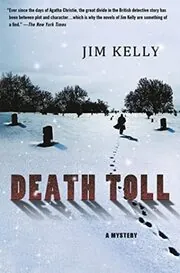
Death Toll
by Jim Kelly
2011
During flood preparations at King's Lynn cemetery, workers open an old grave and find another corpse hidden inside. Shaw and Valentine dig into a family pub's long-buried secrets before the violence reaches into the present.
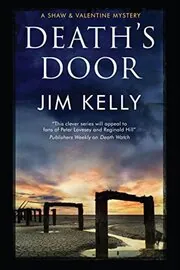
Death's Door
by Jim Kelly
2012
A cold case from an uninhabited Norfolk island returns when police reopen the murder of a holidaymaker who never came home. Then one survivor is found dead, and Shaw and Valentine discover the island's old secrets are still lethal.
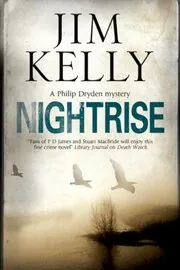
Nightrise
by Jim Kelly
2012
Philip Dryden is told his father has died in a car crash, even though he supposedly drowned decades earlier. As Dryden follows that shock, a shooting in a lettuce field and a buried-baby case begin to point toward the same truth.
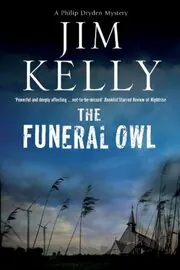
The Funeral Owl
by Jim Kelly
2013
A rare owl sighting draws Philip Dryden into the West Fens just before violence erupts across the district. With a body on a church cross, thefts, and an old art crime resurfacing, the local reporter has more than one trail to follow.
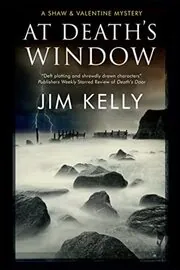
At Death's Window
by Jim Kelly
2015
Off Scolt Head Island, a body turns up with samphire in its pockets, pointing Shaw toward a brutal turf war on the north Norfolk coast. While Valentine chases a string of rich-home burglaries, a second death shows the whole community is under strain.
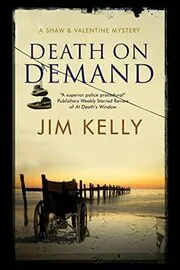
Death on Demand
by Jim Kelly
2015
Reporters arriving for Ruby Bright's 100th birthday find her care home turned into a murder scene. Shaw and Valentine trace the case back to a decaying King's Lynn estate, where old secrets and fresh violence are tightly locked together.
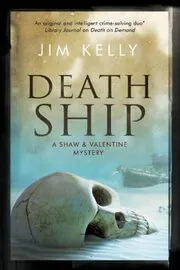
Death Ship
by Jim Kelly
2016
A bomb explodes on a crowded Norfolk beach, and what looks like a wartime relic turns into a fresh murder case. Shaw and Valentine are pulled into a bitter local fight over a new pier, where someone is ready to kill to stop it.
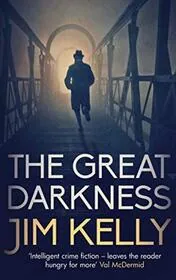
The Great Darkness
by Jim Kelly
2018
As blackout descends on Cambridge in 1939, DI Eden Brooke finds a mutilated body on the riverside and then a second death close behind. War has only just begun, but the city's nights are already hiding murder.
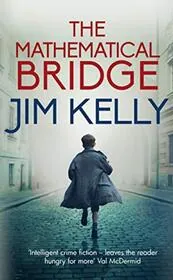
The Mathematical Bridge
by Jim Kelly
2019
When an evacuated boy is swept away in the Cam, Eden Brooke suspects the drowning was no accident. A strike on a local electronics factory and tensions in Cambridge's Irish community suggest a darker wartime conspiracy.
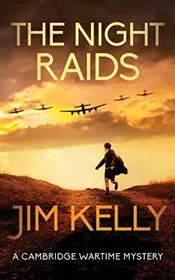
The Night Raids
by Jim Kelly
2020
In blackout Cambridge, DI Eden Brooke investigates an elderly woman's death after a German bomb falls short of its target. When her granddaughter disappears, the case turns into a tense hunt through air raids, fear, and wartime secrets.

The Cambridge Siren
by Jim Kelly
2025
In autumn 1941, a dead man in a Cambridge bomb shelter looks like a suicide until Eden Brooke spots the warning signs. As more bodies turn up and sabotage is suspected at a factory, wartime pressure closes in from every side.

The American Suspect
by Jim Kelly
2026
When workers extending a wartime airfield uncover the remains of a U.S. airman, Eden Brooke is told not to slow the war effort. Then a local woman's murder puts a Black American serviceman at risk, and Brooke suspects the wrong man is accused.
Where to start with Jim Kelly
If you want Fenland mysteries first: The Water Clock → The Fire Baby → The Moon Tunnel
If you want coastal police procedurals: Death Wore White → Death Watch → Death Toll
If you want wartime historical crime: The Great Darkness → The Mathematical Bridge → The Night Raids
If you want the later Philip Dryden books: Nightrise → The Funeral Owl
Jim Kelly sub-series and character series
DI Peter Shaw and DS George Valentine books in order
Explore this seriesDI Peter Shaw and DS George Valentine books in chronological order
Author bio
Jim Kelly was born on April 1, 1957, in Barnet, Hertfordshire, and grew up on the northern edge of London. He has said that books were part of daily life early on, with Barnet Library and long stretches reading in local shops before he could afford to buy much. His father was a detective in the Metropolitan Police, and his maternal grandfather was both a magistrate and a special constable. Crime, routine police work, and local history were around him from the start.
He was a shy child, and reading gave him a quiet kind of freedom.
At Sheffield University he studied geography, but student journalism pulled hard. He worked on the university paper, Darts, and discovered that writing on deadline suited him. After graduating he spent a rough year hunting for a newspaper job and taking whatever work he could get, including factory labor.
In 1979 he finally got his start as a local reporter on the Bedfordshire Times. That was followed by years at the Yorkshire Evening Press, where he became deputy news editor, and then a long stretch at the Financial Times. He edited, reported, and later covered tax and education. The newsroom, and the mix of ordinary lives with sudden drama, stayed with him.
The move toward fiction came after he and his wife, writer and biographer Midge Gillies, left London for Ely in the mid 1990s. Kelly had been talking about writing a novel for years. What got him going was choosing material he knew well, a local newspaper reporter, and setting him in a landscape that felt alive. He started writing on train journeys, laptop open, building the book that became The Water Clock.
Place comes first in his books.
That choice gave him Philip Dryden, a reporter in the Cambridgeshire Fens, and it also gave him his voice as a novelist. Readers who like the Dryden books usually talk about the same things: the flooded Fen country, the mix of present crime and older buried secrets, and Dryden's bruised private life. Titles such as The Water Clock, The Fire Baby, The Moon Tunnel, and The Funeral Owl show Kelly's feel for weather, landscape, and the way the past keeps pushing into the present.
He did not stay in one corner. The Shaw and Valentine books moved him to the north Norfolk coast, with Death Wore White introducing a sharp, uneasy detective partnership and cases shaped by beaches, tides, villages, and the old port town of King's Lynn. Later, the Nighthawk novels, beginning with The Great Darkness, took him into wartime Cambridge, where blackout, fear, and official secrecy change the texture of every investigation.
Kelly's books have picked up solid recognition without ever losing their local feel. The Water Clock was shortlisted for the CWA John Creasey Award, he won the CWA Dagger in the Library in 2006 for the Philip Dryden novels, and Death Watch won the New Angle Prize. His work has also been translated into several languages and published in the United States.
He still lives in Ely with Midge Gillies, and the city continues to matter in his work. He has also taught and supported writers through the Royal Literary Fund. In recent years he has published as J.G. Kelly as well as Jim Kelly, but the thread stays the same: crime stories rooted in place, built from working lives, old memories, and people trying to make sense of what happened in the dark.


Edited by
Software engineer whose passion for tracking book recommendations from podcasts inspired the creation of MRB.
Lead investor at 3one4 Capital whose startup expertise and love for books helped shape MRB and its growth.
Comments
Did we miss something? Have feedback?
Help us improve this page by sharing your thoughts