
Jesmyn Ward Books in Order
See Jesmyn Ward's books in order, with summaries, series background, and guidance on where to start with her major novels, memoirs, and essays.
Last updated:
As an Amazon Associate, we earn from qualifying purchases (at no extra cost to you).
Jesmyn Ward books in publication order
10 books
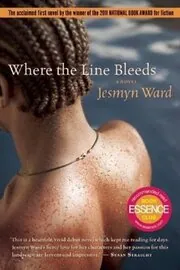
Where the Line Bleeds
by Jesmyn Ward
2006
Twin brothers Joshua and Christophe, newly graduated from high school on Mississippi's Gulf Coast, scramble for work; as one lands a dock job and the other turns to dealing, their bond and their future are pushed to the edge.
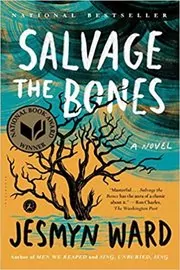
Salvage the Bones
by Jesmyn Ward
2011
In rural Mississippi, teenage Esch and her brothers spend twelve sweltering days caring for a fighting dog, hiding an unplanned pregnancy, and scrounging for supplies as Hurricane Katrina gathers offshore and threatens to sweep away the only home they know.

Cattle Haul
by Jesmyn Ward
2012
Long haul trucker Reese drives a loaded cattle rig from Mississippi across the Southwest, using drugs his father supplies to stay awake while worrying about dying cows, overdue bills, and a fragile relationship waiting for him back home.
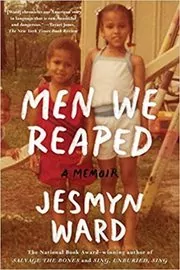
Men We Reaped
by Jesmyn Ward
2013
In this memoir, Jesmyn Ward recounts the deaths of her brother and four other young Black men from her Mississippi community, weaving their stories with her own to show how racism, poverty, and grief shape entire families and towns.
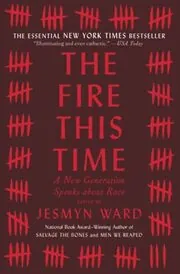
The Fire This Time
by Jesmyn Ward
2016
This collection of essays and poems, edited by Jesmyn Ward, brings together contemporary Black writers to reflect on race, history, violence, and community, responding to the questions raised in James Baldwin's classic The Fire Next Time.
Recommended by
1 person Levar Burton recommended this book
Levar Burton
One of Levar Burton's book recommendations.
Levar Burton's recommendation of this book
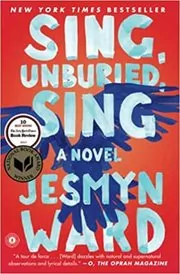
Sing, Unburied, Sing
by Jesmyn Ward
2017
Thirteen year old Jojo, his toddler sister, and their troubled mother drive from Bois Sauvage to Parchman prison to bring his father home, trailed by ghosts and histories that force the family to face buried violence and love.
Recommended by
1 person Barack Obama recommended this book
Barack Obama
Barack Obama's favorite books of 2017 list.
Barack Obama's recommendation of this book
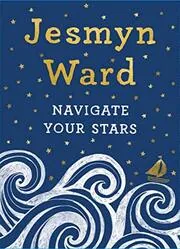
Navigate Your Stars
by Jesmyn Ward
2020
Adapted from Jesmyn Ward's 2018 commencement speech, this slender, illustrated book traces her path from coastal Mississippi to literary life and offers plainspoken reflections on education, work, failure, and the patience it takes to follow a dream.

Mother Swamp
by Jesmyn Ward
2022
Seventeen year old Afice, last in a long line of women who survived slavery and hunger, walks alone through the Louisiana swamps, following her ancestors' route and listening for their songs as she chooses a path into her own future.

Let Us Descend
by Jesmyn Ward
2023
Set in the years before the Civil War, this novel follows Annis, an enslaved teenager sold south by the white man who fathered her, on a brutal journey toward a Louisiana plantation, guided and troubled by ancestral spirits and memory.

On Witness and Respair: Essays
by Jesmyn Ward
2026
Collecting more than a decade of essays and speeches, this volume traces Jesmyn Ward's life and reading, from rural Mississippi childhood to motherhood and loss, and reflects on raising Black children, writing, and finding new hope after despair.
Where to start with Jesmyn Ward
If you want to begin with her Gulf Coast novels: Where the Line Bleeds → Salvage the Bones → Sing, Unburied, Sing.
If you're most interested in memoir and essays: Men We Reaped → Navigate Your Stars → On Witness and Respair: Essays.
If you are drawn to historical stories about slavery and resistance: Let Us Descend → Mother Swamp.
If you prefer to sample shorter work first: Cattle Haul → Navigate Your Stars.
Jesmyn Ward sub-series and character series
Jesmyn Ward collections, short stories, and related book types
Short Stories/Novellas
Non-Fiction
Standalone Jesmyn Ward books
Author bio
Jesmyn Ward is a novelist, memoirist, and essayist whose work centers on Black families along the Mississippi Gulf Coast. Born in 1977 and raised in the small community of DeLisle, she writes about the places and people that shaped her life. She is the first woman and the first Black American novelist to win the National Book Award for fiction twice.
Ward grew up in a multigenerational household in coastal Mississippi, where money was scarce, stories traveled fast, and the woods and bayous pressed up against people's back doors.
Books quickly became a refuge. After attending public schools, she moved to a nearby private academy when one of her mother's employers helped pay her tuition, often finding herself the only Black student in the room. Determined to use school as a way to widen her world, she became the first in her family to attend college, earning a bachelor's degree in English and a master's degree in media studies from Stanford University, then an MFA in creative writing from the University of Michigan.
In 2000, soon after finishing graduate school, her younger brother Joshua was killed by a drunk driver on a Mississippi road. The driver received only a light sentence, and Ward has said that the injustice and grief of that loss pushed her to commit to writing as a way to honor him and to bear witness to the lives of young Black men like him.
She returned to the Gulf Coast and was living back in DeLisle when Hurricane Katrina struck in 2005, flooding her family's home and leaving them stranded in a field before they found shelter. That experience, combined with the slow grind of everyday poverty, gave Ward a stark sense of how vulnerable her community was and how rarely its stories were told. For years she revised and submitted the manuscript that became her debut novel, Where the Line Bleeds, about twin brothers trying to find work and a future in a fictional Mississippi town much like her own.
Her second novel, Salvage the Bones, returns to that landscape and follows a pregnant teenage girl and her brothers in the days leading up to Hurricane Katrina, as they care for a fighting dog, scramble for supplies, and brace for a storm few outside their town seem to see coming. The book won the 2011 National Book Award for fiction and introduced many readers to Ward's recurring setting, the invented town of Bois Sauvage.
Ward later expanded that world in Sing, Unburied, Sing, which tracks thirteen year old Jojo, his baby sister, and their troubled mother on a road trip from Bois Sauvage to Mississippi's notorious state penitentiary at Parchman. Narrated by multiple voices, including a ghost, the novel braids family drama with the afterlives of slavery, convict labor, and Jim Crow. It earned Ward a second National Book Award for fiction in 2017.
In Let Us Descend, she looks farther back in time, following Annis, an enslaved teenager sold south from the Carolina coast to a Louisiana plantation, whose march into the deep South is shadowed by ancestral spirits and her own determination to survive.
Alongside her fiction, Ward has built an influential body of nonfiction. Her memoir Men We Reaped recounts the deaths of five young men from her community, including her brother, and asks why so many Black men die early in a single rural county. She edited the anthology The Fire This Time: A New Generation Speaks About Race, bringing together writers to reflect on history, violence, and the Black future, and she adapted her 2018 Tulane University commencement address into Navigate Your Stars, an illustrated meditation on work, failure, and perseverance. Shorter works such as the story Cattle Haul, the audio original Mother Swamp, and the forthcoming collection On Witness and Respair: Essays extend her concerns into different forms.
Across all of these books, certain themes repeat: families trying to hold together under economic and emotional strain, the long reach of racial violence, the pull of home, and the rich but often harsh natural world of the Gulf Coast. Ward has received a MacArthur fellowship, the Strauss Living Award, and the Library of Congress Prize for American Fiction, and she teaches creative writing at Tulane University. She continues to live in Mississippi, raising her children and writing stories that insist the people and places she came from belong at the center of American literature.





Edited by
Software engineer whose passion for tracking book recommendations from podcasts inspired the creation of MRB.
Lead investor at 3one4 Capital whose startup expertise and love for books helped shape MRB and its growth.
Comments
Did we miss something? Have feedback?
Help us improve this page by sharing your thoughts