
Jefferson Bass Books in Order
Browse Jefferson Bass books in order, from the Body Farm novels to the nonfiction, with summaries, series background, and help choosing where to start.
Last updated:
As an Amazon Associate, we earn from qualifying purchases (at no extra cost to you).
Jefferson Bass books in publication order
17 books

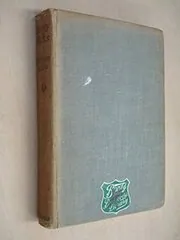
Human Osteology
by Jefferson Bass
1971
This lab and field manual explains how to identify human bones and reconstruct a skeleton, with practical guidance used in archaeology and forensic work. It is a technical reference rather than a narrative read.
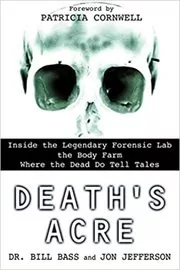
Death's Acre
by Jefferson Bass
2003
Bill Bass and Jon Jefferson take readers inside the real Body Farm and the cases that helped build modern forensic anthropology. It is part memoir, part true crime, and full of the practical science behind how bones and decomposition tell a story.
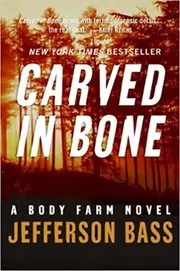
Carved in Bone
by Jefferson Bass
2006
Dr. Bill Brockton leaves Tennessee's Body Farm for a remote mountain community, where a mummified young woman found in a cave reopens a thirty-year-old mystery. The science is sharp, but the local secrets are even deadlier.
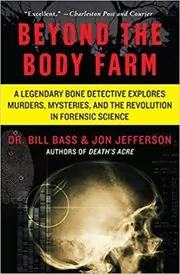
Beyond the Body Farm
by Jefferson Bass
2007
This nonfiction follow-up revisits real cases from Bill Bass's career, from lost planes and disaster victims to historical mysteries. It shows how forensic anthropology works in the field, and how new tools keep changing what investigators can learn.
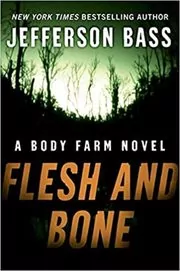
Flesh and Bone
by Jefferson Bass
2007
After a battered body turns up in Chattanooga, Brockton helps re-create the crime at the Body Farm. Then a second corpse appears, and the evidence points straight at him, forcing him to use his own forensic skills to prove he is not the killer.
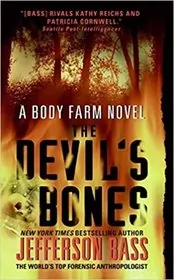
The Devil's Bones
by Jefferson Bass
2008
A charred body in a burned car sends Brockton into the grim science of fire and cremation. His case soon collides with a sinister set of cremated remains and the return of an old enemy.
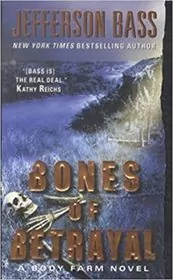
Bones of Betrayal
by Jefferson Bass
2009
Called to Oak Ridge, Brockton investigates a gruesome death with roots in the Manhattan Project and the long shadow of World War II. The case mixes forensic puzzle-solving with buried secrets from Oak Ridge's past.
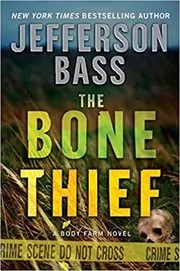
The Bone Thief
by Jefferson Bass
2010
A routine exhumation for a DNA test turns ugly when Brockton finds a corpse mutilated after burial. His search leads to a black market in body parts and an undercover gamble that could cost him far more than his professional reputation.
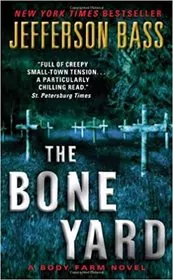
The Bone Yard
by Jefferson Bass
2011
Brockton heads to Florida when bones begin surfacing near a notorious boys' reform school. What starts as a forensic consultation becomes a search for lost victims, old abuse, and the people still willing to kill to keep it buried.
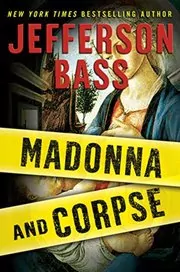
Madonna and Corpse
by Jefferson Bass
2012
In this short prequel set in Avignon, Inspector René Descartes investigates a museum break-in that leads to a forged art trail and a charred corpse. The case edges toward the larger mystery that draws Brockton and Miranda to France.
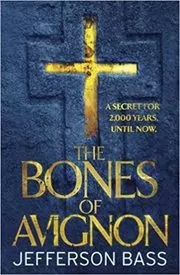
The Bones of Avignon
by Jefferson Bass
2012
In Avignon, Miranda Lovelady uncovers a stone chest said to hold the bones of Jesus, pulling Brockton into a high-stakes clash of faith, history, and forensic science. The case turns deadly as rival interests close in.
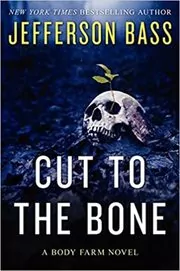
Cut to the Bone
by Jefferson Bass
2013
This prequel goes back to the early 1990s, as Brockton arrives at the University of Tennessee and launches the Body Farm. While he fights to build the new facility, a string of murders suggests a killer from his past may be back.
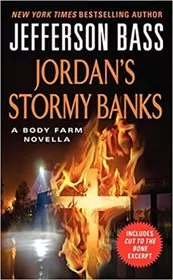
Jordan's Stormy Banks
by Jefferson Bass
2013
Set early in Brockton's Tennessee career, this novella follows one of his first murder investigations after he joins the University of Tennessee. A rural death scene, a hostile sheriff, and an angry crowd push the young scientist into a fight for his future.
The Devil's Bones
by Steve Berry, James Rollins & Jefferson Bass
2014
On an Amazon river cruise, Cotton Malone teams up with Sigma Force commander Gray Pierce to stop a rogue botanist. Their target wants to sell a rare orchid that produces a deadly neurotoxin, and the buyers aren’t worried about mass casualties.
Identity Crisis
by Jefferson Bass
2015
This true account follows Bill Bass as he reopens the disputed identification of Leoma Patterson, decades after her murder. What begins as an exhumation for DNA testing turns into a knotty case about evidence, memory, and the limits of certainty.
The Breaking Point
by Jefferson Bass
2015
Ten years after creating the Body Farm, Brockton is asked to identify a wealthy man killed in a fiery plane crash. The case spirals into professional doubt, threats from an old serial killer, and deeply personal news that shakes his home life.
Without Mercy
by Jefferson Bass
2016
When skeletal remains chained to a tree point to a hateful and brutal crime, Brockton and Miranda start digging for a victim's identity. Then escaped serial killer Nick Satterfield returns, turning a forensic investigation into a very personal siege.
Where to start with Jefferson Bass
If you want the core Body Farm run: Carved in Bone → Flesh and Bone → The Devil's Bones
If you want Brockton at the very beginning: Jordan's Stormy Banks → Cut to the Bone
If you want the real cases behind the fiction: Death's Acre → Beyond the Body Farm → Identity Crisis
If you want the series at its biggest and most historical: The Bone Yard → The Bones of Avignon
If you want the academic side of Bill Bass's work: Human Osteology
Jefferson Bass sub-series and character series
Jefferson Bass collections, short stories, and related book types
Short Stories/Novellas
Non-Fiction
Standalone Jefferson Bass books
Author bio
Jefferson Bass is the shared pen name of writer Jon Jefferson and forensic anthropologist Bill Bass. One came to the partnership through journalism and documentary filmmaking, the other through decades of work with bones, burial sites, and murder investigations. Together they turned real forensic science into a long-running set of thrillers anchored by the Body Farm in Tennessee.
Jon Jefferson was born in St. Joseph, Missouri, and grew up mostly in Guntersville, Alabama. He studied at Birmingham-Southern College, then did graduate work in English and comparative literature at the University of North Carolina at Chapel Hill. Before novels, he worked as a science writer at Oak Ridge National Laboratory, spent time in journalism and public-interest work, and made documentary films for television.
The documentary work changed everything.
While making a two-part film about the University of Tennessee's Anthropological Research Facility, better known as the Body Farm, Jefferson met the man who created it, Dr. William M. Bass. Bass was born in Staunton, Virginia, studied at the University of Virginia, the University of Kentucky, and the University of Pennsylvania, and spent years as an archaeologist and professor before arriving at the University of Tennessee in 1971.
In Tennessee, Bass helped build forensic anthropology into something far more practical for police and medical examiners. After a case in which a well-preserved corpse led to a badly mistaken estimate of time since death, he pushed for more direct research on decomposition. That work led to the Body Farm in the early 1980s, the first facility of its kind, and it became the center of his career.
Bass spent a lifetime learning what bones can still say after everything else is gone.
He was not only a case consultant. Bass taught for decades at the University of Tennessee, published more than two hundred scientific papers, and was named National Professor of the Year. That classroom habit shows up in the books, which often pause just long enough to explain what a bone, burn pattern, tooth, or insect can tell you.
Their first big collaboration was the nonfiction book Death's Acre, which opened the gates of the real Body Farm to general readers. They followed it with Beyond the Body Farm, another book of real cases, and later Identity Crisis, a shorter account of a murder investigation complicated by disputed remains and DNA testing. Readers who want the factual side of Jefferson Bass usually start there.
The fiction came next. Beginning with Carved in Bone in 2006, a novel that reached the New York Times bestseller list, Jefferson and Bass launched the Body Farm novels and kept returning to Dr. Bill Brockton, their fictional forensic anthropologist. Flesh and Bone and The Devil's Bones lean hard into the science of crime scenes and fire. Bones of Betrayal reaches back into wartime Oak Ridge, The Bone Yard looks at buried abuse in Florida, and The Bones of Avignon carries the series to France. Readers tend to come for the cases, then stay for the Tennessee setting, the procedural detail, and Brockton's stubborn, slightly rumpled humanity.
There is a more technical side to Bass's bibliography, too. His manual Human Osteology has been used by students and professionals in archaeology and forensic work for years, which helps explain why the novels feel grounded in practice instead of movie-style guesswork. In later years, Jon Jefferson has lived with his wife in Athens, Georgia, while Bill Bass has remained tied to the University of Tennessee as a retired professor, researcher, and guest lecturer. The pen name joins their two careers neatly, one writer who knows how to tell a story, one scientist who spent decades learning how to read the evidence.

Edited by
Software engineer whose passion for tracking book recommendations from podcasts inspired the creation of MRB.
Lead investor at 3one4 Capital whose startup expertise and love for books helped shape MRB and its growth.
Comments
Did we miss something? Have feedback?
Help us improve this page by sharing your thoughts