
James Joyce Books in Order
Browse James Joyce books in order, with concise summaries, reading paths, publication context, and practical guidance for choosing where to begin.
Last updated:
As an Amazon Associate, we earn from qualifying purchases (at no extra cost to you).
James Joyce books in publication order
21 books
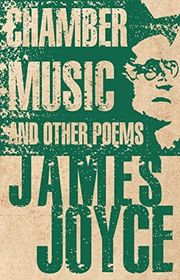
Chamber Music
by James Joyce
1907
Joyce’s first book gathers thirty-six brief love poems shaped by song, longing, nature, and changing moods. The poems are more traditional in form than his later fiction, but they already show his care for sound and rhythm.
Araby
by James Joyce
1914
A Dublin boy becomes consumed by a romantic crush and promises to bring the girl a gift from the Araby bazaar. His late journey through the dim, disappointing market brings fantasy into hard contact with reality.
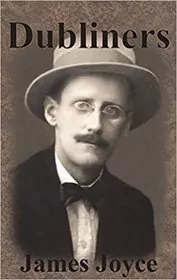
Dubliners
by James Joyce
1914
Fifteen linked stories set in Dublin, following children, clerks, families, lovers, and neighbors at moments of disappointment or realization. It is a strong entry point to Joyce, with vivid city life and quietly painful human choices.
Recommended by
1 person Ernest Hemingway recommended this book
Ernest Hemingway
Ernest Hemingway recommended this book in the "Ernest Hemingway on Writing" book.
Ernest Hemingway's recommendation of this book
The Boarding House
by James Joyce
1914
At a Dublin boarding house, Mrs. Mooney sees a chance to secure her daughter Polly’s future after Polly grows close to lodger Bob Doran. Social pressure, money, and reputation make a private mistake impossible to keep private.
The Dead
by James Joyce
1914
At a Dublin holiday gathering, Gabriel Conroy worries over speeches, old tensions, and his uneasy marriage. A quiet conversation after the party changes how he sees his wife, himself, and the emotional distance between people.
Two Gallants
by James Joyce
1914
Lenehan wanders Dublin while his friend Corley courts a young servant woman. As Lenehan waits for the outcome of Corley’s scheme, the story exposes a small, cruel con shaped by boredom, vanity, and need.
A Portrait of the Artist as a Young Man
by James Joyce
1916
Stephen Dedalus grows up in Dublin, wrestling with school, family, faith, sexuality, and the demands of Irish life. As he begins to trust his own artistic calling, he must decide what loyalties he can keep and what he must leave behind.
Recommended by
2 people- Ernest Hemingway recommended this book
Ernest Hemingway
Ernest Hemingway recommended this book in the "Ernest Hemingway on Writing" book.
Ernest Hemingway's recommendation of this book  Jim Carrey recommended this book
Jim Carrey
"[The author] says the greatest of art, the masterpieces, are the ones that stop you. It causes a stasis in your brain. Stops time and makes it last longer." - Jim Carrey
Jim Carrey's recommendation of this book
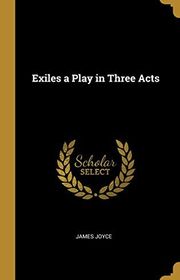
Exiles: A Play in Three Acts
by James Joyce
1918
Writer Richard Rowan returns to Dublin with Bertha and their young son after years abroad. When an old friend pursues Bertha, the couple confront jealousy, desire, freedom, and whether love can survive without control.
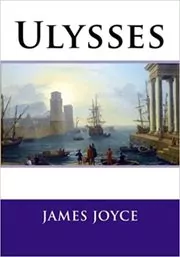
Ulysses
by James Joyce
1922
Over one day, June 16, 1904, Leopold Bloom moves through Dublin while Stephen Dedalus and Molly Bloom follow their own paths. Errands, conversations, memories, and private thoughts build an unusually intimate portrait of a city and its people.
Recommended by
4 people Neil Strauss recommended this book
Neil Strauss
"The book that’s most influenced me." - Neil Strauss
Neil Strauss's recommendation of this book  Debbie Millman recommended this book
Debbie Millman
"I also really love a line from [this book], which is 'The longest way around is the shortest way home.'" - Debbie Millman
Debbie Millman's recommendation of this book  Christopher Hitchens recommended this book
Christopher Hitchens
"[Appears] not to be written by [a human being]." - Christopher Hitchens
Christopher Hitchens's recommendation of this book - Ernest Hemingway recommended this book
Ernest Hemingway
Ernest Hemingway recommended this book in the "Ernest Hemingway on Writing" book.
Ernest Hemingway's recommendation of this book
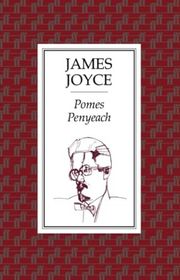
Pomes Penyeach
by James Joyce
1927
This slim collection contains thirteen poems written across two decades. Love, grief, memory, music, and passing time recur in compressed pieces that offer a quieter, more direct side of Joyce’s writing.
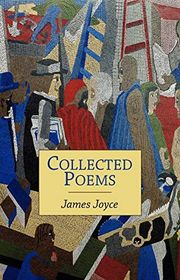
Collected Poems
by James Joyce
1936
A gathering of Joyce’s published poetry, including the poems of Chamber Music and Pomes Penyeach alongside other work. It lets readers follow his interest in songlike language, private feeling, and carefully controlled short forms.
The Cats of Copenhagen
by James Joyce
1936
A playful children’s tale first written for Joyce’s grandson. In this strange Copenhagen, cats are everywhere and nothing is quite as it seems, giving the story a comic edge beneath its fanciful animal world.
Finnegans Wake
by James Joyce
1939
Joyce’s final novel turns a nighttime family drama into a dreamlike flow of puns, echoes, and shifting identities. Centered loosely on the Earwicker family, it rewards readers willing to listen to its language as much as follow a conventional plot.
Stephen Hero
by James Joyce
1944
This unfinished early novel follows Stephen Daedalus as he struggles with family pressure, religion, friendship, and his wish to become an artist. It offers a rougher, more expansive first version of material Joyce later remade in A Portrait of the Artist as a Young Man.
Critical Writings
by James Joyce
1959
Essays, reviews, lectures, and newspaper pieces from Joyce’s early career. These lively, often argumentative writings show his thoughts on drama, language, Irish culture, literature, and the artistic debates that shaped his fiction.
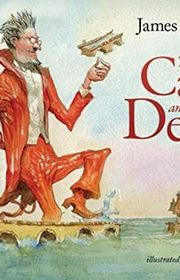
The Cat and the Devil
by James Joyce
1965
In the French town of Beaugency, a mayor makes a risky bargain with the Devil to get a bridge built. This witty children’s fable follows the townspeople as they look for a clever way around the deal.
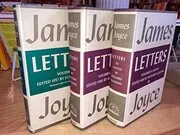
James Joyce Letters Volumes 1 - 2 & 3
by James Joyce
1966
This three-volume gathering of Joyce’s correspondence follows his life from early ambitions through his later years. The letters bring together family matters, literary friendships, publishing battles, financial strain, and the slow construction of his major books.
Giacomo Joyce
by James Joyce
1968
A short, fragmentary prose poem set in Trieste, where an English teacher becomes infatuated with a young student. Its quick impressions of streets, lessons, desire, and restraint offer an intimate glimpse of Joyce working between poetry and fiction.
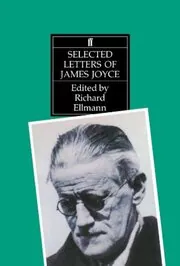
Selected Letters of James Joyce
by James Joyce
1975
A curated selection of Joyce’s letters, spanning his writing life and personal world. They show the novelist as a working writer, family man, friend, and determined negotiator with publishers, editors, and fellow artists.
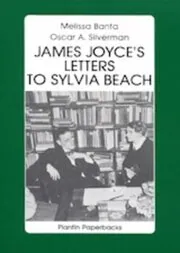
James Joyce's Letters To Sylvia Beach, 1921 1940
by James Joyce
1987
This correspondence traces Joyce’s long working relationship and friendship with Sylvia Beach, the first publisher of Ulysses. The letters reveal practical worries about editions, money, corrections, travel, and the day-to-day work behind his books.

Finn's Hotel
by James Joyce
2013
A posthumously published set of ten short prose pieces written in 1923. These compact, comic, and experimental narratives offer a glimpse of Joyce testing language, Irish material, and ideas that would later surface in Finnegans Wake.
Where to start with James Joyce
For the best first step: Dubliners → A Portrait of the Artist as a Young Man
For Stephen Dedalus's story: A Portrait of the Artist as a Young Man → Ulysses
For one rich day in Dublin: Ulysses
For Joyce at his most language-driven: Ulysses → Finnegans Wake
For shorter poetry: Chamber Music → Pomes Penyeach
James Joyce collections, short stories, and related book types
Short Stories/Novellas
Collections
Non-Fiction Books
Standalone James Joyce books
Author bio
James Joyce was born on February 2, 1882, in Rathgar, a suburb of Dublin. He was the eldest of ten children, raised in a Catholic family whose finances grew increasingly unstable. His father loved politics and singing, and Joyce grew up amid frequent moves and a crowded household.
School gave him structure, and words gave him a way out. He attended the Jesuit schools Clongowes Wood College and Belvedere College before studying modern languages at University College Dublin. As a student, he wrote poems, reviews, and sharp essays, including an early piece on Henrik Ibsen.
After graduation, Joyce tried studying medicine in Paris but returned to Dublin in 1903 when his mother became seriously ill. In 1904 he met Nora Barnacle. That October, the couple left Ireland together, first for Pola and then Trieste, where Joyce taught English and they raised their children, Giorgio and Lucia.
He spent most of his adult life outside Ireland, but Dublin stayed at the center of his fiction.
His first book, Chamber Music, arrived in 1907. Then came Dubliners in 1914, a set of stories about children, workers, families, drinkers, dreamers, and people caught between hope and habit in the city he knew so well. Readers often come to Joyce through these compact, clear-eyed stories, especially “Araby” and “The Dead.”
Joyce also kept returning to Stephen Dedalus, a young man trying to separate his own ambitions from family, church, and country. The unfinished Stephen Hero, published after Joyce’s death, shows an earlier version of that material. He reshaped it into A Portrait of the Artist as a Young Man, a more focused novel about Stephen’s childhood, education, faith, and decision to make a life in art.
During the First World War, the family lived in Zurich before moving to Paris after the war. Joyce wrote his only surviving play, Exiles, and kept building the novel that became Ulysses. Published as a book in 1922 with Sylvia Beach’s help, Ulysses follows Leopold Bloom, Stephen Dedalus, and Molly Bloom through Dublin on June 16, 1904.
The book’s frankness and unusual form caused trouble with censors, but it also gave readers a new way to see ordinary life, through errands, arguments, memories, jokes, and private thoughts. Joyce made a city day feel huge without making it neat.
Then he pushed even further.
His final novel, Finnegans Wake, took years of work and uses dream logic, multilingual wordplay, family stories, songs, and recurring Dublin echoes. Joyce also wrote poems, criticism, journalism, plays, and a large body of letters that show the daily labor behind the books.
Joyce dealt with serious eye problems for much of his later life. He and Nora married in London in 1931 after nearly three decades together, and the family returned to Zurich in 1940 as war spread across Europe. Joyce died there on January 13, 1941, following intestinal surgery, at age fifty-eight.


Edited by
Software engineer whose passion for tracking book recommendations from podcasts inspired the creation of MRB.
Lead investor at 3one4 Capital whose startup expertise and love for books helped shape MRB and its growth.
Comments
Did we miss something? Have feedback?
Help us improve this page by sharing your thoughts