
James D Hornfischer Books in Order
Explore James D Hornfischer books in order, with short summaries, background on his naval histories, and a quick guide to where to start reading.
Last updated:
As an Amazon Associate, we earn from qualifying purchases (at no extra cost to you).
James D Hornfischer books in publication order
9 books

Right Thinking
by James D Hornfischer
1996
Hornfischer assembles quotations from conservative thinkers across centuries, creating a brisk tour of the movement's language and core ideas. The book works as a political sampler, linking older writers to modern conservative rhetoric.

Hate is Not a Family Value
by James D Hornfischer
1997
This compact quote collection gathers liberal voices from across history, from classical writers to modern American politics. It works as a quick guide to the ideas, arguments, and wit that have shaped liberal thought.

The Last Stand of the Tin Can Sailors
by James D Hornfischer
2003
At the Battle off Samar, a small American force faces a far stronger Japanese fleet and charges anyway. Hornfischer turns that desperate morning into a tense, human account of courage, confusion, and sacrifice at sea.
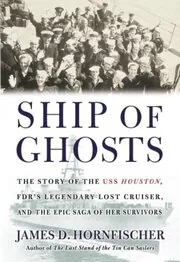
Ship of Ghosts
by James D Hornfischer
2006
The story of the USS Houston begins as a last-stand sea fight and becomes an ordeal of survival after the ship goes down. Hornfischer follows the crew from Sunda Strait to brutal captivity on the Burma-Thailand Death Railway.
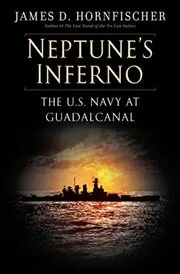
Neptune's Inferno
by James D Hornfischer
2011
Hornfischer recounts the brutal naval struggle around Guadalcanal, where American ships fought desperate night battles in Ironbottom Sound. He keeps the focus on sailors and commanders as the Pacific war hangs in the balance.

Service
by James D Hornfischer
2011
Written with Marcus Luttrell, this memoir follows the SEAL's return to combat in Iraq after surviving Operation Redwing. It mixes battlefield action, reflections on sacrifice, and new detail about the rescue that made Luttrell widely known.

The Fleet at Flood Tide
by James D Hornfischer
2016
This sweeping history follows the U.S. drive across the Marianas in 1944 and into Japan's final defeat. Saipan, Tinian, Guam, carrier battles, and strategic bombing come together in a vivid portrait of total war in the Pacific.
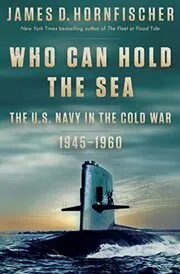
Who Can Hold the Sea
by James D Hornfischer
2022
Hornfischer follows the U.S. Navy from World War II's end into the tense first years of the Cold War. Atomic tests, Korea, submarines, and the voyage of Nautilus show a service remaking itself for a new kind of conflict.

Destroyer Captain
by James D Hornfischer
2024
This biography follows Commander Ernest E. Evans from Oklahoma to the bridge of the USS Johnston. It centers on his fearless stand at Samar and the leadership that made him one of the battle's lasting heroes.
Where to start with James D Hornfischer
If you want his signature World War II naval history: The Last Stand of the Tin Can Sailors → Ship of Ghosts → Neptune's Inferno
If you want the broadest Pacific War view: The Fleet at Flood Tide → Neptune's Inferno
If you want to follow the Navy into the Cold War: Who Can Hold the Sea
If you want a modern combat memoir: Service
If you want more on one hero from Samar: The Last Stand of the Tin Can Sailors → Destroyer Captain
James D Hornfischer collections, short stories, and related book types
Non-Fiction
Political Books
American War Heroes Books
Author bio
James D. Hornfischer was born in Salem, Massachusetts, on November 18, 1965. His early boyhood was spent in Amherst, and later his family moved to Litchfield, Connecticut, where he finished high school. Long before he wrote naval history, he was the kid asking to join a military history book club at age ten, building model ships and aircraft, and reading his way through World War II shelves at the library.
He took that curiosity to Colgate University, where he studied international relations and German, edited the student newspaper, and graduated Phi Beta Kappa in 1987. After college he moved to New York and entered publishing, first at McGraw-Hill and later at HarperCollins. That stretch mattered. He learned how books are built, how research and narrative work together, and how much difference a good editor can make.
Books came first as a job, then as a calling.
Hornfischer later made his home in Austin, Texas. There he earned an MBA from the University of Texas and then a law degree from the University of Texas School of Law, though he did not build a career as a practicing lawyer. Instead he became a literary agent, and in 2001 he and his wife, Sharon, founded Hornfischer Literary Management. He represented nonfiction writers across history, politics, science, and current affairs, and people who worked with him often knew him as both an editor's editor and a steady guide through publishing.
As an author, he had a clear lane and he knew how to use it. His books focus again and again on the U.S. Navy, especially in the Pacific War, but they are not dry campaign studies. He liked the close view: sailors at battle stations, commanders making choices with incomplete information, crews trying to hold together under shellfire, exhaustion, and fear. Readers come to him for the research, but they often stay for the sense that history is happening at human scale.
For many readers, The Last Stand of the Tin Can Sailors is the place to start. It tells the story of the Battle off Samar, where small American ships attacked a much stronger Japanese force. Ship of Ghosts follows the USS Houston from desperate sea combat to the brutal prison camp years that followed. Neptune's Inferno turns to Guadalcanal and the savage night fighting in Ironbottom Sound. Later, The Fleet at Flood Tide widened the lens to the Marianas campaign and the final drive toward Japan, while Who Can Hold the Sea moved into the Cold War years from 1945 to 1960.
He could make steel, salt water, and radar feel personal.
Hornfischer also stepped outside naval history when he worked with Marcus Luttrell on Service, helping shape a modern military memoir about combat, survival, and duty. Beyond books, he wrote essays and reviews for major publications, spoke often at museums and military institutions, and saw all four of his World War II naval histories placed on the Chief of Naval Operations Professional Reading Program list. In May 2021, the Navy gave him its Distinguished Public Service Award, a sign of how closely his work had come to matter to sailors as well as civilian readers.
He lived in Austin with his family and kept writing even during illness. Hornfischer died in 2021, at age fifty-five, but his work still feels immediate. What stands out now is not just the subject matter, but the combination of patience, clarity, and respect. He wanted to preserve what happened, yes, but also what it felt like to be there. That is a big reason his books continue to find readers far beyond the usual military history crowd.


















Edited by
Software engineer whose passion for tracking book recommendations from podcasts inspired the creation of MRB.
Lead investor at 3one4 Capital whose startup expertise and love for books helped shape MRB and its growth.
Comments
Did we miss something? Have feedback?
Help us improve this page by sharing your thoughts