
James Clavell Books in Order
Browse James Clavell's books in order, with summaries, Asian Saga reading guide, author bio, and tips on where to start with his epic historical fiction.
Last updated:
As an Amazon Associate, we earn from qualifying purchases (at no extra cost to you).
James Clavell books in publication order
10 books
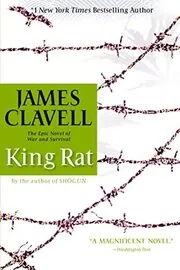
King Rat
by James Clavell
1962
In a squalid Japanese prison camp in Singapore, young RAF officer Peter Marlowe is drawn into the schemes of an American corporal known as the King. Their uneasy partnership tests class loyalties, morality, and the brutal economics of survival.
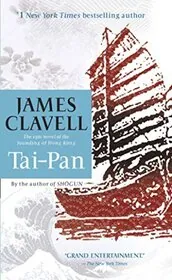
Tai-Pan
by James Clavell
1966
After the First Opium War, Scottish trader Dirk Struan seizes the chance to build a trading empire on the raw island of Hong Kong. Locked in a lifelong feud with rival Tyler Brock, he gambles everything on storms, politics, and shifting alliances.

Shōgun
by James Clavell
1975
English pilot-major John Blackthorne is shipwrecked off the coast of Japan in 1600 and taken captive in a culture he barely understands. As rival warlords maneuver for power, he becomes a pawn and then a samurai, torn between allegiance and desire.
Recommended by
2 people Joe De Sena recommended this book
Joe De Sena
"Puts everything in a proper frame of reference for me. What that guy is going through, it like puts your day in perspective." - Joe De Sena
Joe De Sena's recommendation of this book  Edward Norton recommended this book
Edward Norton
"I devoured [this book]." - Edward Norton
Edward Norton's recommendation of this book
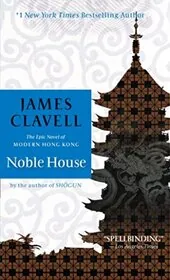
Noble House
by James Clavell
1981
In 1963 Hong Kong, Ian Dunross, the new tai-pan of Struan & Company, discovers his legendary firm is on the brink of collapse. As he courts American investors and battles rival Quillan Gornt, financial intrigue collides with espionage and Cold War tension.
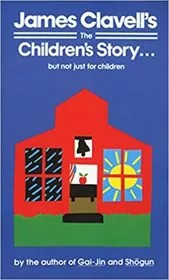
The Children's Story
by James Clavell
1981
A new teacher walks into an American classroom the morning after the country has lost a war. In less than half an hour, through games and gentle questions, she shows how easily children can be stripped of independent thought.
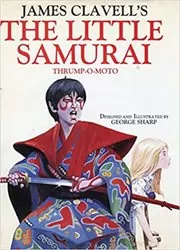
The Little Samurai
by James Clavell
1986
Patricia, an Australian girl who cannot walk without crutches, meets a tiny Japanese wizard-in-training who tumbles into her world. Together they journey through enchanted landscapes to confront the source of her curse and discover courage, friendship, and healing.

Thrump-O-Motol
by James Clavell
1986
In this illustrated fantasy, little wizard Thrump-O-Moto miscasts a spell and lands in the Australian outback, where he meets Patricia, a lonely girl who cannot walk unaided. Their quest to defeat a cruel sorcerer becomes a journey toward bravery and self-belief.
Whirlwind
by James Clavell
1986
Tehran, 1979: as revolution topples the Shah, a multinational team of helicopter pilots working for a British firm scramble to evacuate their families and aircraft. Caught between factions, desert storms, and corporate demands, every flight could be their last.
Gai-Jin
by James Clavell
1993
Set in 1860s Japan, Gai-Jin follows Malcolm Struan, heir to the Noble House, after a violent attack on foreign residents near Yokohama. As he recovers and falls for the headstrong Angelique, they are pulled into samurai politics, xenophobic plots, and fragile new trade.
Escape
by James Clavell
1995
Drawn from Whirlwind, Escape centers on Finnish pilot Erikki Yokkonen and his Iranian wife Azadeh as Iran erupts in revolution. While Erikki races to save company helicopters, the couple must slip through checkpoints and family loyalties to win their freedom.
Where to start with James Clavell
If you want his most famous epic: Shōgun.
If you prefer to follow the Asian Saga chronologically: Shōgun → Tai-Pan → Gai-Jin → King Rat → Noble House → Whirlwind.
If you like World War II stories: King Rat.
If you want business and Cold War intrigue: Tai-Pan → Noble House.
If you are curious about the Iran revolution setting: Whirlwind → Escape.
James Clavell sub-series and character series
James Clavell collections, short stories, and related book types
Short Stories/Novellas
Short Story Collections
Standalone James Clavell books
Author bio
James Clavell was born Charles Edmund Dumaresq Clavell in Sydney, Australia, on 10 October 1921, and grew up between naval bases and English schools. He would go on to become known worldwide for big, immersive stories set across Asia.
His father was a Royal Navy officer stationed with the Australian fleet, and the family returned to England before Clavell was a year old. He attended The Portsmouth Grammar School and, like many in his family, moved naturally toward military service.
War shaped almost everything he wrote later.
In 1940 he joined the Royal Artillery. Sent to Southeast Asia after the attack on Pearl Harbor, he was wounded, captured in Java, and spent several years as a prisoner of war in Japanese camps, including the notorious Changi prison in Singapore. The starvation, disease, and casual cruelty he saw there never left him.
After the war a motorcycle accident ended his army career. Clavell studied at the University of Birmingham, where he met actress April Stride, who became his wife. Visiting her on film sets pulled him toward the movie business, first in distribution and then in screenwriting. By the late 1950s he had moved to the United States and was writing scripts for films such as The Fly and The Great Escape, as well as later directing To Sir, with Love.
A writers' strike in 1960 gave him time to try a novel. The result was King Rat, a sharp, unsentimental look at life inside Changi that drew heavily on his own experience. It was a success, and it convinced him that the long, detailed stories he liked to tell on screen could live just as well on the page.
Over the next three decades he built what became known as the Asian Saga, six interlinked historical novels that follow traders, soldiers, samurai, and families through shifting empires. Tai-Pan dives into the founding of Hong Kong and the rise of the Struan trading house. Shōgun drops an English pilot into 17th century Japan and lets readers watch him learn a foreign language, code of honor, and way of thinking. Noble House, Whirlwind, and Gai-Jin push the story forward into Cold War finance, revolution in Iran, and the opening of Japan.
What ties these books together is not just shared characters but a steady curiosity about power, survival, and what happens when cultures meet and have to bargain.
Alongside the huge epics he also wrote shorter work. The Children's Story is a brief, unsettling tale about a new teacher who calmly leads a classroom of children into accepting a conquering regime. Thrump-O-Moto, a fantasy about a tiny wizard and an Australian girl, shows a lighter, more playful side and was later published under the title The Little Samurai in some editions.
Clavell became a citizen of both the United Kingdom and the United States, raised his family partly in Canada and later in Switzerland, and kept writing into the early 1990s. He died in Vevey, Switzerland, on 7 September 1994, aged seventy-two. His books remain in print, and readers still come to them for a mix of adventure, history, and the sense that ordinary people can shape vast events through stubborn will.



Edited by
Software engineer whose passion for tracking book recommendations from podcasts inspired the creation of MRB.
Lead investor at 3one4 Capital whose startup expertise and love for books helped shape MRB and its growth.
Comments
Did we miss something? Have feedback?
Help us improve this page by sharing your thoughts