
Jacqueline Susann Books in Order
See Jacqueline Susann books in order, with quick summaries, where to start, and notes on the novels and memoir that made her a publishing sensation.
Last updated:
As an Amazon Associate, we earn from qualifying purchases (at no extra cost to you).
Jacqueline Susann books in publication order
6 books
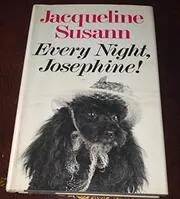
Every Night, Josephine!
by Jacqueline Susann
1963
Susann's warm, funny memoir follows her beloved poodle Josephine through dog shows, city life, and television-era New York. It is lighter than the novels, but just as sharp about vanity, hustle, and the chaos of a very pampered pet.
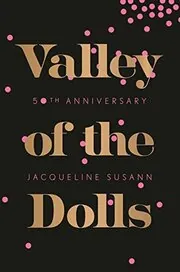
Valley of the Dolls
by Jacqueline Susann
1966
Anne Welles, Neely O'Hara, and Jennifer North chase love and fame from New York to Hollywood. Friendship, ambition, and pills drive this show business classic as success starts to look a lot like ruin.
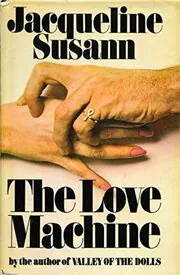
The Love Machine
by Jacqueline Susann
1969
Robin Stone claws his way up the television world, brilliant, ambitious, and nearly impossible to resist. As three very different women orbit him, power and appetite turn glossy success into something darker.
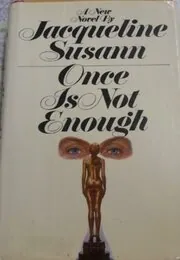
Once is Not Enough
by Jacqueline Susann
1973
January Wayne returns to New York after years in a Swiss clinic and finds a richer, harsher, more sexually charged world waiting for her. Family loyalty, fame, and desire pull her into Susann's most openly troubled social drama.
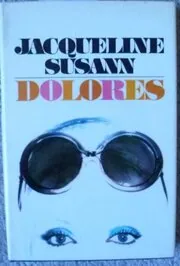
Dolores
by Jacqueline Susann
1975
After her president husband is assassinated, glamorous Dolores Cortez Ryan retreats from public life, then steps back into a world of money, gossip, and uneasy romance. It is a short, melancholy story about grief under a spotlight.
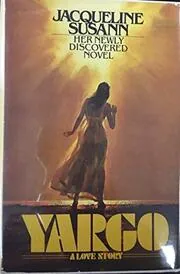
Yargo
by Jacqueline Susann
1979
Janet Cooper, a young woman from New Jersey, is abducted by aliens and carried to the planet Yargo. As she falls for their remote leader, Susann turns pulp romance into a strange, earnest space adventure.
Where to start with Jacqueline Susann
For the classic first read: Valley of the Dolls
If you want more glossy show business drama: Valley of the Dolls → The Love Machine → Once is Not Enough
If you want her lighter, more personal side: Every Night, Josephine!
If you are curious about the posthumous books: Dolores → Yargo
Standalone Jacqueline Susann books
Author bio
Jacqueline Susann was born in Wynnewood, Pennsylvania, in 1918 and grew up in Philadelphia. She was the only child of Robert Susann, a portrait painter, and Rose Jans Susann, a public school teacher. She liked to blur her age in public, but the larger point is clear enough: from early on, she wanted out of ordinary life and into show business.
She was restless early.
After graduating from West Philadelphia High School in 1936, she left for New York and chased acting with real stubbornness. She picked up small Broadway parts, worked in television, appeared in commercials, and wrote plays with her friend Beatrice Cole. In 1939 she married press agent Irving Mansfield, who became both husband and partner in the long project of making Jackie Susann happen.
For a long time, the big break did not come. She had stage credits, TV work, and visibility, but not the kind of success that settles a career. One turning point came in the early 1960s, after Billy Rose encouraged her to turn her funny letters about her poodle Josephine into a book. That became Every Night, Josephine!, a lively memoir that sold well and showed she had a brisk, chatty, very readable voice.
After that, she finally had a lane that was fully her own.
Then came Valley of the Dolls in 1966, the book that made her impossible to ignore. Its mix of New York, Hollywood, friendship, ambition, sex, pills, and bad bargains struck a nerve with readers, even while critics rolled their eyes. Many readers still come to Susann for exactly that blend of glamour and damage, plus her feel for the way people chase love, money, status, and escape all at once.
She followed it with The Love Machine and Once is Not Enough, and those books also became massive bestsellers. Together, the three novels made her the first author to score three consecutive number one novels on The New York Times best seller list. Readers who like Susann usually like the same things across all three books: fast movement, sharp social climbing, people who want too much, and a show business world where success is never as safe as it looks.
Her settings kept circling the same bright, hard places, Manhattan offices, Broadway dressing rooms, Hollywood parties, TV studios, fancy restaurants, hotel suites. Her characters often include women trying to invent themselves, powerful men who confuse hunger with charm, and outsiders learning the cost of getting what they thought they wanted. Even the smaller, later corners of her bibliography, like Dolores and the posthumously published Yargo, show how willing she was to swing between glossy melodrama and something odder.
Her private life had more strain than the public version suggested. She and Irving had one son, Guy, who was diagnosed with severe autism as a small child. In 1962 Susann was diagnosed with breast cancer, and the illness later spread. That mix of fear, urgency, and responsibility helps explain how hard she pushed, especially when she toured and promoted her books with a kind of show business hustle that helped change how authors sold themselves.
She died in New York in 1974, at 56. But Valley of the Dolls never really went away, and neither did the image of Susann herself, funny, blunt, ambitious, and very aware that books were part art, part performance, and part nerve.





Edited by
Software engineer whose passion for tracking book recommendations from podcasts inspired the creation of MRB.
Lead investor at 3one4 Capital whose startup expertise and love for books helped shape MRB and its growth.
Comments
Did we miss something? Have feedback?
Help us improve this page by sharing your thoughts