
Ibram X Kendi Books in Order
Explore Jason Reynolds and Ibram X. Kendi books in order, with summaries, background, and where to start with the Stamped books for young readers.
Last updated: 2 new books added
Coming soonNext book: Eatonville (2027) · Pre-order on Amazon
As an Amazon Associate, we earn from qualifying purchases (at no extra cost to you).
Ibram X Kendi books in publication order
16 books
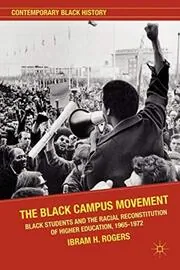
The Black Campus Movement
by Ibram X Kendi
2012
Kendi's first book examines Black student activism at colleges and universities from 1965 to 1972. It shows how organizing for Black Studies, representation, and institutional change reshaped higher education across the country.
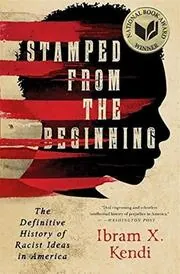
Stamped from the Beginning
by Ibram X Kendi
2016
Kendi traces the history of racist ideas in America through the lives of five major figures, from Cotton Mather to Angela Davis. It is sweeping and deeply researched, but always focused on how ideas get used to justify policy and inequality.
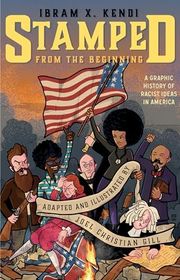
Stamped from the Beginning
by Ibram X Kendi
2016
This graphic adaptation, created with Joel Christian Gill, turns Kendi's history into a visual narrative. It follows the same long fight over racist and antiracist ideas, using images and motion to make the argument easier to track.
How to Be an Antiracist
by Ibram X Kendi
2019
Part memoir and part argument, this book follows Kendi as he rethinks race, power, and policy in his own life and in America. It pushes past passive innocence and asks what active antiracism actually demands.
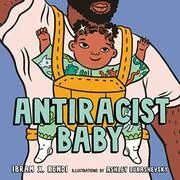
Antiracist Baby
by Ibram X Kendi
2020
This bright board book introduces the youngest readers to antiracism through nine simple steps. Rhyming text and bold images give families an easy way to start talking about fairness, identity, and standing up for others.
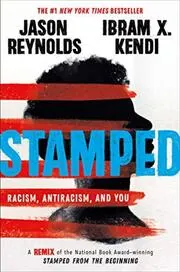
Stamped
by Ibram X Kendi
2020
Remixed with Jason Reynolds for younger readers, this fast-moving history tracks how racist ideas were built, spread, and challenged in America. It speaks directly to teens, connecting the past to the choices and language of the present.
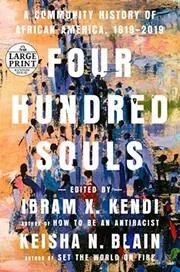
Four Hundred Souls
by Ibram X Kendi
2021
Coedited with Keisha N. Blain, this community history gathers eighty writers and ten poets to cover four hundred years of African American life. The result is broad in scope but personal on the page, moving through struggle, resistance, and everyday survival.
Stamped (For Kids)
by Ibram X Kendi
2021
This younger adaptation of Stamped guides readers through the history of racist ideas and antiracist action in America. Clear and direct, it helps kids connect the past to the choices they make right now.
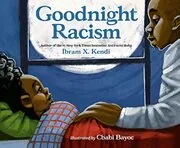
Goodnight Racism
by Ibram X Kendi
2022
In this bedtime picture book, the moon watches over children as they dream about a fairer world. Gentle, rhythmic, and hopeful, it gives young readers simple language for justice, equality, and imagining change.
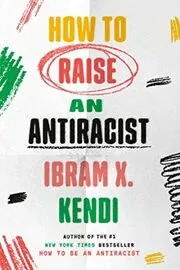
How to Raise an Antiracist
by Ibram X Kendi
2022
Kendi turns from theory to family life, asking how parents, caregivers, and teachers can talk to children about race honestly and early. Blending research with personal stories, he looks at how racism shapes childhood and what adults can do about it.
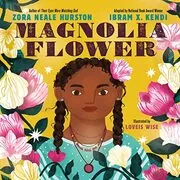
Magnolia Flower
by Ibram X Kendi
2022
Born to parents marked by slavery and the Trail of Tears, Magnolia Flower longs for freedom on her own terms. This folktale follows her brave choice between obedience and a life led by love and movement.
The (Young) Antiracist's Workbook
by Ibram X Kendi
2023
This interactive workbook turns big ideas about race, identity, and justice into questions young readers can wrestle with for themselves. Through prompts and activities, it helps teens reflect, speak up, and build a personal antiracist practice.
Malcolm Lives!
by Ibram X Kendi
2025
Written for young readers, this biography follows Malcolm X from a hard childhood through prison, faith, public leadership, and lasting influence. Kendi keeps the story direct and human, showing both the scale of Malcolm's life and the pressures around it.
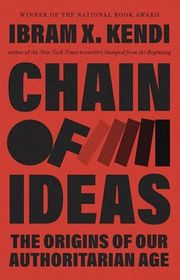
Chain of Ideas
by Ibram X Kendi
2026
Kendi looks at how great replacement theory moved from extremist thinking into mainstream politics. Using history to map that chain of ideas, he argues that fear, power, and racial myths keep feeding authoritarian movements.
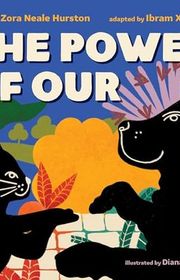
The Power of Our
by Ibram X Kendi
2026
A cat and a dog have just one piece of pineapple between them. Kendi retells Hurston’s folktale for young children, using their dilemma to explore how friendship and sharing can turn a disagreement into something better.
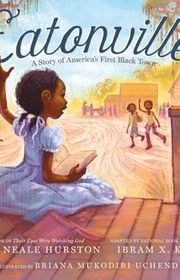
Eatonville
by Ibram X Kendi
2027
Adapting a chapter of Hurston’s autobiography for young readers, Kendi recounts how free Black settlers built Eatonville. Their work clearing land, creating homes, and securing their town becomes a story of community, independence, and the place that shaped Hurston.
Where to start with Ibram X Kendi
If you want the core adult argument: Stamped from the Beginning → How to Be an Antiracist
If you want a fast teen-friendly entry point: Stamped → Stamped (For Kids)
If you are reading with younger kids: Antiracist Baby → Goodnight Racism
If you want family and classroom guidance: How to Raise an Antiracist
If you want a wider historical sweep: Four Hundred Souls → Malcolm Lives!
Ibram X Kendi collections, short stories, and related book types
Non-Fiction
by Ibram X Kendi
2012Black Students and the Racial Reconstitution of Higher Education, 1965-1972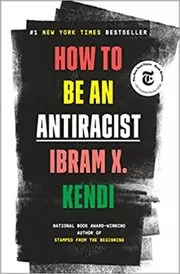
%20-%20Racism%2C%20Antiracism%2C%20and%20You.jpg)
%20Antiracist's%20Workbook%20-%20Nic%20Stone.jpg)

Graphic Novels
Children's Books
Standalone Ibram X Kendi books
Author bio
Ibram X. Kendi was born in New York City in 1982 and spent much of his childhood in Jamaica, Queens, before his family moved to Manassas, Virginia, when he was in high school. His parents were activist Christians shaped by Black liberation theology, and that background helps explain why his books care so much about the gap between belief and practice. Even when he is writing about large systems, he keeps coming back to how ideas land in ordinary lives.
As a teenager, he imagined a future in basketball or sports journalism. At Florida A&M University, he studied journalism, wrote and interned in sports departments, and learned how public stories get made. Over time, though, the questions that pulled at him stopped being about games and started being about history, race, and power.
That turn stuck.
Kendi added African American studies at Florida A&M, graduated in 2004, and later earned a PhD in African American studies from Temple University in 2010. He taught at several universities before taking on his current work at Howard University, where he serves as the Carter G. Woodson Endowed Chair in History and directs the Institute for Advanced Study. He has joked that he once dreamed of the NBA, and wound up winning a different NBA, the National Book Award.
His first book, The Black Campus Movement, studies Black student organizing in the late 1960s and early 1970s and the fight to reshape higher education. Then Stamped from the Beginning brought him to a much wider readership. That book follows the history of racist ideas in America through the lives of five major figures, and readers often respond to the way it makes a huge subject feel connected, argued through, and very current.
How to Be an Antiracist turns the lens inward as well as outward. It mixes memoir, history, and argument, and part of its appeal is that Kendi does not write like someone standing above the conversation. He writes through change, confusion, illness, mistakes, and learning. In Four Hundred Souls, which he coedited with Keisha N. Blain, he opens the frame wider again, gathering many voices to tell four centuries of African American history.
He has also spent real energy writing for younger readers. Stamped, created with Jason Reynolds, reshapes the history behind Stamped from the Beginning in a direct, fast-moving way for teens. His picture books and parenting books work from the same belief, that children can handle honesty, and that adults need better language for talking about race, fairness, and community.
Those ideas run through nearly everything he writes. His books return again and again to the link between ideas and policy, to the way language can hide power, and to the fact that history is not finished. He writes about institutions, but he also writes about homes, schools, bodies, fear, hope, and the stories people tell themselves about why inequality exists.
Off the page, he writes essays, speaks widely, and still shares a few small details that make him feel human rather than remote. He has written about loving basketball, lifting weights, and spending time with family and friends. In 2013, he and his wife, Dr. Sadiqa Kendi, chose the surname Kendi together when they married.
He still sounds like a teacher who wants the room awake.









Edited by
Software engineer whose passion for tracking book recommendations from podcasts inspired the creation of MRB.
Lead investor at 3one4 Capital whose startup expertise and love for books helped shape MRB and its growth.
Comments
Did we miss something? Have feedback?
Help us improve this page by sharing your thoughts