
Hammer and The Cross Books in Order
Part ofHarry Harrison Books in OrderSee the Hammer and The Cross trilogy by Harry Harrison in order, with summaries, Viking-era background, and guidance on reading the series.
Last updated:
As an Amazon Associate, we earn from qualifying purchases (at no extra cost to you).
Hammer and The Cross books in publication order
3 books
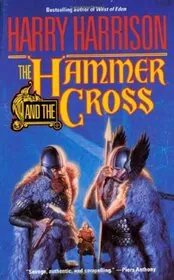
The Hammer and the Cross
by Harry Harrison
1993
In an alternate ninth century, Shef, the son of a Viking and an English noblewoman, is swept into war and belief-driven politics. It is a tough, fast historical what-if with ships, raids, and sharp ideas.
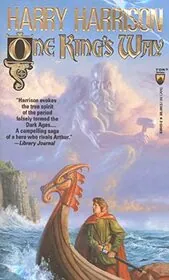
One King's Way
by Harry Harrison
1994
Shef's rise continues as war, religion, and statecraft pull him deeper into the fate of England and the Norse world. The middle volume broadens the stakes without losing the gritty adventure feel.
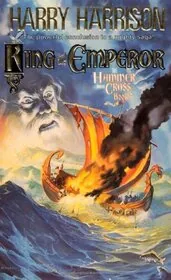
King and Emperor
by Harry Harrison
1996
The final Hammer and the Cross novel drives Shef into the largest struggles of the trilogy. Kingdoms, belief, and empire all collide as personal ambition turns into a fight over the shape of Europe.
Hammer and The Cross books in chronological order
Series background & context
The Hammer and the Cross books move Harry Harrison into Viking-age alternate history, and they do it with a lot of energy. Written with John Holm, the pseudonym used by Tom Shippey, the series starts in ninth-century England and asks what might happen if the Norse world organized itself more effectively against the rise of Christian power.
The central figure is Shef, a young man of mixed background, the son of a Viking and an English noblewoman. He begins close to the bottom, which makes him a good guide through a violent, divided world. Shef is not just a fighter. He is an observer, an experimenter, and a man who keeps noticing that old habits are not always the best ones. That matters, because the books are as interested in ideas and organization as they are in battle.
Religion is everywhere in this trilogy, not as background decoration but as a live political force. The clash between pagan Norse belief, Christian institutions, and competing visions of rule drives much of the story. At the same time, the books enjoy practical detail. You get ships, weapons, tactics, engineering, trade, and the slow realization that clever systems can matter as much as brute courage.
That blend is what makes the series work. It has the sweep of epic historical adventure, but it also keeps asking how power actually functions. Who feeds armies. Who moves information. Who convinces people that a different future is possible.
The tone is more grounded than Harrison's comic work, though the pacing is still quick. Readers who like Vikings, contested kingdoms, and alternative paths through early medieval Europe will find a lot to dig into here. Think of it as a big historical what-if with mud on its boots and politics at its core.








Edited by
Software engineer whose passion for tracking book recommendations from podcasts inspired the creation of MRB.
Lead investor at 3one4 Capital whose startup expertise and love for books helped shape MRB and its growth.
Comments
Did we miss something? Have feedback?
Help us improve this page by sharing your thoughts