
Guy Vanderhaeghe Books in Order
Explore Guy Vanderhaeghe books in order, with short summaries, notes on the Frontier novels and story collections, and simple advice on where to start.
Last updated:
As an Amazon Associate, we earn from qualifying purchases (at no extra cost to you).
Guy Vanderhaeghe books in publication order
12 books

Man Descending
by Guy Vanderhaeghe
1982
These stories follow men and boys who are smart, wounded, funny, and often stuck in lives they barely understand. The title character, Ed, is especially memorable, a drifting antihero whose failures are painful and darkly comic.

The Trouble With Heroes and Other Stories
by Guy Vanderhaeghe
1983
This early collection looks at prairie men measuring themselves against old ideas of toughness, courage, and success. Vanderhaeghe keeps the scale intimate, letting ordinary disappointments and private bravado do the real damage.
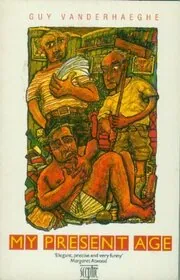
My Present Age
by Guy Vanderhaeghe
1984
Ed is broke, bitter, and abandoned, and he roams the city trying to piece together what went wrong. Darkly funny and painfully sharp, the novel turns his search for his estranged wife into a wrecked man's self-reckoning.
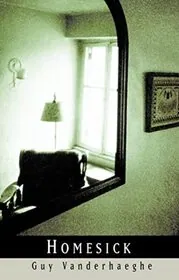
Homesick
by Guy Vanderhaeghe
1989
In the summer of 1959, Vera returns to her Saskatchewan hometown with her twelve-year-old son after years away. The uneasy reunion with her father forces old silences, family wounds, and buried truths into the open.

I Had A Job I Liked. Once
by Guy Vanderhaeghe
1992
At a Saskatchewan RCMP detachment, Sergeant Finestad investigates a rape accusation made by the crown attorney's daughter against Les Grant. The play becomes a tense test of law, class pressure, and what justice really asks of decent people.

Things As They Are?
by Guy Vanderhaeghe
1992
Set largely on the prairies, these stories watch boys and men collide with family rules, shame, and the stories they tell about themselves. The tone shifts from slyly funny to quietly brutal without losing its human touch.

Dancock's Dance
by Guy Vanderhaeghe
1996
Lieutenant John Dancock, shattered by the First World War, is confined to an asylum and haunted by the man he once tortured. This spare, intense play follows his fight with guilt, authority, and the thin hope of redemption.
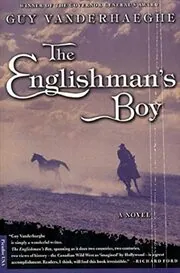
The Englishman's Boy
by Guy Vanderhaeghe
1996
In 1920s Hollywood, screenwriter Harry Vincent is sent to coax an old cowboy's story onto the screen. What he uncovers reaches back to the Cypress Hills Massacre and to the way the West gets remade into legend.
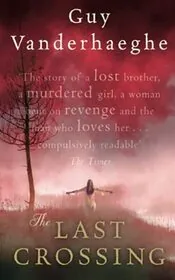
The Last Crossing
by Guy Vanderhaeghe
2002
English brothers Charles and Addington Gaunt cross the North American frontier to find their missing sibling, Simon. Their search turns into a hard, violent journey through competing loyalties, imperial arrogance, and a West that refuses easy myths.
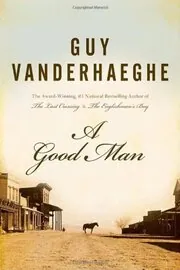
A Good Man
by Guy Vanderhaeghe
2011
After leaving Canada to outrun a buried secret, Wesley Case heads for Montana hoping to buy a ranch and start over. Instead he is drawn into border violence, Sioux politics, and a dangerous love triangle centered on the strong-willed Ada Tarr.

Daddy Lenin and Other Stories
by Guy Vanderhaeghe
2015
In these later stories, aging men look back at bad choices, bruised loyalties, and the roles they once thought they could play. The title story, about a former student and his old mentor, gives the collection its sharpest edge.
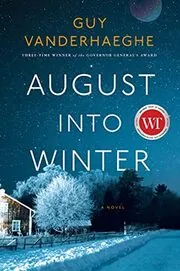
August Into Winter
by Guy Vanderhaeghe
2021
In 1939 Saskatchewan, volatile Ernie Sickert commits a shocking act and runs into the storm with twelve-year-old Loretta Pipe. The chase that follows pulls in war-scarred veterans, a new schoolteacher, and a prairie community already living under the shadow of war.
Where to start with Guy Vanderhaeghe
For the frontier novels: The Englishman's Boy → The Last Crossing → A Good Man
For the short story route: Man Descending → The Trouble With Heroes and Other Stories → Things As They Are? → Daddy Lenin and Other Stories
For prairie family drama: Homesick → August Into Winter
For a darkly funny modern antihero: Man Descending → My Present Age
Guy Vanderhaeghe sub-series and character series
Frontier (Guy Vanderhaeghe) books in order
Explore this seriesFrontier (Guy Vanderhaeghe) books in chronological order
Guy Vanderhaeghe collections, short stories, and related book types
Chapbooks
Plays
Collections
Standalone Guy Vanderhaeghe books
Author bio
Guy Vanderhaeghe was born in Esterhazy, Saskatchewan, in 1951 and grew up in a mining town shaped by prairie weather, hard work, and strong oral storytelling. That mix matters in his fiction. Even when his books range from Hollywood backlots to the nineteenth-century borderlands, they keep returning to western Canada, to class, to memory, and to the ways ordinary people size each other up.
He started making up stories when he was about six.
As he has described it, he wrote beside his grandmother while she worked as a seamstress, and he read whatever he could get, including comic books, because his town had little access to children's books. He has also said he came from a family of storytellers. His father worked rodeos and farmed, and some of the grit in his western fiction clearly comes out of that world.
University was not a sure thing. He has said he nearly missed the marks he needed, but once he got to the University of Saskatchewan he found the world he wanted, one where ideas mattered. He studied history there, later earned a teaching degree from the University of Regina, and worked as an archivist, editor, researcher, and high school teacher before writing full time.
Short stories came first.
His first public break came in 1976, when he won a Saskatchewan short story competition. Then Man Descending arrived in 1982 and made it clear what kind of writer he was: funny, sharp, unsentimental, and very alert to the ways men talk themselves into trouble. The book won the Governor General's Award and later the Geoffrey Faber Prize. Its antihero Ed carried over into My Present Age, a darkly comic novel about a man trying to rebuild a life he has mostly sabotaged himself.
He followed that with Homesick, a 1959 prairie family novel that brings a daughter back to her Saskatchewan home after years away. Readers who like Vanderhaeghe often point to the same strengths again and again: the dry humour, the exact feel of place, and the fact that even his difficult characters are never treated like jokes.
Then came the books many readers start with: The Englishman's Boy, The Last Crossing, and A Good Man. These frontier novels are set in the nineteenth-century Canadian and American West, and they are less interested in cowboy glamour than in power, violence, mythmaking, and the border itself. He brings together settlers, soldiers, scouts, outcasts, and officials, then asks what stories survive when history gets cleaned up and turned into legend.
He never stopped returning to shorter forms, though. The Trouble With Heroes and Other Stories and Things As They Are? keep working similar ground, especially masculinity, shame, bravado, and small-town pressure. Much later, Daddy Lenin and Other Stories brought him back to the short story with a collection about aging, memory, failure, and the strange afterlife of old loyalties. It won him a third Governor General's Award in 2015.
His 2021 novel August Into Winter moves to 1939 and back to Saskatchewan, where a violent crime sets a manhunt in motion across flooded prairie country. It has suspense, but it also has what runs through almost all of his work: damaged people trying to live with the stories they have inherited and the ones they keep telling themselves.
Vanderhaeghe has long lived in Saskatoon and has taught creative writing at St. Thomas More College at the University of Saskatchewan. To many readers, he is not just a novelist and story writer, but also a teacher who takes craft seriously. That fits the work. His books feel deeply made, but never fussy, and they stay close to people who have to endure first and explain themselves later.



Edited by
Software engineer whose passion for tracking book recommendations from podcasts inspired the creation of MRB.
Lead investor at 3one4 Capital whose startup expertise and love for books helped shape MRB and its growth.
Comments
Did we miss something? Have feedback?
Help us improve this page by sharing your thoughts