
Frontier (Guy Vanderhaeghe) Books in Order
Part ofGuy Vanderhaeghe Books in OrderSee the Frontier books by Guy Vanderhaeghe in order, with brief summaries, series background, and a quick guide to the best place to start reading.
Last updated:
As an Amazon Associate, we earn from qualifying purchases (at no extra cost to you).
Frontier (Guy Vanderhaeghe) books in publication order
3 books
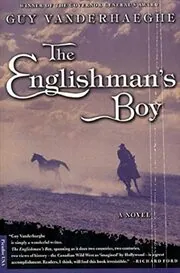
The Englishman's Boy
by Guy Vanderhaeghe
1996
In 1920s Hollywood, screenwriter Harry Vincent is sent to coax an old cowboy's story onto the screen. What he uncovers reaches back to the Cypress Hills Massacre and to the way the West gets remade into legend.
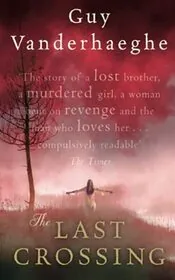
The Last Crossing
by Guy Vanderhaeghe
2002
English brothers Charles and Addington Gaunt cross the North American frontier to find their missing sibling, Simon. Their search turns into a hard, violent journey through competing loyalties, imperial arrogance, and a West that refuses easy myths.
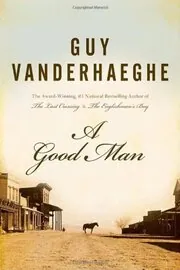
A Good Man
by Guy Vanderhaeghe
2011
After leaving Canada to outrun a buried secret, Wesley Case heads for Montana hoping to buy a ranch and start over. Instead he is drawn into border violence, Sioux politics, and a dangerous love triangle centered on the strong-willed Ada Tarr.
Frontier (Guy Vanderhaeghe) books in chronological order
Series background & context
Guy Vanderhaeghe's Frontier books are best thought of as a loose historical trilogy, not a step-by-step saga with one continuing cast. The Englishman's Boy, The Last Crossing, and A Good Man share a landscape and a set of concerns more than a single plotline. You can read each novel on its own, but publication order is the easiest way to watch his view of the West deepen from book to book.
This is frontier fiction, but not the tidy movie version. The books move through the Canadian and American West in the late nineteenth century, where borders are unstable, law is improvised, and every camp, trail, and river crossing feels politically charged. Soldiers, scouts, ranchers, wolfers, officials, and drifters all meet on ground that has not stopped being contested.
The Englishman's Boy is the most openly concerned with mythmaking. Part of it takes place in 1920s Hollywood, where screenwriter Harry Vincent is sent to record the memories of Shorty McAdoo, an old cowboy with a story tied to the Cypress Hills Massacre. As the past surfaces, the novel keeps asking who gets to tell western history, and what gets cleaned up when violence is turned into entertainment.
Memory is never neutral here.
The Last Crossing widens the canvas. Charles and Addington Gaunt, brothers from England, cross into North America to search for their missing brother Simon. What begins as a family mission becomes a rough, dangerous journey through Montana and the Canadian West, with a traveling party full of clashing motives, old injuries, and divided loyalties. The novel has the shape of a quest story, but it also shows how badly Old World assumptions fit this landscape.
A Good Man narrows its focus again, this time around Wesley Case, a former soldier trying to leave his past behind and make a life near the border. His hopes for a ranch and some measure of peace are tangled up with military tensions, the aftermath of Little Bighorn, and a love story involving the widowed Ada Tarr. It is probably the most intimate of the three books, but it still carries the trilogy's larger questions about justice, power, and what counts as decent behavior in a violent place.
These are westerns, but they do not worship the western.
What links the books most strongly is tone. Vanderhaeghe writes with the sweep of an epic, but he stays close to character, especially men under pressure, women who refuse easy roles, and people caught between law and desire. If you like historical fiction with big landscapes, moral friction, and stand-alone stories that talk to one another, this is a rewarding place to start.


Edited by
Software engineer whose passion for tracking book recommendations from podcasts inspired the creation of MRB.
Lead investor at 3one4 Capital whose startup expertise and love for books helped shape MRB and its growth.
Comments
Did we miss something? Have feedback?
Help us improve this page by sharing your thoughts