
Gregory David Roberts Books in Order
Browse Gregory David Roberts books in order, with quick summaries, reading guides, related series, and clear advice on where to start reading.
Last updated:
As an Amazon Associate, we earn from qualifying purchases (at no extra cost to you).
Gregory David Roberts books in publication order
4 books
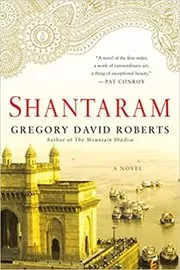
Shantaram
by Gregory David Roberts
2003
Escaped convict Lin reaches Bombay with a false passport and no real plan. As he falls in with slum life, the mafia, and the elusive Karla, his search for freedom becomes a larger hunt for love, loyalty, and redemption.
Recommended by
5 people Richard Branson recommended this book
Richard Branson
Richard Branson recommended this book on his "70 must-read books" blog post.
Richard Branson's recommendation of this book  Josh Waitzkin recommended this book
Josh Waitzkin
Josh Waitzkin recommended this book in the "Tools of Titans" book.
Josh Waitzkin's recommendation of this book  Kevin Kelly recommended this book
Kevin Kelly
"You get an incredibly vivid, immersive, deep, and in some ways uplifting view of India and the underworld in India, into that part of Asia." - Kevin Kelly
Kevin Kelly's recommendation of this book  Whitney Wolfe Herd recommended this book
Whitney Wolfe Herd
"I don’t know what it is about [this book]. I can’t summarize it in one sentence. But it just gives you a peek into the soul of humanity. [It's a book] that I’ve gifted frequently, and I love." - Whitney Wolfe Herd
Whitney Wolfe Herd's recommendation of this book  Phil Jackson recommended this book
Phil Jackson
"Great mysterious read of another culture." - Phil Jackson
Phil Jackson's recommendation of this book
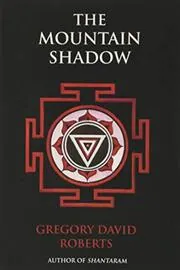
The Mountain Shadow
by Gregory David Roberts
2015
Two years after the events of Shantaram, Lin is still in Bombay, trying to stay steady in a city ruled by new mafia politics and old desires. A final mission, shifting loyalties, and Karla pull him back toward danger.
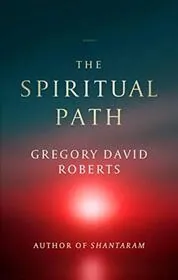
The Spiritual Path
by Gregory David Roberts
2021
Roberts turns from fiction to a personal guide to faith, doubt, and devotion. Drawing on sacred traditions and the teaching of his spiritual mentor, he lays out the steps that shaped his own search for meaning.

Heart of Iron
by Gregory David Roberts
2024
Dwarven warrior Balcus Ironheart returns to Myrannor and finds a kingdom knotted up in intrigue, betrayal, and a growing threat beneath the mountains. To save his people, he must lead a desperate mission into the dark places no dwarf has ever conquered.
Where to start with Gregory David Roberts
If you only read one book: Shantaram
If you want the full Lin story: Shantaram → The Mountain Shadow
If you want his spiritual side more directly: The Spiritual Path
Gregory David Roberts sub-series and character series
Standalone Gregory David Roberts books
Author bio
Gregory David Roberts was born in Melbourne, Australia, in 1952 and grew up there. Long before readers knew him as the author of Shantaram, he had already lived a life that would sound invented if it were handed in as fiction. That mix of hard experience, restless searching, and self-examination sits at the center of almost everything he writes.
After the breakdown of his marriage and the loss of custody of his daughter, Roberts became addicted to heroin. To support that addiction, he turned to armed robbery and was eventually sentenced to a long prison term in Australia. It is the kind of backstory that can swallow a person whole, and for a while it nearly did.
Then came the escape.
In 1980 he broke out of Pentridge Prison in broad daylight and spent years as a fugitive, much of that time in Bombay, now Mumbai. There he moved through worlds that most novels would treat separately, slum life, street medicine, counterfeit documents, crime, friendship, love, and spiritual seeking. Those years became the raw material for his later fiction, though he has also made clear that he reshaped real events into novels rather than straight memoir.
Writing became a way forward. While imprisoned, and later after his recapture, he kept working on stories under punishing constraints, at times memorizing pages when he had no pen or paper. By the time Shantaram finally reached readers in 2003, it had already survived a long and difficult journey.
Shantaram is still the book most people start with, and it makes sense. Its narrator, Lin, is an escaped Australian convict who disappears into Bombay and gets pulled into the city's slums, underworld, and emotional life. Readers tend to like the sheer scale of it, but also the way Roberts makes room for tenderness, moral confusion, comic street detail, and big questions about love, guilt, loyalty, and second chances.
He returned to Lin's story in The Mountain Shadow, a sequel set in a changed Bombay where old losses, mafia politics, and unfinished relationships still press in on the hero. Not everything he writes is fiction, though. In The Spiritual Path, Roberts turns more directly to belief, reason, devotion, and the search for inner change. Readers who enjoy the reflective passages in the novels usually find that book gives those same concerns a clearer, more personal shape.
Mumbai is the great setting of his work.
Again and again, Roberts writes about outsiders, mentors, fugitives, wounded people, and makeshift families. In recent years he has also worked in music under GDR, and Shantaram reached a new audience through its television adaptation. He has spoken publicly about spirituality and community work too, which fits the larger pattern of his career. However wild the plot turns can be, the line running through his work is steady: survival matters, love matters, and redemption is never simple, but it is worth chasing.












Edited by
Software engineer whose passion for tracking book recommendations from podcasts inspired the creation of MRB.
Lead investor at 3one4 Capital whose startup expertise and love for books helped shape MRB and its growth.
Comments
Did we miss something? Have feedback?
Help us improve this page by sharing your thoughts