
Greg Bear Books in Order
Explore Greg Bear books in order, from hard science fiction to fantasy and tie-ins, with short summaries, related series, and tips on where to start.
Last updated:
As an Amazon Associate, we earn from qualifying purchases (at no extra cost to you).
Greg Bear books in publication order
52 books
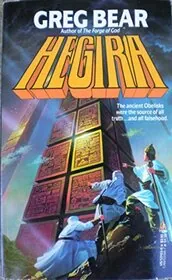
Hegira
by Greg Bear
1953
On a planet crowded with tribes, cities, and giant obelisks that record contradictory histories, young Bar-Woten goes searching for the truth about his world. Bear's first novel is a quest story wrapped around a cosmic riddle.
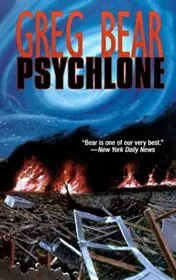
Psychlone
by Greg Bear
1979
Larry Fowler tracks a violent, freezing phenomenon across New Mexico and into the buried horrors behind it. Part ghost story and part science fiction nightmare, it is one of Bear's rougher, more unsettling early novels.
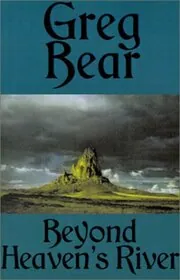
Beyond Heaven's River
by Greg Bear
1980
A Japanese soldier is abducted during World War II and stranded on a distant world, where love and empire push him toward the truth of his captivity. It is early Bear, romantic, strange, and already thinking on a large scale.
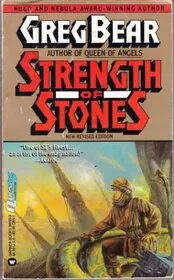
Strength of Stones
by Greg Bear
1981
In a distant theocratic future, living cities have expelled human beings and begun to decay without them. One woman allowed inside a city may be the only person who can decide whether that broken relationship can be repaired.

Lost Souls
by Greg Bear
1982
A scientist in New Mexico investigates a bizarre force that can freeze animals instantly and destroy whole towns. This is the same eerie, hybrid science fiction and ghost-story material also published as Psychlone.

The Venging
by Greg Bear
1983
This collection expands on The Wind from a Burning Woman, adding more stories to Bear's early mix of hard science fiction, cosmic menace, and speculative weirdness. It is a good look at ideas that later grew into larger books.

The Wind from a Burning Woman
by Greg Bear
1983
This early collection gathers stories about future worlds, strange minds, and human lives pushed to an edge. It includes the title story along with pieces that already show Bear's taste for scale, unease, and conceptual surprise.

Corona
by Greg Bear
1984
The Enterprise answers a rescue call and runs into Corona, a sentient protostellar force that has taken control of Vulcan scientists. Bear gives the Original Series a classic high-concept crisis with Kirk, Spock, and the whole ship under pressure.
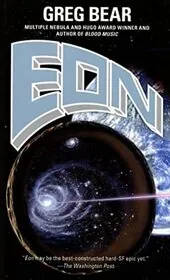
Eon
by Greg Bear
1984
On the brink of nuclear war, humanity discovers a vast stone in Earth orbit, hollow inside and filled with the ruins of a future human civilization. What begins as first contact becomes a story about history, catastrophe, and the multiverse.

Infinity Concerto
by Greg Bear
1984
Aspiring poet Michael Perrin becomes obsessed with a mysterious composer whose impossible music opens a path into Sidhedark. Bear turns artistic longing into a dangerous portal fantasy where beauty and terror arrive together.
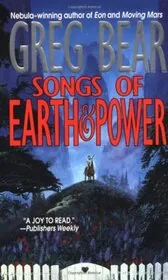
Songs of Earth and Power
by Greg Bear
1984
This combined edition follows Michael Perrin from modern California into Sidhedark, where music and poetry carry real magical force. It brings together Bear's portal fantasy duology as one long struggle between Earth and faerie.
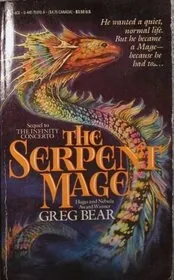
The Serpent Mage
by Greg Bear
1984
After years trapped in Sidhedark, Michael Perrin returns home only to find the other world bleeding into Los Angeles and beyond. The sequel turns the series outward, making the magical rupture Earth's problem too.
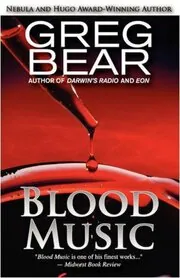
Blood Music
by Greg Bear
1985
To save his experiments, scientist Vergil Ulam injects himself with engineered living cells and sets off a transformation that spreads far beyond his own body. It is part biotech nightmare, part mind-bending speculation about what humanity becomes next.
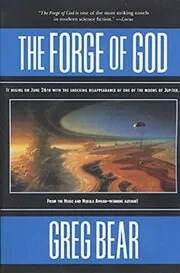
The Forge of God
by Greg Bear
1987
A new cinder cone in Death Valley and other impossible geological events signal that Earth is no longer in control of its own fate. Bear builds the dread slowly, then lets the scale of the disaster hit all at once.

Bear's Fantasies
by Greg Bear
1988
A collection devoted to Bear's fantasy work, full of mythic moods, uncanny roads, and stories where wonder usually comes with some bite. It is a handy reminder that he was never only a science fiction writer.

Early Harvest
by Greg Bear
1988
An early gathering of revised stories, essays, journalism, and pieces from Bear's formative years. It is less a single unified book than a snapshot of the writer he was becoming.
Eternity
by Greg Bear
1988
Decades after Eon, the Way has been severed and Earth has changed, but factions still want the multiverse reopened. Rhita Vaskayza and a resurrected Konrad Korzenowski are pulled into another crisis with even bigger consequences.

Hardfought
by Greg Bear
1988
In a far-future war against the alien Senexi, a young girl discovers that the conflict may hide the possibility of peace and a new stage of human change. It is compact, fierce, and one of Bear's most admired shorter works.

Sleepside
by Greg Bear
1988
A fantasy collection bringing together stories such as Webster, The White Horse Child, Sleepside Story, and Petra. It shows Bear's quieter side, where roads, dreams, and old magic matter more than spaceships.

Tangents
by Greg Bear
1989
This short-story collection includes the award-winning title piece and other tales of mathematics, alternate histories, and impossible turns in reality. It is a strong entry point to Bear's shorter speculative fiction.
Heads
by Greg Bear
1990
On and around the Moon, a search for absolute zero and a baffling cache of 410 frozen heads push a family into chaos. It is one of Bear's strangest shorter novels, full of sharp ideas about memory, identity, and quantum possibility.
Queen of Angels
by Greg Bear
1990
In Los Angeles in 2047, investigator Mary Choy and therapist Martin Burke confront a rare mass murder in a society that believes it has mostly solved crime. Bear mixes police work, mind science, AI, and distant cosmic echoes.
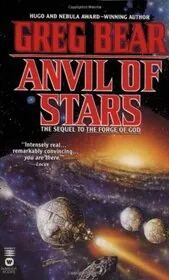
Anvil of Stars
by Greg Bear
1992
A group of young survivors from ruined Earth are sent into deep space on a mission of revenge against the species that destroyed their home. The sequel asks whether justice can survive when grief is handed planet-killing power.

Sisters
by Greg Bear
1992
A short, idea-driven piece centered on identity, kinship, and the pressures placed on women shaped by future systems. It later became one of the key stories collected in Women in Deep Time.
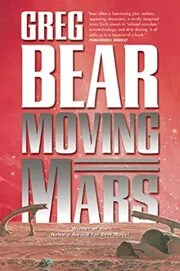
Moving Mars
by Greg Bear
1993
Casseia Majumdar grows up on a Mars that wants independence from Earth's corporate grip. What starts as a political coming-of-age story becomes a sweeping novel about revolution, love, and technology radical enough to move worlds.
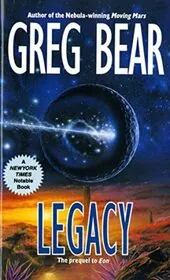
Legacy
by Greg Bear
1994
Sent through the Way to the alien world of Lamarckia, Olmy Ap Sennon must investigate an illegal human colony and the damage it may be causing. The prequel adds intimacy and moral weight to the giant architecture of the Eon universe.

Slant
by Greg Bear
1997
A data heist in separatist Green Idaho collides with a mystery involving virtual afterlives and a new artificial intelligence contacting Jill, an AI unlike any before her. Bear uses the shared future of Queen of Angels to ask who gets to count as alive.

Country Of The Mind
by Greg Bear
1998
In a near-future society shaped by nanotech and deep psychotherapy, a shocking mass murder forces investigators to explore both the killer's mind and the limits of human identity. It is a cerebral thriller with one foot in noir and one in speculative science.
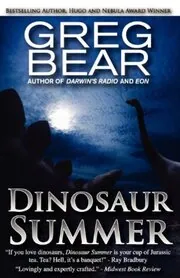
Dinosaur Summer
by Greg Bear
1998
In an alternate 1947 where Conan Doyle's Lost World was real, a group sets out to return the last circus dinosaurs to their remote South American home. What follows is an affectionate, dangerous adventure full of old-school pulp energy.
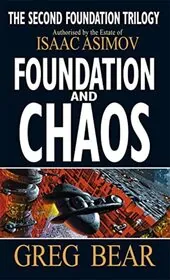
Foundation and Chaos
by Greg Bear
1998
Hari Seldon struggles to shape psychohistory while Daneel Olivaw and a dangerously altered robot confront threats inside the crumbling Empire. Bear's Foundation novel leans into politics, long-range planning, and machine uncertainty.
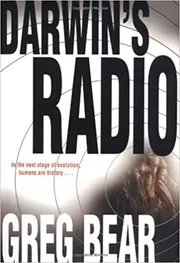
Darwin's Radio
by Greg Bear
1999
When pregnant women begin suffering a mysterious syndrome, scientists Kaye Lang and Christopher Dicken uncover evidence that something ancient in human DNA has awakened. Bear turns a biological mystery into a thriller about the next step in evolution.
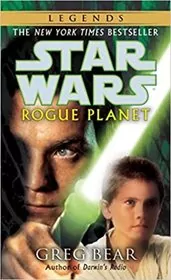
Rogue Planet
by Greg Bear
2000
Obi-Wan Kenobi and twelve-year-old Anakin Skywalker travel to the mysterious world of Zonama Sekot, where living starships and hidden agendas test both their mission and their bond. It is a prequel-era Star Wars adventure with an eerie, unsettled edge.
Dead Lines
by Greg Bear
2001
A washed-up screenwriter helps promote a communication device with almost limitless reach, then discovers it may be letting the dead call back. Bear described it as a high-tech ghost story, and that is exactly the mood it hits.
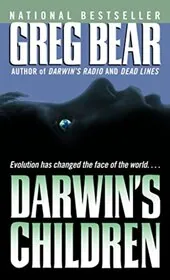
Darwin's Children
by Greg Bear
2002
Years after the SHEVA outbreak, the new children have reached adolescence and become targets of fear, quarantine, and political violence. The sequel makes the scientific crisis personal by following Stella and the adults trying to protect her.

The Collected Stories of Greg Bear
by Greg Bear
2002
A broad career-spanning collection that reaches from Bear's earliest published work to major award winners like Blood Music and Tangents. If you want the range of his short fiction in one place, this is the obvious stop.

Vitals
by Greg Bear
2002
Scientist Hal Cousins is chasing the secret of immortality when murders, family trauma, and an older conspiracy close in around him. It blends biotech thriller, ghostly unease, and Cold War leftovers into one sharp, paranoid ride.

Women in Deep Time
by Greg Bear
2003
Three stories centered on women in extreme futures, including Sisters, Scattershot, and Hardfought. The collection is small, but it cuts across war, identity, and deep time with real force.
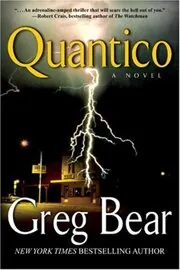
Quantico
by Greg Bear
2007
Three new FBI agents and veteran investigator Rebecca Rose face a near-future wave of terror attacks, bioweapon fears, and domestic extremism. Bear turns the post-9/11 security state into a tense procedural thriller.
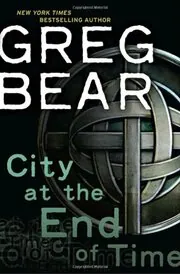
City at the End of Time
by Greg Bear
2008
Three young people in the present are psychically tied to a doomed far-future city and hunted across layers of time by forces they barely understand. It is sprawling, strange science fiction about fate, memory, and the end of everything.
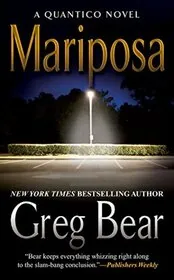
Mariposa
by Greg Bear
2009
In a near-future America on the edge, three FBI agents try to stop a private security empire from gutting the federal system. The real nightmare is Mariposa, a treatment program that may be turning damaged people into brilliant sociopaths.

Hull Zero Three
by Greg Bear
2010
An amnesiac wakes naked and freezing aboard a crippled colony ship full of monsters, damaged systems, and equally confused survivors. To stay alive, he has to work out who he is and what happened to Hull 03.
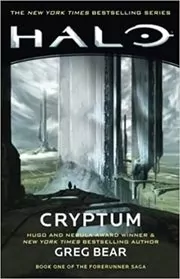
Cryptum
by Greg Bear
2011
Set a hundred millennia before the main Halo era, young Forerunner Bornstellar awakens the long-sleeping Didact and becomes his student. Their travels through a powerful but troubled civilization lead toward a showdown with the Didact’s rival, the Master Builder.
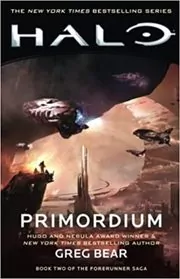
Primordium
by Greg Bear
2011
After the apparent collapse of the Forerunner empire, humans Chakas and Riser are stranded on an inverted world and used as pawns in an ancient struggle. With unlikely companions, Chakas crosses a damaged Halo ring in search of home, answers, and escape.

Dangerous Games
by Greg Bear
2012
This Jurassic Park graphic novel turns a human hunt into a dinosaur-fueled survival story. It plays like a lean franchise side adventure, with predators, bad decisions, and the usual lesson that controlled danger never stays controlled for long.
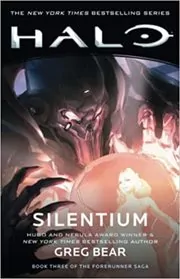
Silentium
by Greg Bear
2013
As the Forerunner empire collapses, the Flood spreads with devastating force and internal division cripples resistance. The Ur-Didact and the Librarian uncover terrible connections among the Precursors, humanity, and the parasite, then face incompatible choices for saving the galaxy.

War Dogs
by Greg Bear
2014
Alien benefactors called the Gurus recruit human soldiers to fight the Antags on Mars, but Sergeant Michael Venn soon realizes the mission is not what he was told. Fast military action meets an older, stranger mystery buried in the red planet.
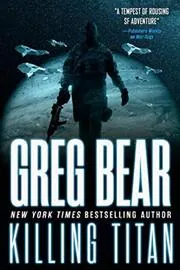
Killing Titan
by Greg Bear
2015
After barely surviving Mars, Master Sergeant Michael Venn is pulled back into the war and sent toward Titan, where deeper secrets about the Drifters and the Gurus wait. It widens the trilogy from battlefield survival into solar-system conspiracy.

Beyond the Farthest Suns
by Greg Bear
2016
The third volume of Bear's complete short fiction reaches from The Way of All Ghosts to Hardfought and The Venging. It is a strong late-career map of the big ideas and emotional stakes that drove his shorter work.

Far Thoughts and Pale Gods
by Greg Bear
2016
This second short-fiction volume includes stories such as Heads, The Wind from a Burning Woman, Scattershot, and Petra. It is a compact showcase for Bear's range, from alien thinking to multiverse strangeness.

Just Over the Horizon
by Greg Bear
2016
The first volume of Bear's complete short fiction gathers early science fiction, fantasy, horror, and even an unproduced television script. It is a varied, energetic look at the beginnings of his short-form imagination.
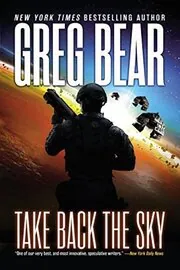
Take Back the Sky
by Greg Bear
2016
Trapped beneath Titan's frozen crust, Michael Venn and his comrades finally begin to grasp what the Gurus and Antagonists are really fighting over. The trilogy closes by pushing the war beyond Pluto and into the truth behind the whole conflict.
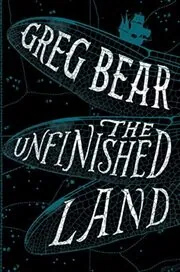
The Unfinished Land
by Greg Bear
2019
In Elizabethan England, young Reynard is swept from village life into war at sea, a lost galleon, and a strange northern land where gods still interfere. Bear turns a coming-of-age journey into a myth-soaked historical fantasy.
Where to start with Greg Bear
If you want classic big-idea science fiction: Eon → Eternity
If you like biotech and evolutionary suspense: Blood Music → Darwin's Radio → Darwin's Children
If you want cosmic disaster and aftermath: The Forge of God → Anvil of Stars
If you want fantasy instead of hard SF: The Infinity Concerto → The Serpent Mage → Songs of Earth and Power
Greg Bear sub-series and character series
- Ares Rising books in order
- Darwin's Radio books in order
- Eon (Greg Bear) books in order
- Forge of God books in order
- Halo: The Forerunner Saga books in order
- Jurassic Park Graphic Novels books in order
- Quantum Logic books in order
- Queen of Angels books in order
- Second Foundation Trilogy books in order
- Songs of Earth and Power books in order
- Star Trek: TOS books in order
- Star Wars Legends books in order
Eon (Greg Bear) books in order
Explore this seriesHalo: The Forerunner Saga books in order
Explore this seriesJurassic Park Graphic Novels books in order
Explore this seriesJurassic Park Graphic Novels books in chronological order
Quantum Logic books in order
Explore this seriesSecond Foundation Trilogy books in order
Explore this seriesSecond Foundation Trilogy books in chronological order
Songs of Earth and Power books in order
Explore this seriesSongs of Earth and Power books in chronological order
Greg Bear collections, short stories, and related book types
Short Stories/Novellas
Short Story Collections
Standalone Greg Bear books
Author bio
Greg Bear was born in San Diego in 1951, but he did not grow up in one place for long. His father was a Navy meteorologist, so Bear spent parts of his childhood in Japan, the Philippines, Alaska, Texas, and Rhode Island before settling back in Southern California. That sense of movement, of big systems and bigger horizons, feels very close to the fiction he would later write.
He started early.
While living in Alaska, he finished his first short story at about ten years old. By fifteen he had sold one, and he was already drawing, painting, and showing up anywhere science fiction and comics were being discussed. He was also one of the young fans who helped get the first San Diego Comic-Con off the ground, which says a lot about how completely he was part of that world from the start.
At San Diego State University he studied English and worked as a teaching assistant for Elizabeth Chater's science fiction writing course. He learned in the classroom, but he also learned by making things, stories, art, covers, convention culture, all of it. His first novel, Hegira, appeared in 1979, and over the next decade he became one of the writers readers turned to when they wanted science fiction that went very big without losing its nerve.
A lot of people meet him through Blood Music, Eon, or The Forge of God. Those books show different sides of him. Blood Music turns biotechnology into something intimate and terrifying. Eon begins with a mysterious asteroid in Earth orbit and keeps widening until it becomes a story about history, war, and whole new kinds of space. The Forge of God starts with odd geological events and ends on a scale that still feels startling.
He liked asking what happens when human beings discover that they are not as central, or as stable, as they thought.
That question runs through Queen of Angels, with its nanotech future and mind science, and through Darwin's Radio, where evolution itself becomes the crisis. Even when Bear wrote military science fiction or franchise novels, the machinery was never there just to look clever. The science mattered, but so did guilt, identity, politics, and the way ordinary people react when the rules of the world suddenly change.
He could shift modes without much fuss. There is the eerie fantasy of The Infinity Concerto and The Serpent Mage. There is the melancholy sweep of Moving Mars. There are tie-ins like Rogue Planet, Foundation and Chaos, and the Halo Forerunner books, where he brought his love of scale and ancient history into already crowded fictional universes.
He was not only a novelist.
Bear worked as an illustrator early in his career, contributed cover art, stayed active in the science fiction community, and won five Nebula Awards and two Hugo Awards. Later in life he lived near Seattle with his wife, Astrid Anderson Bear. His last novel, The Unfinished Land, arrived in 2021. He died in 2022, but his books are still easy to fall into and hard to confuse with anyone else's. Even at their strangest, they feel like the work of a writer who genuinely wanted to think further, and then bring the reader with him.
Edited by
Software engineer whose passion for tracking book recommendations from podcasts inspired the creation of MRB.
Lead investor at 3one4 Capital whose startup expertise and love for books helped shape MRB and its growth.
Comments
Did we miss something? Have feedback?
Help us improve this page by sharing your thoughts