
Gene Roddenberry Books in Order
Browse Gene Roddenberry books in order, with quick summaries, Star Trek background, and clear where-to-start tips for exploring his work with confidence.
Last updated:
As an Amazon Associate, we earn from qualifying purchases (at no extra cost to you).
Gene Roddenberry books in publication order
3 books
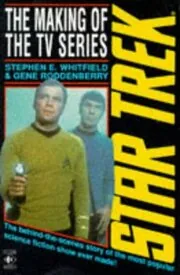
The Making of Star Trek
by Gene Roddenberry
1968
This classic behind-the-scenes book follows the birth of the original Star Trek series, from early ideas and production hurdles to the design of the ship and crew. It mixes show lore with memos, cast details, and a close look at how TV science fiction got made.
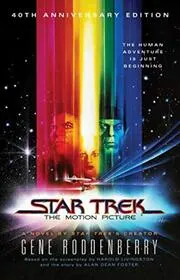
Star Trek: The Motion Picture
by Gene Roddenberry
1979
Admiral Kirk reunites the old Enterprise crew when a vast, unstoppable alien threat heads for Earth. The novelization adds extra character insight as Kirk, Spock, and the team race to understand a danger that may not be what it seems.
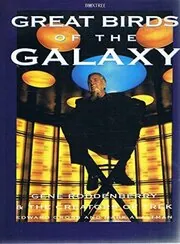
Great Birds of the Galaxy
by Gene Roddenberry
1992
This behind-the-scenes Trek volume traces the franchise from the original pilot through later films and series, with Gene Roddenberry and other key creators at the center. It works as a lively snapshot of how the Star Trek universe kept growing.
Where to start with Gene Roddenberry
If you want the big-screen adventure first: Star Trek: The Motion Picture
If you want the behind-the-scenes route: The Making of Star Trek → Great Birds of the Galaxy
If you want the full Gene Roddenberry sampler: The Making of Star Trek → Star Trek: The Motion Picture → Great Birds of the Galaxy
Gene Roddenberry sub-series and character series
Star Trek: Movie Novelization books in order
Explore this seriesStar Trek: Movie Novelization books in chronological order
Standalone Gene Roddenberry books
Author bio
Gene Roddenberry was born in El Paso, Texas, in 1921, but Los Angeles is where he really grew up. His father became a police officer there, and Roddenberry spent his boyhood reading pulp adventure stories and dreaming about flight. Those two interests, stories and machines, stayed with him for the rest of his life.
Before Hollywood, he had several other lives. He studied at Los Angeles City College, earned a pilot's license, and served in the U.S. Army Air Forces during World War II, flying 89 combat missions in the Pacific. After the war he flew commercially for Pan Am, and he survived a deadly crash in the Syrian desert, an episode that sounds like something from one of his own plots.
He did not take a straight path to writing.
Roddenberry joined the Los Angeles Police Department, partly following his father's example and partly because TV writing jobs were not easy to get. While working there, he wrote on the side, first as a technical adviser and then as a scriptwriter, sometimes using the name Robert Wesley. That side work grew into steady television writing, and by the mid-1950s he left the force to write full time.
He wrote westerns and TV dramas, including Have Gun - Will Travel, and created The Lieutenant, a military series that let him try out ideas about command, duty, and life inside a crew. Those ideas mattered a lot a few years later. In 1966, Star Trek arrived with a simple but huge premise: send a mixed crew into deep space and use adventure stories to ask what kind of people humans might become. Viewers came for the starship and the alien worlds, but many stayed for the optimism, the teamwork, and the sense that the future might actually be worth looking forward to.
That optimism was Roddenberry's signature.
His stories often put capable people under pressure and then ask them to solve problems with reason, nerve, and a little compassion. Readers and viewers who like Roddenberry usually respond to that mix of big ideas and accessible storytelling. You can see it in The Questor Tapes and Genesis II, which play with artificial life, social systems, and what makes a person a person. You can also see it in The Making of Star Trek, a brisk look behind the scenes of the original series, and in Star Trek: The Motion Picture, his novelization of the first film, which gives Kirk, Spock, and the crew more room on the page.
Roddenberry's career was not all smooth sailing. Pilots failed, shows were cancelled, and Star Trek itself lasted only three seasons on NBC. But syndication made the series much bigger than its first run, and he spent the rest of his career returning to that universe in one form or another.
In 1985 he became the first TV writer to receive a star on the Hollywood Walk of Fame. Two years later, Star Trek: The Next Generation put his future-facing ideas in front of a new audience, though worsening health limited his day-to-day role after the first season. He died in Santa Monica, California, on October 24, 1991.
What lasts is not just the franchise, but the pitch behind it: people can get smarter, kinder, and more curious. Roddenberry kept coming back to ships, crews, and strange frontiers, but the real subject was always us.












Edited by
Software engineer whose passion for tracking book recommendations from podcasts inspired the creation of MRB.
Lead investor at 3one4 Capital whose startup expertise and love for books helped shape MRB and its growth.
Comments
Did we miss something? Have feedback?
Help us improve this page by sharing your thoughts