
Gail Tsukiyama Books in Order
Browse Gail Tsukiyama books in order, with short summaries, series notes, and a simple guide to where to start with her historical and family novels.
Last updated:
As an Amazon Associate, we earn from qualifying purchases (at no extra cost to you).
Gail Tsukiyama books in publication order
9 books
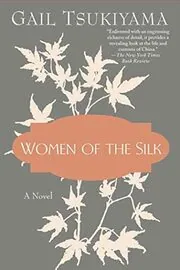
Women of the Silk
by Gail Tsukiyama
1991
In rural China in 1926, young Pei is sent away to work in a silk house and slowly finds kinship among the factory women. Their shared labor and growing defiance turn the novel into a moving story of sisterhood, survival, and hard won freedom.
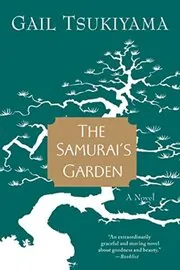
The Samurai's Garden
by Gail Tsukiyama
1994
Sent from Hong Kong to a Japanese seaside village to recover from tuberculosis, young Stephen falls under the care of Matsu, a quiet gardener with deep reserves of wisdom. Against the backdrop of war, he learns about love, loss, and inner strength.
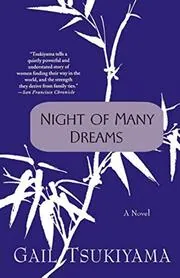
Night of Many Dreams
by Gail Tsukiyama
1998
As World War II forces sisters Joan and Emma Lew from Hong Kong to wartime Macao, their bond is tested by ambition, romance, and family duty. When peace returns, each woman reaches for a different life.
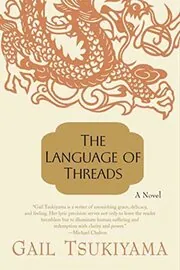
The Language of Threads
by Gail Tsukiyama
1999
After the upheaval of Women of the Silk, Pei reaches Hong Kong with the orphan Ji Shen in her care. Work, war, and the Japanese occupation test them again, as Pei tries to build a new family from hardship and loyalty.
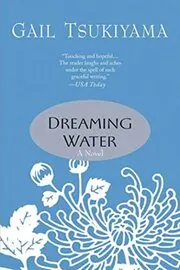
Dreaming Water
by Gail Tsukiyama
2002
Hana, dying from Werner's syndrome, lives quietly with her mother Cate in California until her old friend Laura arrives with two daughters and a storm of unfinished feelings. Over two days, the novel traces grief, friendship, and the small acts that make a life.
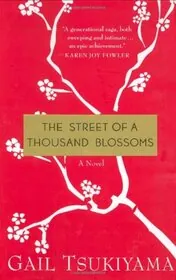
The Street of a Thousand Blossoms
by Gail Tsukiyama
2007
In 1939 Tokyo, orphaned brothers Hiroshi and Kenji dream of lives shaped by sumo and Noh mask making. War interrupts those plans, binding their futures to one family and forcing both boys to grow up fast.
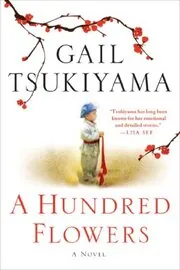
A Hundred Flowers
by Gail Tsukiyama
2012
In 1957 China, Kai Ying's family is torn apart when her husband is sent to a labor camp for criticizing the Communist Party. As her young son Tao suffers a terrible fall, the household must face fear, guilt, and the slow damage of political upheaval.
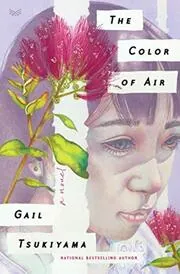
The Color of Air
by Gail Tsukiyama
2020
When doctor Daniel Abe returns from Chicago to Hilo in 1935, Mauna Loa erupts and old family secrets rise with the lava. Tsukiyama weaves Daniel, his uncle Koji, and his mother Mariko into a rich community story about love, home, and memory.

The Brightest Star
by Gail Tsukiyama
2023
This historical novel follows Anna May Wong from her girlhood in Los Angeles to international fame, tracing the racism, family pressure, and compromises behind early Hollywood stardom. It offers an intimate view of a barrier breaking life.
Where to start with Gail Tsukiyama
If you want the best first read: The Samurai's Garden
If you want linked novels about women's lives in China: Women of the Silk → The Language of Threads
If you want sweeping wartime family stories: The Street of a Thousand Blossoms → A Hundred Flowers
If you want intimate contemporary emotion: Dreaming Water → Night of Many Dreams
If you want her later historical fiction: The Color of Air → The Brightest Star
Gail Tsukiyama sub-series and character series
Standalone Gail Tsukiyama books
Author bio
Gail Tsukiyama was born in San Francisco to a Chinese mother from Hong Kong and a Japanese father from Hawaii. She grew up in the San Francisco Bay Area, and that mix of family history runs through much of her fiction, where China, Japan, immigration, memory, and divided loyalties are often close to the surface.
At San Francisco State University, she earned both a BA and an MA in English, with an emphasis in creative writing. Most of her work there was poetry, and that early training helps explain why her novels often feel clean, measured, and attentive to small physical details.
She came to fiction by degrees.
Before and alongside her novels, she taught writing, worked with students, and reviewed books for the San Francisco Chronicle and Ms. magazine. She has also taught at San Francisco State University, the University of California, Berkeley, and Mills College, staying closely connected to the Bay Area literary world.
Her first novel, Women of the Silk, introduced many readers to the kind of story she does especially well, intimate historical fiction built around ordinary people facing hard limits. Set among women working in a silk factory in rural China, it follows Pei as she finds sisterhood and strength in a life she did not choose. Tsukiyama later returned to Pei in The Language of Threads, which moves the story to Hong Kong and wartime uncertainty.
A lot of readers start with The Samurai's Garden, and it is easy to see why. In that novel, a young Chinese man named Stephen is sent to a Japanese coastal village to recover from tuberculosis, where he comes under the quiet care of Matsu, a gardener with his own buried history. The book brings together illness, war, friendship, and moral steadiness without ever getting loud about it.
She has kept widening the frame. Night of Many Dreams follows two sisters moving between Hong Kong, Macao, and later San Francisco. Dreaming Water shifts to contemporary California and looks closely at a mother, a daughter, and a lifelong friend. The Street of a Thousand Blossoms follows two orphaned brothers in wartime Tokyo, while A Hundred Flowers turns to 1950s China and the human cost of political repression.
Her later novels continue to move across place and time. The Color of Air brings her to Hawai'i, where a doctor's return home unfolds against the 1935 Mauna Loa eruption and the buried history of a tight-knit community. In The Brightest Star, she turns to Anna May Wong and the pressures of being a trailblazing Chinese American actress in early Hollywood.
She pays close attention to caretakers.
Across her books, Tsukiyama tends to write about people who are carrying more than they say. Her fiction returns to family ties, chosen family, cultural inheritance, illness, grief, exile, and the ways history presses on private lives. Along the way, she has received the Academy of American Poets Award and the PEN Oakland Josephine Miles Literary Award, and she was among the authors invited to the first National Book Festival in 2001. She lives in the San Francisco Bay Area and serves as executive director of WaterBridge Outreach: Books + Water, a nonprofit focused on access to books and clean water.





Edited by
Software engineer whose passion for tracking book recommendations from podcasts inspired the creation of MRB.
Lead investor at 3one4 Capital whose startup expertise and love for books helped shape MRB and its growth.
Comments
Did we miss something? Have feedback?
Help us improve this page by sharing your thoughts