
Future War Books in Order
Part ofElliot Ackerman Books in OrderSee the Future War books by Elliot Ackerman and James Stavridis in order, with quick summaries, series background, and where to start first.
Last updated:
As an Amazon Associate, we earn from qualifying purchases (at no extra cost to you).
Future War books in publication order
3 books
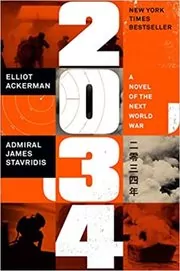
2034
by Elliot Ackerman
2021
A routine U.S. naval patrol in the South China Sea turns into disaster when China and Iran deploy devastating new cyber weapons. Ackerman and James Stavridis imagine how pride, miscalculation, and technology could pull the world into war.
Recommended by
1 person Tom Keene recommended this book
Tom Keene
"Immediate book-of-the-summer consideration." - Tom Keene
Tom Keene's recommendation of this book

2054
by Elliot Ackerman
2024
Twenty years after the war of 2034, America is sliding toward civil conflict when the president's death exposes a startling leap in AI and biotech. The thriller links political decay, information warfare, and a race to understand dangerous new technology.

2084
by Elliot Ackerman
2026
In a climate-ravaged world, equatorial nations demand justice from richer powers that prospered while the planet burned. Ackerman and James Stavridis turn that divide into a global war story about reparations, power, and survival.
Future War books in chronological order
Series background & context
The Future War books, written by Elliot Ackerman with Admiral James Stavridis, are near-future geopolitical thrillers built around one unsettling idea: the next global crisis will not arrive out of nowhere. It will grow from systems already in place, military rivalry, political decay, new technology, and climate pressure that keeps getting easier to ignore. These novels are connected, but not in the usual series way. They share a world, a method, and a widening timeline more than a single hero.
2034 opens with a routine freedom of navigation patrol in the South China Sea and turns that familiar show of force into the first move of a much larger war. The story follows officers, pilots, diplomats, and leaders on several sides as a clash involving the United States, China, and Iran spins beyond anyone's control. What makes the book tense is not just combat. It is the way pride, misreading, and overconfidence push events forward faster than the people inside them can understand.
Nobody gets to stay safely above the mess.
2054 jumps ahead twenty years to a United States reshaped by the earlier conflict. Here the series turns inward. American politics are brittle, violence is rising in the streets, and a major leap in AI and biotech changes the balance of power again. The cast includes people close to the White House, the intelligence world, and the tech frontier, so the novel feels part political thriller and part speculative science story. The stakes are still global, but the question is more intimate now: what happens when a country starts to lose faith in its own rules?
By the time 2084 arrives, the horizon is darker still. Climate change has redrawn the map, and the nations bearing the worst of the damage, especially around the equator, are no longer willing to accept the old global bargain. Richer countries are battered too, but they still hold more power, and that imbalance becomes the engine of the conflict. The book widens into a truly global cast and treats climate justice not as a side issue, but as a military and moral emergency.
These books think in decades.
That is what makes the series work. It is not just predicting gadgets or building flashy battle scenes. It is tracing how one era's decisions become the next era's disasters. Expect military realism, intelligence tradecraft, cabinet-room tension, and a lot of attention to how technology changes the battlefield. Just as important, expect a human scale inside all that machinery. Ackerman and Stavridis keep returning to the same question: when states, algorithms, and ideologies start moving too fast, who still has the power to choose differently? You can read each novel on its own, but reading them in order gives the fullest sense of how one crisis feeds the next.






Edited by
Software engineer whose passion for tracking book recommendations from podcasts inspired the creation of MRB.
Lead investor at 3one4 Capital whose startup expertise and love for books helped shape MRB and its growth.
Comments
Did we miss something? Have feedback?
Help us improve this page by sharing your thoughts