
Frances Hodgson Burnett Books in Order
Explore Frances Hodgson Burnett's books in order, with short summaries and guidance on where to start with her children's classics and her deeper adult novels.
Last updated:
As an Amazon Associate, we earn from qualifying purchases (at no extra cost to you).
Frances Hodgson Burnett books in publication order
42 books

One Day at Arle
by Frances Hodgson Burnett
1872
This short story takes place over the course of one charged day in the fishing village of Arle, where old wrongs and buried promises come to a head. A young woman must decide whether to accept a compromised marriage or fight for a truer, lonelier path.

Surly Tim
by Frances Hodgson Burnett
1877
Factory hand Tim Hibblethwaite is known only as a gloomy, taciturn worker until he finally tells a visiting gentleman the story that broke his life. In a few concentrated chapters Burnett reveals love, poverty, and a devastating secret that explains both his bitterness and his stubborn honesty.
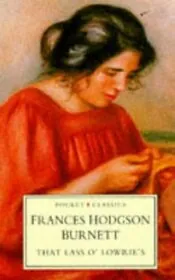
That Lass O'Lowrie's
by Frances Hodgson Burnett
1877
Set in a Lancashire mining village, this novel centers on Joan Lowrie, a miner's daughter with a fierce sense of justice and little patience for gentility. Her path crosses that of a young mining engineer and a visiting clergyman, and the story blends dialect, social hardship, and slow building romance.
Theo
by Frances Hodgson Burnett
1877
Theodora North, pretty and romantic, dreams of escape from her cramped seaside home. A visit to a wealthy aunt in London plunges her into a whirl of parties, misunderstandings, and suitors, where she must learn the difference between girlish fantasy and a love sturdy enough to trust.
Haworth's
by Frances Hodgson Burnett
1878
Jem Haworth has risen from half starved runaway to ironworks owner in a smoky manufacturing town. Around him move ambitious engineers, stubborn workers, and proud gentlewomen, their fortunes colliding in a story that uses the industrial setting to explore class, character, and the costs of success.
Lindsay's Luck
by Frances Hodgson Burnett
1878
This early love story turns on chance meetings and reversals of fortune in a tightly drawn Victorian world. Lindsay's apparent bad luck gradually reveals unexpected opportunities, testing what the characters value most in themselves and in one another.
Louisiana
by Frances Hodgson Burnett
1879
At a Southern resort, sophisticated New Yorker Olivia Ferrol becomes fascinated by shy mountain girl Louisiana Rogers. A makeover and a masquerade throw Louisiana into fashionable society and into love with Olivia's brother, leaving her to untangle honesty, class, and self respect before she can choose her future.

Miss Crespigny
by Frances Hodgson Burnett
1879
Lisbeth Crespigny, clever, restless, and beautifully self possessed, has already broken one engagement and earned a reputation for heartlessness. When her past love reenters her life in altered circumstances, she is forced to weigh old habits of pride against the possibility of real change and forgiveness.

The Woman Who Saved Me
by Frances Hodgson Burnett
1879
Told as a man's confession, this novella unpacks a love story clouded by pride, rumor, and deliberate misunderstanding. As he slowly recognizes the truth about the woman he wronged, he also traces how her steadiness and courage rescued him from a narrow and bitter life.
A Fair Barbarian
by Frances Hodgson Burnett
1881
Slowbridge, a prim English town, is scandalized when Miss Octavia Bassett arrives from a rough Nevada mining camp with extravagant clothes and modern opinions. Her wit and independence unsettle snobbish neighbors, tangle up several courtships, and gently poke fun at the idea that one country has a monopoly on good manners.
Esmerelda
by Frances Hodgson Burnett
1881
In this romantic comedy, innocent farm girl Esmerelda finds herself pushed toward a brilliant marriage that suits everyone's ambitions but her own. Torn between the expectations of family and the pull of a simpler love, she must decide what kind of life will actually make her happy.
Through One Administration
by Frances Hodgson Burnett
1881
Set in Washington, D.C., during a single presidential administration, this novel follows a young woman caught between private feeling and public duty in the small world of capital politics. Burnett threads marriage plots through cabinet intrigues, examining how personal compromise and ambition play out under constant scrutiny.

Little Lord Fauntleroy
by Frances Hodgson Burnett
1886
Cheerful New York boy Cedric Errol learns he is heir to a grand English estate and a very unloving grandfather. Moving from a city street to Dorincourt Castle, he brings his easy friendliness and sense of justice with him, softening hard hearts far more effectively than anyone expects.
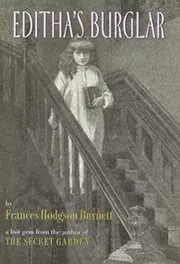
Editha's Burglar
by Frances Hodgson Burnett
1888
Seven year old Editha lies awake worrying about burglars after reading too many of her father's newspapers. When a real thief finally creeps into the house, her odd mixture of politeness, bravery, and concern for her parents disarms him, turning a frightening night into an unexpected lesson in compassion.

Sara Crewe or What Happened at Miss Minchin's
by Frances Hodgson Burnett
1888
This earlier, shorter version of A Little Princess tells the core of Sara Crewe's story. It follows her fall from favored pupil to half starved servant at Miss Minchin's school, and the mysterious neighbor whose generosity finally changes everything.
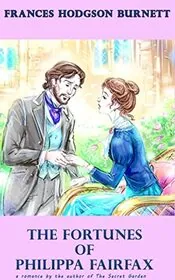
The Fortunes of Philippa Fairfax
by Frances Hodgson Burnett
1888
This shorter society novel follows Philippa Fairfax as she moves from a quiet upbringing into the bright, watchful world of London drawing rooms. Admiration, gossip, and the lure of comfort pull in one direction, while her own sense of loyalty and fairness pulls in another.
The Pretty Sister of Jose
by Frances Hodgson Burnett
1889
In a poor Spanish village, strong, slow Jose works the vineyards while his radiantly beautiful sister Pepita draws every eye. Urged to seek a better life in Madrid, Pepita must navigate suitors, family expectations, and her own pride in a story that mixes romance with quiet social criticism.
Two Little Pilgrims' Progress
by Frances Hodgson Burnett
1895
Twin orphans Meg and Robin escape their dreary farm life through stories of the Chicago World's Fair, which they call the City Beautiful. When they decide to go there on their own, their secret journey becomes a tale of kindness, chance meetings, and the way a great exhibition can open young eyes.

A Lady Of Quality
by Frances Hodgson Burnett
1896
Clorinda Wildairs, raised like a boy by a coarse father who never wanted daughters, grows up fearless, beautiful, and dangerously uncontrolled. Determined to seize a grand future for herself, she remakes her manners for polite society, only to find that one reckless choice may shadow every chance at happiness.

In Connection with the De Willoughby Claim
by Frances Hodgson Burnett
1899
Set in the American South on the eve of the Civil War, this sprawling novel circles around a disputed lottery claim tied to the De Willoughby family. Lawyers, drifters, and small town shopkeepers are drawn into the case, which lets Burnett explore honor, greed, and the making of community.
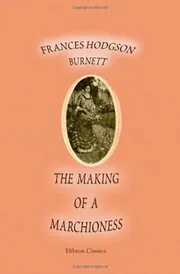
The Making of a Marchioness
by Frances Hodgson Burnett
1901
Practical, middle aged Emily Fox-Seton spends her days running errands for demanding society ladies, grateful just to pay her rent. A country house invitation brings her unexpected kindness, then an equally unexpected proposal from Marquess Walderhurst, turning a life of small economies into a cautious, late blooming fairy tale.
The Methods of Lady Walderhurst
by Frances Hodgson Burnett
1901
Now Marchioness of Walderhurst and finally expecting a child, Emily finds her new security quietly threatened by her husband's former heir Alec Osborn and his tense wife Hester. In this darker sequel, country walks and nursery plans share space with growing unease, as politeness masks real danger.
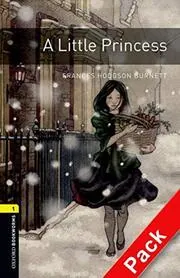
A Little Princess
by Frances Hodgson Burnett
1905
Sara Crewe arrives at Miss Minchin's London school as a pampered captain's daughter, famous for her stories and kindness. When word comes that her father is dead and her money gone, she is turned into a drudging servant, yet clings to her imagined princess dignity until unexpected help appears next door.
The Dawn of a To-Morrow
by Frances Hodgson Burnett
1905
A wealthy London businessman, crushed by illness and despair, slips into one of the city's poorest quarters intending to end his life. Instead he meets a ragged street girl called Glad and a devout old woman, whose stubborn hope and faith slowly pull him toward a different kind of beginning.
Queen Silver-Bell
by Frances Hodgson Burnett
1906
Queen Silver-Bell, ruler of the fairies, has lost her temper, a tiny fairy companion, and with it much of her power. Determined to make children believe in fairies again, she recruits a respectable human storyteller and spins whimsical tales of magic, mischief, and second chances.
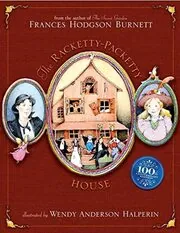
The Racketty-Packetty House
by Frances Hodgson Burnett
1906
An old, battered dollhouse full of cheerful shabby dolls is shoved into a nursery corner when grand new Tidy Castle arrives. Watched over by the fairy Queen Crosspatch, the Racketty family laugh, dance, and stay loyal even when threatened with destruction, proving that spirit matters more than paint and silk.

The Shuttle
by Frances Hodgson Burnett
1906
When strong willed American heiress Bettina Vanderpoel visits the English estate where her sister Rosalie has vanished into an abusive marriage, she finds both family and house in ruins. Bettina's steady restoration of Stornham Court, and her clash with Rosalie's brutal husband, knit together themes of transatlantic marriages, courage, and renewal.

The Good Wolf
by Frances Hodgson Burnett
1908
A small boy named Barty longs for adventure in the deep winter woods and meets an enormous talking wolf who insists he is good. Their magical journeys through snow, forests, and feasts of toy animals become a playful lesson in courage, kindness, and the pleasures of imagination.
The Land of the Blue Flower
by Frances Hodgson Burnett
1908
In this fairy tale for younger readers, a boy king named Amor is raised far from his grim, stony kingdom by a wise old man. When he returns with seeds of a mysterious blue flower, he slowly teaches his suspicious people how beauty, patience, and tending living things can change a country.
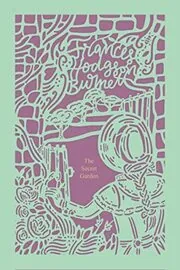
The Secret Garden
by Frances Hodgson Burnett
1910
Orphaned Mary Lennox is sent from hot, crowded India to her uncle's bleak Yorkshire manor, sour and solitary in every way. Her discovery of a locked walled garden, and of new friends in Dickon and sickly Colin, slowly turns a dead place and three damaged children toward life again.
Recommended by
1 person Shonda Rhimes recommended this book
Shonda Rhimes
"A kickass book." - Shonda Rhimes
Shonda Rhimes's recommendation of this book
My Robin
by Frances Hodgson Burnett
1912
This brief memoir grows out of readers' questions about the robin in The Secret Garden. Burnett remembers the real robins and the English garden that changed her life, mixing gentle nature writing with reflections on how a small bird helped unlock a famous story.

T. Tembarom
by Frances Hodgson Burnett
1913
Temple 'T.' Tembarom grows up scraping by on New York streets, hustling for newspaper jobs and board money with cheerful resilience. An absurd twist of inheritance suddenly makes him master of an English estate, forcing him to balance new duties with loyalty to the American friends and sweetheart who shaped him.
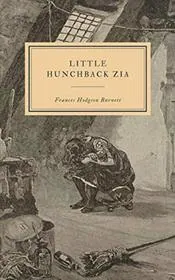
Little Hunchback Zia
by Frances Hodgson Burnett
1915
Zia, a crippled and despised boy, flees the only home he has known and wanders in fear across a harsh landscape. Drawn at last to Bethlehem on the night of the Nativity, he finds unexpected kindness and a glimpse of grace that rewrites his sense of himself.
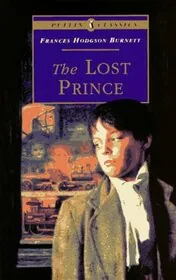
The Lost Prince
by Frances Hodgson Burnett
1915
Twelve year old Marco Loristan has been trained all his life for a mission he does not fully understand. When he and his ragged friend known as the Rat are sent across Europe with a secret password, they become the spark for their war torn homeland's rebirth.

The White People
by Frances Hodgson Burnett
1917
Set in a lonely Scottish castle, this introspective novella has a young heiress narrating her strange visions and meditations on life, death, and the possibility of an unseen world. Written after Burnett lost her son Lionel, it circles grief and spiritual longing.
Robin
by Frances Hodgson Burnett
1922
Picking up after The Head of the House of Coombe, this novel follows Robin into adulthood as love, war service, and loss reshape everything she thought she knew. Her bond with Donal and her changing view of Lord Coombe drive a story about loyalty under pressure.
The Head of the House of Coombe
by Frances Hodgson Burnett
1922
In pre war London, enigmatic Lord Coombe hovers over the life of Feather, a shallow beauty, and her neglected daughter Robin. Burnett traces how quiet choices, gossip, and looming political unrest entangle them long before war reaches their doorstep.
His Grace of Osmonde
by Frances Hodgson Burnett
2005
This sequel to A Lady Of Quality follows Gerald, Duke of Osmonde, from his youth to his long delayed courtship. Seeing Clorinda Wildairs through his eyes, the novel blends romance, court intrigue, and questions of honor in Restoration England.

Little Saint Elizabeth and Other Stories
by Frances Hodgson Burnett
2007
This collection gathers several of Burnett's fairy tale like pieces, led by the story of Little Saint Elizabeth, a devout heiress trying to help the poor in New York. Across the tales she blends piety, fantasy, and everyday detail in ways that feel both old fashioned and emotionally direct.

Natalie and Other Stories
by Frances Hodgson Burnett
2007
Opening with the title story about Natalie, a young woman facing difficult choices of love and duty, this volume collects a handful of Burnett's shorter romances. The pieces range from quiet domestic scenes to more dramatic turns, each sketching complicated feelings in a small space.

The One I Knew The Best Of All
by Frances Hodgson Burnett
2007
Burnett's autobiographical memoir revisits her own childhood as 'the child she knew best of all', from cramped Manchester streets to a new life in Tennessee. It lingers on reading, daydreams, and the first magazine stories that pulled her family out of debt.

Jarl's Daughter, and Other Novelettes
by Frances Hodgson Burnett
2015
Named for its lead tale about the daughter of a northern chieftain, this collection brings together several of Burnett's early novelettes. Expect compact stories of courtship, loyalty, and moral testing in varied settings, from chilly coasts to comfortable parlors.
Where to start with Frances Hodgson Burnett
If you want her most beloved children's classics: The Secret Garden → A Little Princess → Little Lord Fauntleroy
If you like adventurous children's stories: The Lost Prince → Two Little Pilgrims' Progress → The Land of the Blue Flower
If you want adult social and romantic fiction: The Making of a Marchioness → The Methods of Lady Walderhurst → The Shuttle
If you enjoy historical romance: A Lady Of Quality → His Grace of Osmonde
If you are curious about her late wartime novels: The Head of the House of Coombe → Robin
Frances Hodgson Burnett sub-series and character series
The Head of the House of Coombe books in order
Explore this series
The Head of the House of Coombe
by Frances Hodgson Burnett
1922The Head of the House of Coombe, Book 1
The Head of the House of Coombe books in chronological order
The Head of the House of Coombe
by Frances Hodgson Burnett
1922The Head of the House of Coombe, Book 1
Frances Hodgson Burnett collections, short stories, and related book types
Collections
Standalone Frances Hodgson Burnett books
Author bio
Frances Hodgson Burnett grew up between hard luck and imagination, and both stayed with her for life. Readers know her for Little Lord Fauntleroy, A Little Princess, and The Secret Garden, but she spent decades writing for adults as well as children.
She was born in Manchester in 1849, the third of five children in a family that ran a small ironmongery business. When her father died suddenly, money vanished almost overnight. Frances learned early what it meant to watch a household shrink and improvise.
In 1865 her mother brought the family to Tennessee, hoping an uncle could help them start again. The help never quite matched the need, so as a teenager Frances began sending stories to magazines to keep everyone afloat. By her late teens she was earning real money from her pen and treating writing as work, not a hobby.
She married Swan Burnett, a young doctor, in 1873, and the couple eventually settled in Washington, D.C., with two sons, Lionel and Vivian. Long days of housework, heat, and money worries sat beside long nights at her desk. Out of that period came her first novels, including the Lancashire mining story That Lass o' Lowrie's and industrial drama Haworth's.
The book that changed her public life was Little Lord Fauntleroy in the mid 1880s. The story of a warm hearted American boy who softens a crusty English earl sold in huge numbers, spawned curls and velvet suits, and led to a court case over theater rights that helped reshape copyright law. She followed it with A Little Princess and The Secret Garden, which traded on similar faith in kindness, imagination, and slow transformations.
Success let her live the life she had once only read about. She moved back and forth between the United States and England, kept lively salons, and leased houses with big gardens, including Great Maytham Hall in Kent, whose walled rose garden helped spark The Secret Garden. Behind the public brightness, she wrestled with depression, especially after the death of her elder son Lionel from tuberculosis in 1890, and she explored currents of Christian Science, Spiritualism, and other new religious ideas.
Burnett never quite stopped writing for adults. Novels such as A Lady Of Quality, The Making of a Marchioness, The Shuttle, and the Coombe duet offered historical intrigue, domestic suspense, and sharp views of class and money on both sides of the Atlantic. Her private life was less tidy. She divorced Swan Burnett in 1898, briefly married an actor, Stephen Townsend, then ended that marriage too, frank about how much easier it was to support herself than to be supported badly.
In 1907 she settled permanently on Long Island, in a house that let her keep a big garden and receive friends while still visiting Bermuda in winter. There she finished later works such as The Lost Prince and The Head of the House of Coombe and edited a children’s magazine at her son Vivian’s request.
She died in 1924, but the books have refused to fade. Part of the appeal is the wish fulfillment, from secret gardens to lost heirs; part of it is her eye for small human gestures in cramped rooms. She never entirely stopped writing about poor children and worried parents, even when she moved them into castles.








Edited by
Software engineer whose passion for tracking book recommendations from podcasts inspired the creation of MRB.
Lead investor at 3one4 Capital whose startup expertise and love for books helped shape MRB and its growth.
Comments
Did we miss something? Have feedback?
Help us improve this page by sharing your thoughts