
Fools' Guild Books in Order
Part ofAlan Gordon Books in OrderExplore the Fools' Guild books by Alan Gordon in order, with short summaries and a series reading list to help you choose where to start reading.
Last updated:
As an Amazon Associate, we earn from qualifying purchases (at no extra cost to you).
Fools' Guild books in publication order
8 books
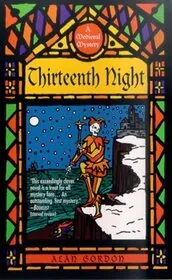
Thirteenth Night
by Alan Gordon
1998
The death of Duke Orsino sends Feste back to Illyria disguised as a merchant. Working for the secretive Fools’ Guild, the jester investigates a suspicious loss and revisits the intrigues surrounding figures from Shakespeare’s Twelfth Night.

Jester Leaps In
by Alan Gordon
2000
Newly married jesters Theophilos and Viola travel to Constantinople after the Fools’ Guild’s agents disappear. A claimant to the Byzantine throne and gathering European forces complicate their search as they try to avert war and survive political intrigue.

A Death in the Venetian Quarter
by Alan Gordon
2002
As crusaders besiege Constantinople in 1203, jesters Theophilos and Viola work to prevent disaster. The murder of an apparently ordinary silk merchant draws them into an investigation whose hidden political stakes could determine the city’s survival.

The Widow of Jerusalem
by Alan Gordon
2003
Traveling across the Alps, Theophilos recounts an earlier mission during the Third Crusade. His adventures with the jester Scarlet in Tyre involve Jerusalem’s queen, competing political interests, and a murder amid the struggles surrounding Richard the Lionheart’s campaign.

An Antic Disposition
by Alan Gordon
2004
Hiding from papal forces in the Black Forest, the Fools’ Guild listens to Father Gerald recount a mission to Denmark. His tale of rival kings and a jester called Yorick reveals a version of Hamlet’s tragedy with secrets Theophilos recognizes.

The Lark's Lament
by Alan Gordon
2007
Theophilos and Claudia seek a former guild member’s help against Pope Innocent III, but a monk’s murder interrupts their visit. A message written in blood sends them into the abbot’s past, where old events threaten their mission and lives.

The Moneylender of Toulouse
by Alan Gordon
2008
Theophilos arrives in Toulouse to persuade its bishop to retire in favor of a friendlier successor. When a moneylender who quarreled with the bishop is found dead in a tanner’s vat, solving the murder becomes essential to protecting the guild.

The Parisian Prodigal
by Alan Gordon
2010
A stranger claiming to be the count’s brother arrives in Toulouse, then becomes implicated in a prostitute’s murder. Theophilos investigates the man’s identity and the crime, navigating aristocratic claims and political intrigue that complicate the apparent evidence.
Series background & context
The Fools’ Guild mysteries imagine a medieval Europe in which jesters are more than court entertainers. They belong to a network that can gather information, intervene in political disputes and investigate a death. Alan Gordon places the series in the thirteenth century, using the fool’s ambiguous position to make room for both performance and intrigue. Someone invited to amuse the powerful may also be well placed to notice what those people would prefer to conceal.
The first book begins with the death of Duke Orsino.
In Thirteenth Night, Feste must establish whether that death was an accident, suicide or murder. The characters draw on Shakespeare’s Twelfth Night, but the new question turns the theatrical inheritance toward detection. Readers do not need to treat the book as a scholarly exercise: its immediate concern is a death, the motives around it and the political consequences of the answer.
Theophilos and Claudia are central figures in the continuing guild story. In The Lark's Lament, they seek assistance from Folquet, a former guild member who has become an abbot, while papal opposition threatens their organization. Their visit is interrupted by the murder of a monk and a message written in blood. The premise connects an urgent local investigation with a larger need to keep the guild functioning, so solving a case can carry consequences beyond identifying an offender.
The Toulouse novels continue that mixture of murder and influence. The Moneylender of Toulouse sends Theophilos to persuade a bishop to retire, only for the death of a moneylender to make the mission more dangerous. In The Parisian Prodigal, a visitor’s claim to be the count’s brother becomes entangled with a prostitute’s murder. Both setups turn identity, position and access into practical problems for the investigator. Religious office and aristocratic kinship shape what people can demand and what others are willing to believe.
Begin with Thirteenth Night, then follow Jester Leaps In, A Death in the Venetian Quarter and The Widow of Jerusalem. Continue with An Antic Disposition, The Lark's Lament and the two Toulouse novels. Reading forward preserves the developing relationships and guild politics while letting each new case establish its own immediate puzzle. The series suits readers who enjoy historical detection with a comic performer at its center, but its murders and struggles over power give the fool’s work serious consequences.













Edited by
Software engineer whose passion for tracking book recommendations from podcasts inspired the creation of MRB.
Lead investor at 3one4 Capital whose startup expertise and love for books helped shape MRB and its growth.
Comments
Spotted a missing book, a wrong order or a mistake? Tell us and we'll fix this page.
We're a reading guide, not the author or publisher, so we can't send books or pass on messages.