
Fear and Loathing Letters Books in Order
Part ofHunter S Thompson Books in OrderSee the Fear and Loathing Letters series by Hunter S. Thompson in order, with volume notes and context for how his letters mirror the life behind his journalism.
Last updated:
As an Amazon Associate, we earn from qualifying purchases (at no extra cost to you).
Fear and Loathing Letters books in publication order
3 books
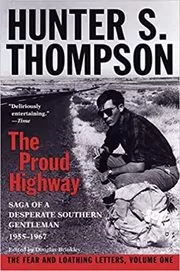
The Proud Highway
by Hunter S. Thompson
1997
The first Fear and Loathing Letters volume presents Thompson’s correspondence from 1955–1967. We see him as a young freelancer hustling for work, roaming the Caribbean and South America, and sharpening the voice that would later explode in his famous books.
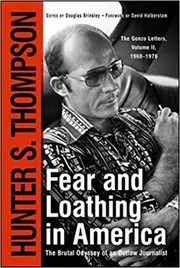
Fear and Loathing in America
by Hunter S. Thompson
2000
This second letters volume covers 1968–1976, the years when Thompson became a public figure. The correspondence captures the making of Fear and Loathing in Las Vegas and Campaign Trail ’72, his battles with publishers, and his lifelong arguments with friends and editors.
The Mutineer
by Hunter S. Thompson
2012
Completing the Fear and Loathing Letters trilogy, The Mutineer spans roughly 1977–2005. The letters show late‑career Thompson at Owl Farm – still writing, feuding, and scheming – while reflecting on politics, lawsuits, film deals, and the cost of living as his own legend.
Fear and Loathing Letters books in chronological order
Series background & context
The Fear and Loathing Letters series turns Hunter S. Thompson’s private correspondence into a kind of accidental autobiography. Edited by historian Douglas Brinkley, the three volumes – The Proud Highway, Fear and Loathing in America, and The Mutineer – follow him from hungry young writer to exhausted legend. Instead of polished essays, you get first‑draft thoughts fired off to friends, editors, politicians, and anyone who crossed his path.
The Proud Highway covers roughly 1955–1967. These letters show Thompson leaving Louisville, stumbling through military service and small newspapers, and chasing work across Puerto Rico, New York, and South America. He argues with editors, courts his future wife, comments on the civil‑rights era, and slowly talks himself toward the immersion reporting that will lead to Hell's Angels.
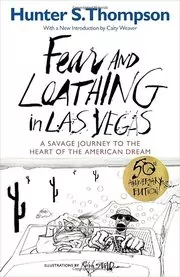
In Fear and Loathing in America, the timeline runs from the late 1960s through 1976, the years when he becomes a recognizable public figure. The correspondence charts the writing of Fear and Loathing in Las Vegas and Fear and Loathing on the Campaign Trail '72, his battles over contracts and movie rights, and his love‑hate relationship with Rolling Stone. You also see him wrestling with fame, burnout, and the sense that the political moment he cared about most is slipping away.
The Mutineer picks up in the late 1970s and stretches into the early 2000s. By now he is based at Owl Farm in Colorado, dealing with court cases, local politics, shifting friendships, and the long afterlife of his most famous work. The letters bounce from small‑town skirmishes to national elections, from football to gun laws, often in the same page.
Across all three books, the letters carry the same snap as his published writing but feel looser and stranger. He jokes with lawyers, sends late‑night apologies and threats, and drops offhand lines about events that later become full articles or chapters. Because he saved carbons of nearly everything, the picture is unusually complete.
You can treat the series as deep background while you read the main books, or simply move through the letters year by year and let the story of his life unfold that way. Either approach makes clear how much of his energy went into the unseen work of pitching, complaining, encouraging younger writers, and trying – often failing – to hit his own deadlines.
If the rest of Thompson’s bibliography shows the performance, the Fear and Loathing Letters series lets you sit backstage and listen to him mutter, scheme, and occasionally, very quietly, doubt himself.













Edited by
Software engineer whose passion for tracking book recommendations from podcasts inspired the creation of MRB.
Lead investor at 3one4 Capital whose startup expertise and love for books helped shape MRB and its growth.
Comments
Did we miss something? Have feedback?
Help us improve this page by sharing your thoughts