
Ezra Pound Books in Order
Explore Ezra Pound’s books and series in order, with short summaries and reading lists to help you find your next book and decide where to begin reading.
Last updated: 51 new books added
As an Amazon Associate, we earn from qualifying purchases (at no extra cost to you).
Ezra Pound books in publication order
51 books
A Lume Spento
by Ezra Pound
1908
Ezra Pound’s first poetry collection brings together early lyrics, dramatic voices and poems drawing on European literary traditions. Its varied forms and historical masks offer a view of the experiments that preceded his better-known modernist work.
A Quinzaine For This Yule
by Ezra Pound
1908
Written during Pound’s time in Venice, this early poetry collection draws on his San Trovaso sketchbook. Its brief lyrics reveal a young poet experimenting with craft, atmosphere and inherited forms before the emergence of his later modernist style.
Exultations
by Ezra Pound
1909
This early collection gathers poems and translations that first established Pound’s literary reputation in London. Dramatic voices and experiments with inherited verse forms reveal his developing interest in speaking through figures drawn from different periods and literary traditions.
Personae
by Ezra Pound
1909
This early poetry collection gathers dramatic voices, ballads, and lyrics, including Cino, Na Audiart, and Ballad of the Gibbet. Historical speakers and varied poetic forms distinguish the original volume from the later collected edition bearing the same title.
Provenca
by Ezra Pound
1910
Drawing on troubadour traditions, medieval romance, and myth, these early poems explore love, loss, beauty, and mortality. Musical lyrics sit beside forceful dramatic voices confronting war, religious faith, and the artist’s determination to preserve experience through poetry.
The Spirit of Romance
by Ezra Pound
1910
Ezra Pound surveys the literary traditions of medieval and Renaissance Europe, tracing the move from Latin into Romance languages. Essays consider troubadours, Dante, Villon and other writers as he argues for the continuing vitality of older poetry.
Canzoni
by Ezra Pound
1911
Pound explores a wide range of poetic forms and literary inheritances in this early collection. Provençal song and Roman satire provide points of departure for experiments in voice and style that anticipate concerns pursued throughout his later work.
Ripostes
by Ezra Pound
1912
Original poems and adaptations include Portrait d’une femme, The Return, and Pound’s version of the Anglo-Saxon Seafarer. An appended selection of T. E. Hulme’s poems places another developing modernist voice alongside Pound’s early experiments with verse.
Cathay
by Ezra Pound
1915
Drawing on Ernest Fenollosa’s notes, Pound reshapes classical Chinese poems into English verse and includes his rendering of The Seafarer. Voices of separation, travel and longing connect distant literary traditions with the developing language of modernist poetry.
Certain Noble Plays of Japan
by Ezra Pound
1916
Four Japanese Noh plays bring together restless spirits, frustrated love, battle and family shame. Working from Ernest Fenollosa’s manuscripts, Pound reshapes the translations into English dramatic poetry, accompanied by William Butler Yeats’s introduction to the theatrical tradition.
Gaudier-Brzeska
by Ezra Pound
1916
Pound remembers sculptor Henri Gaudier-Brzeska, whom he befriended and supported in London before the artist died in the First World War. The memoir connects Gaudier’s work and ideas with Pound’s advocacy and the early modernist art world.
Lustra
by Ezra Pound
1916
Short poems, literary encounters, and adaptations draw on classical, Chinese, and Provençal sources. Including In a Station of the Metro and A Pact, this collection brings compressed images and observations of contemporary life into Pound’s developing poetic practice.
Noh, Or, Accomplishment
by Ezra Pound
1917
Translations of Japanese Noh plays accompany an examination of the theatre’s history, poetry and performance traditions. Pound and Fenollosa explore the relationship between text, music, masks and movement, offering readers a route into a highly stylized dramatic art.
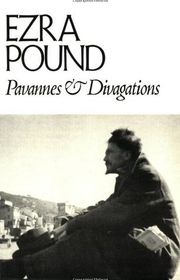
Pavannes and Divagations
by Ezra Pound
1918
This collection presents Ezra Pound in a lighter and often satirical vein through autobiographical prose, verses, translations and commentary. Topics range from literature and religion to fashionable society, revealing the wit and provocations behind his public literary persona.
Quia Pauper Amavi
by Ezra Pound
1919
This poetry collection brings together Homage to Sextus Propertius, early versions of three Cantos, and shorter poems grouped as Langue d’oc and Moeurs contemporaines. The volume combines adaptations of classical verse with portraits of contemporary life.
Instigations
by Ezra Pound
1920
Pound examines French poets, Henry James, translation, and literary criticism in essays on the practice of writing. The collection also includes Ernest Fenollosa’s discussion of Chinese characters and their relationship to the language of poetry.
Umbra
by Ezra Pound
1920
Pound gathers the early poetry he wished to preserve from Personae, Exultations, Ripostes, and related volumes. Alongside his own verse, the collection includes translations of Cavalcanti and Arnaut Daniel and poems by T. E. Hulme.
Poems 1918-21
by Ezra Pound
1921
This collection brings together Homage to Sextus Propertius, shorter poems grouped under Langue d’oc and Moeurs contemporaines, and the Hugh Selwyn Mauberley sequence. It also includes four Cantos, bringing Pound’s shorter verse alongside his developing extended poem.
Selected Poems of Ezra Pound
by Ezra Pound
1928
This selection surveys Pound’s poems and translations across his writing career, from early lyrics and Provençal songs to Chinese verse and Greek drama. Extracts from his longer works introduce recurring themes and changes in his poetic technique.
How to Read
by Ezra Pound
1931
Pound considers how readers can judge literature, moving through questions of language, criticism, publishing, and literary education. His brief guide proposes writers and works for close study while arguing for a more discriminating relationship with books.
ABC of Economics & Social Credit
by Ezra Pound
1933
These economic writings present Pound’s arguments about finance, commerce, and usury alongside his interest in social credit. They offer a direct encounter with the monetary ideas that informed his political commitments and appeared throughout his wider work.
ABC of Reading
by Ezra Pound
1934
Pound sets out his ideas about reading and literary value through examples drawn from earlier writers. His discussions of language and technique, followed by a treatise on meter, invite close attention to how poetry works.
Make It New
by Ezra Pound
1935
Essays examine troubadours, Arnaut Daniel, Elizabethan classicists, Greek translators, and French poets, alongside Henry James and Rémy de Gourmont. Pound’s study of literary predecessors and contemporaries connects criticism, translation, and his ideas about renewing the art of writing.
Polite Essays
by Ezra Pound
1937
Pound’s literary criticism ranges across poets, prose writers, and the practice of reading. Essays on Harold Monro, Housman, Joyce, Eliot, and Dante bring assessments of contemporaries together with arguments about the traditions and standards shaping literary art.
Guide to Kulchur
by Ezra Pound
1938
Pound ranges across Chinese philosophy, poetry, music, economics, and other fields in short chapters challenging conventional ideas of culture. The book presents his personal curriculum for readers seeking connections among artistic practice, historical understanding, and intellectual life.
The Selected Letters of Ezra Pound 1907-1941
by Ezra Pound
1950
Pound’s letters document his support for fellow writers, his publishing interventions, and his advice to emerging poets. The selection follows a wide literary network, showing how correspondence became a central instrument of his work and influence.
Confucius
by Ezra Pound
1951
Pound brings together his versions of three Confucian texts with commentary, emphasizing their ethical and political teachings. The volume reveals his interpretive approach to Chinese philosophy and the ideas that became central to his own writing.
Pound/Joyce
by Ezra Pound
1969
Pound’s letters to Joyce trace his efforts to find publishers, raise money, and defend a fellow writer against censorship. Critical essays and related material show how his first responses to Joyce’s manuscripts developed into sustained literary advocacy.
The Cantos of Ezra Pound
by Ezra Pound
1970
Pound’s long poetic project moves among historical figures, cultures, political ideas, and personal memories. This collected edition brings the sequence together with its later fragments and Italian cantos, revealing the changing structure of an extended intellectual and artistic undertaking.
Selected Prose 1909-1965
by Ezra Pound
1973
Sixty-six prose pieces explore Pound’s concerns with civilization, economics, history, and American culture. Arranged by theme, the collection brings together criticism and polemics that reveal connections between his literary judgments and his wider political beliefs.
Selected Poems, 1908-1969
by Ezra Pound
1975
A selection of early shorter poems, major works, and passages from The Cantos introduces Pound’s poetic range. Spanning decades of writing, the collection offers a compact view of the forms and voices through which his work developed.
Ezra Pound and Music
by Ezra Pound
1976
Pound’s concert reviews, columns, essays, and other writings on music are assembled chronologically with commentary. Including his study of George Antheil and reflections on harmony and rhythm, the collection traces music’s place in his criticism.
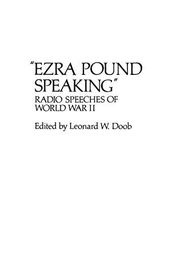
Ezra Pound Speaking
by Ezra Pound
1978
This collection presents Pound’s wartime broadcasts from Italy, making available the speeches behind his controversial radio activity. The texts document his public political arguments during the Second World War and provide material for examining that period of his career.
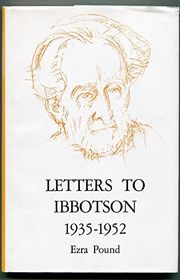
Letters to Ibbotson, 1935-1952
by Ezra Pound
1979
Letters to Pound’s former teacher Joseph Ibbotson trace a friendship sustained across years of political and personal upheaval. Annotations place the correspondence in context, documenting changes in the poet’s thinking between his years in Rapallo and confinement in America.
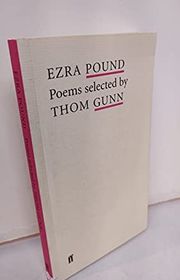
Ezra Pound
by Ezra Pound
1983
Thom Gunn selects poems by Ezra Pound and introduces the writer he admires. The volume combines Pound’s verse with a later poet’s personal and critical response, offering an entry into his work through another practitioner’s choices.
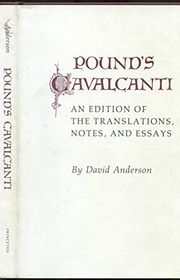
Pound’s Cavalcanti
by Ezra Pound
1983
Pound’s translations, notes, and essays on Guido Cavalcanti are gathered to show his sustained engagement with the medieval Florentine poet. The volume examines his attempts to interpret technically demanding verse and the philosophical concerns underlying it.
Ezra Pound and Dorothy Shakespear
by Ezra Pound
1984
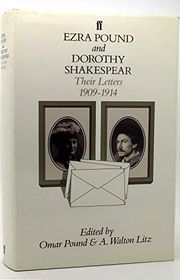
Letters and diary entries from the years before Pound and Dorothy Shakespear married reveal their developing relationship and his early modernist ambitions. Their exchanges place private life alongside friendships, artistic experiments, and the search for a new poetic style.
Pound/Lewis
by Ezra Pound
1985
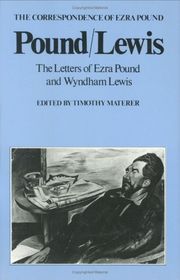
Five decades of correspondence trace Pound and Wyndham Lewis’s friendship from prewar London through political upheaval and Pound’s later confinement. Their exchanges reveal a lasting professional bond, shared artistic interests, and controversial commitments across changing circumstances.
Pound/Zukofsky
by Ezra Pound
1987
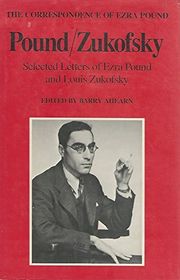
Pound and Louis Zukofsky met only rarely, yet maintained an extensive correspondence that preceded their first encounter. Their letters document a relationship sustained largely through writing and offer a record of exchange between two modernist poets.
Ezra Pound and James Laughlin
by Ezra Pound
1989
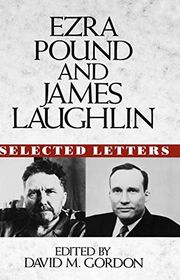
Selected letters follow Pound and James Laughlin’s relationship from teacher and pupil to author and publisher. Their exchanges about literature, music, politics, and mutual acquaintances illuminate both a personal friendship and the development of modernist publishing.
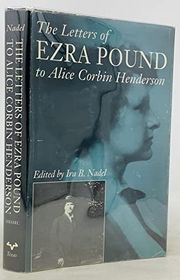
The Letters of Ezra Pound to Alice Corbin Henderson
by Ezra Pound
1993
Pound’s letters to poet and Poetry editor Alice Corbin Henderson follow their exchanges between 1912 and 1949. The correspondence illuminates his work as the magazine’s foreign correspondent and his continuing involvement in its literary world.
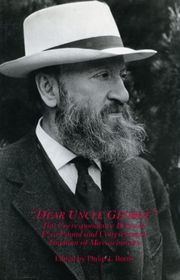
Dear Uncle George
by Ezra Pound
1996
One hundred letters trace Pound’s political correspondence with Massachusetts congressman George Holden Tinkham through the 1930s. Their exchange spans economic crisis, elections, and the approach of war, revealing Pound’s efforts to engage directly with American public life.
Pound/Cummings
by Ezra Pound
1996
Letters between Pound and E. E. Cummings explore poetry, personal beliefs, literary gossip, and political commitments across several decades. Their candid exchanges reveal artistic judgments and controversial views that complicate familiar accounts of both writers.
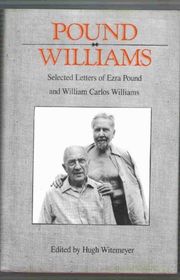
Pound/Williams
by Ezra Pound
1996
Pound and William Carlos Williams’s correspondence follows a lifelong, often contentious friendship from their student years to Williams’s death. Their exchanges connect poetry with politics, publishing, other artists, and the magazines and presses that supported modernism.
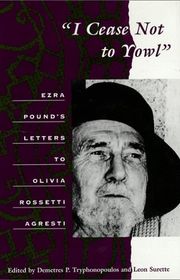
I Cease Not to Yowl
by Ezra Pound
1998
Pound’s correspondence with Olivia Rossetti Agresti begins in 1937 and continues through his confinement in Washington. The letters expose the intensity of his political convictions and hostility toward the conduct and consequences of the Second World War.
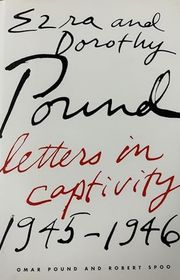
Ezra and Dorothy Pound
by Ezra Pound
1999
Letters between Pound and his wife document his detention near Pisa and subsequent confinement in the United States. Joined by contemporary records, they illuminate their partnership, harsh conditions, and the circumstances in which he wrote The Pisan Cantos.
Ezra Pound's Letters to William Watt
by Ezra Pound
2001
Letters from Ezra Pound to William Watt appear with Watt’s introduction and explanatory notes. The correspondence includes Pound’s reflections on artistic meaning and Dante, documenting an exchange with the editor of the architectural magazine Agora.
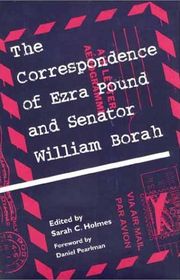
The Correspondence of Ezra Pound and Senator William Borah
by Ezra Pound
2001
Pound’s letters to Senator William Borah press the case for monetary reform and attempt to influence American politics during the 1930s. The exchange reveals his economic proposals, political ambitions, and growing commitment to fascism.
Ezra Pound's Economic Correspondence, 1933-1940
by Ezra Pound
2007
Letters to monetary reformers, historians, and journalists reveal Pound’s economic campaigns during the Depression. The annotated correspondence connects his hopes for reform with his poetry, political commitments, growing fascism, and antisemitism.
Ezra Pound’s Chinese Friends
by Ezra Pound
2008
Letters exchanged with nine Chinese intellectuals reveal Pound’s engagement with Chinese language, literature, history, and philosophy. Covering decades of contact, the collection documents relationships that informed his modernist writing and challenges assumptions about his sources and understanding.
Correspondence with members of the Frobenius Institute traces anthropology’s influence on Pound’s poetry and political thought. Annotated letters and contextual essays examine his interest in cultural theory and his engagement with German intellectual life during the fascist era.
Standalone Ezra Pound books








by Ezra Pound
1969The Letters of Ezra Pound to James Joyce, with Pound’s Critical Essays and Articles About Joyce
by Ezra Pound
1996Correspondence Between Ezra Pound & Congressman Tinkham of Massachusetts













Edited by
Software engineer whose passion for tracking book recommendations from podcasts inspired the creation of MRB.
Lead investor at 3one4 Capital whose startup expertise and love for books helped shape MRB and its growth.
Comments
Spotted a missing book, a wrong order or a mistake? Tell us and we'll fix this page.
We're a reading guide, not the author or publisher, so we can't send books or pass on messages.