
Erich von Däniken Books in Order
Browse Erich von Däniken's books in order, with brief summaries, series background, and where to start if you are curious about his ancient astronaut theories.
Last updated:
As an Amazon Associate, we earn from qualifying purchases (at no extra cost to you).
Erich von Däniken books in publication order
29 books
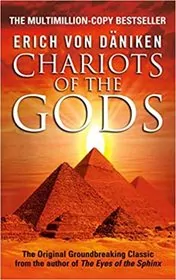
Chariots of The Gods
by Erich von Däniken
1968
Von Däniken's landmark book proposes that many monuments, myths, and religious stories record visits from extraterrestrial beings. Using examples like the pyramids, Stonehenge, and the Nazca lines, he argues that early civilizations received advanced knowledge from space.
Recommended by
1 person Dan Carlin recommended this book
Dan Carlin
"Played upon these tantalizing little legends that seem to suggest that man has had contact with higher beings." - Dan Carlin
Dan Carlin's recommendation of this book
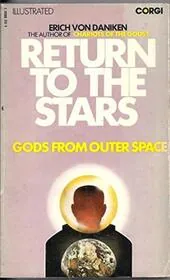
Return to the Stars
by Erich von Däniken
1970
Written soon after Chariots of The Gods, this early book revisits his ancient astronaut thesis with new examples and bolder claims. Von Däniken focuses on myths of sky gods, strange hybrids, and global building projects, arguing that they reflect a program run from the stars.
Gods from Outer Space
by Erich von Däniken
1972
A reworked edition of his second book, this volume expands on the idea that extraterrestrials shaped early humanity. Von Däniken explores genetic myths, ancient art, and engineering feats, suggesting that humans may be the deliberate creation or experiment of visiting spacefarers.
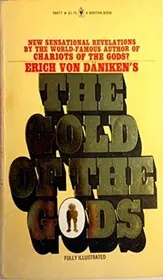
The Gold of the Gods
by Erich von Däniken
1972
Here von Däniken recounts claims about an underground tunnel system in Ecuador said to contain a library of metal plates, statues, and stores of gold. He links this story to other enigmatic sites like Nan Madol, presenting them as traces of lost high technology.
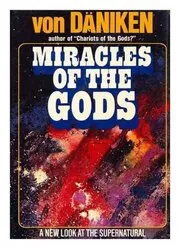
Miracles of the Gods
by Erich von Däniken
1975
Instead of focusing on ruins, this book examines reported miracles, apparitions, healings, and other strange events from shrines around the world. Von Däniken asks whether some supernatural experiences might actually reflect misunderstood technology or contact with nonhuman intelligences.
In Search of Ancient Gods
by Erich von Däniken
1976
A heavily illustrated companion to his earlier work, this volume presents hundreds of photographs of carvings, statues, temples, and landscapes. Von Däniken offers commentary on each image, inviting readers to see them as evidence for prehistoric alien civilizations and spacecraft.
According to the Evidence
by Erich von Däniken
1977
This book attempts to pull together von Däniken's proof that humanity has extraterrestrial origins. He combines archaeological anomalies, ancient myths, and modern scientific speculations to argue that humans were engineered or modified by visitors from space rather than evolving alone.
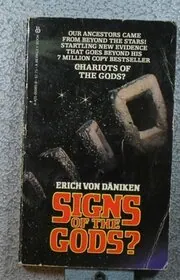
Signs of the Gods
by Erich von Däniken
1980
Von Däniken surveys puzzles such as the megaliths of Malta, menhirs in Brittany, Sumerian king lists, and the Ark of the Covenant. He asks whether these relics and texts record cloning experiments, advanced machines, or astronomical knowledge given to humans by powerful visitors.
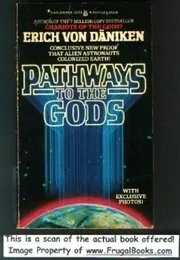
Pathways to the Gods
by Erich von Däniken
1981
Combining travel narrative and speculation, this book follows von Däniken from highland ruins in the Andes to libraries in India. Along the way he highlights rock carvings, stone structures, and Sanskrit texts that he believes trace the ancient flight paths of alien visitors.
The Stones of Kiribati
by Erich von Däniken
1982
Focusing on remote islands in the Pacific, von Däniken describes massive stone platforms, alignments, and legends from Kiribati and neighboring regions. He treats these features as markers of a global network laid out by visitors from the stars to guide navigation and ritual.
The Gods and Their Grand Design
by Erich von Däniken
1984
Here von Däniken ranges across sites on several continents, looking for patterns that might reveal a coordinated plan behind ancient constructions. He argues that alignments, shared symbols, and recurrent myths point to a long term strategy pursued by visiting gods or their agents.
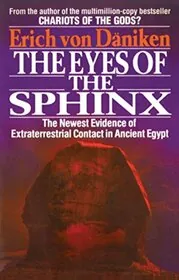
The Eyes of the Sphinx
by Erich von Däniken
1996
A follow up to Chariots of The Gods that concentrates on Egypt. Von Däniken explores pyramids, boat burials, underground chambers, and elongated skulls, claiming they reveal advanced planning, hidden messages, and physical traces of nonhuman visitors in the Nile valley.
Arrival of the Gods
by Erich von Däniken
1998
Centered on the desert around Nazca in Peru, this book examines the famous lines, geometric figures, and animal shapes etched into the ground. Von Däniken reviews competing explanations, presents his own aerial photographs, and argues that the plateau once served visiting astronauts.
The Return of the Gods
by Erich von Däniken
1998
Building on decades of research, von Däniken argues that Earth has long been observed by other intelligences and that their attention is increasing again. He links historical religious visions and modern UFO accounts, and suggests that humanity may face a renewed encounter.
The Gods Were Astronauts
by Erich von Däniken
2001
This book surveys major world religions and mythologies with a single guiding claim, that their gods were in fact advanced extraterrestrials. Von Däniken revisits angels, fiery chariots, and miraculous weapons, suggesting they describe spacecraft, aerial battles, and high technology.
Odyssey of the Gods
by Erich von Däniken
2002
Focusing on ancient Greece, von Däniken rereads myths of Zeus, centaurs, Cyclopes, and Atlantis as misunderstood reports of alien visitors and their technology. He compares temple art, legends, and astronomy to argue that Greek religion preserves a record of extraterrestrial contact.
History is Wrong
by Erich von Däniken
2009
Here von Däniken challenges accepted timelines and narratives in world history. He discusses puzzles such as the Voynich manuscript, the Book of Enoch, a rumored metal library in Ecuador, and the Nazca lines, arguing that they hint at hidden knowledge and outside intervention.
Evidence of the Gods
by Erich von Däniken
2010
Drawing on more than 150 photographs from his archive, von Däniken presents rock art, temples, and artifacts he believes point to contact with spacefaring visitors. Each image is paired with commentary that fits it into his broader ancient astronaut framework.
Twilight of the Gods
by Erich von Däniken
2010
This volume centers on the high plateau site of Puma Punku in Bolivia and on prophecies linked to the Maya calendar. Von Däniken argues that the massive stone blocks show impossible precision and uses them to support his claim that the gods will return.
Tomy and the Planet of Lies
by Erich von Däniken
2012
In this science fiction novel, von Däniken tells the story of Tomy, a mysterious being he claims once encountered in the desert. The tale follows Tomy on Earth and on his distant home world, where hidden motives and deceptions drive the plot.
Remnants of the Gods
by Erich von Däniken
2013
An illustrated tour of enigmatic sites in Egypt, Spain, France, Turkey, and Italy. Von Däniken argues that aligned holy places, underground complexes, and so called impossible buildings mark a forgotten surveying system and the lingering traces of alien influence in Europe.
The Mysterious Master Builders of the Stone Age
by Erich von Däniken
2016
Written for younger readers, this investigation asks how prehistoric people raised massive stone structures with such precision. Touring megalithic sites, von Däniken highlights engineering puzzles and suggests that lost technology or outside help may lie behind Stone Age achievements.
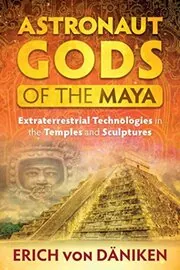
Astronaut Gods of the Maya
by Erich von Däniken
2017
Focusing on Mesoamerica, von Däniken surveys Maya, Aztec, and neighboring sites and sculptures, arguing that many carvings depict helmets, hoses, and other astronaut gear. With extensive photographs, he presents these images as evidence of direct contact with technologically advanced visitors.
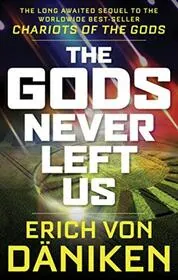
The Gods Never Left Us
by Erich von Däniken
2017
Presented as a sequel to Chariots of The Gods, this book argues that the extraterrestrials who visited ancient cultures still observe and influence us today. Von Däniken blends speculative scenes, myth reinterpretation, and modern UFO reports to claim continuing contact.
War of the Gods
by Erich von Däniken
2020
Von Däniken combs myths and scriptures from around the world for stories of battles in the sky and weapons that shattered entire regions. He links these tales to underground cities, impact scars on Earth, and strange mummified bodies that he presents as nonhuman.
Confessions of an Egyptologist
by Erich von Däniken
2021
Built around the claimed experiences of Adel H., who says he was trapped for days beneath the Step Pyramid at Saqqara, this book mixes underground adventure with speculation about hidden labyrinths, lost Egyptian libraries, and the true purpose of the Great Pyramid.
Eyewitness to the Gods
by Erich von Däniken
2021
In this later work, von Däniken shifts from ancient sites to modern testimony. He presents interviews and reports from people who claim to have seen UFOs, met otherworldly beings, or handled suppressed evidence, framing their stories as support for his lifelong convictions.
Impossible Truths
by Erich von Däniken
2021
This book offers a visual, accessible summary of von Däniken's ancient astronaut ideas. Packed with photographs from sites such as Machu Picchu, Colombian jungle cities, and the Nazca region, it revisits famous puzzles and adds new field research to support his case.
Evolution Is Wrong
by Erich von Däniken
2022
A polemical survey of modern biology that challenges Darwinian evolution. Von Däniken focuses on the fine structure of cells and DNA, highlighting unanswered questions and suggesting that an unknown intelligent agency may have shaped life and humanity's development.
Where to start with Erich von Däniken
If you are new to his ancient astronaut ideas: Chariots of The Gods → The Gods Were Astronauts → The Gods Never Left Us
If you love mysteries of Egypt: The Eyes of the Sphinx → Confessions of an Egyptologist → The Gods and Their Grand Design
If you want global archaeology and vivid photos: In Search of Ancient Gods → Evidence of the Gods → Remnants of the Gods
If you enjoy myths and religion reinterpreted: History is Wrong → Odyssey of the Gods → The Return of the Gods
If you prefer later, more personal books: Eyewitness to the Gods → War of the Gods → Evolution Is Wrong
Erich von Däniken sub-series and character series
Chariots of the Gods books in order
Explore this seriesChariots of the Gods books in chronological order
Erich von Däniken collections, short stories, and related book types
Non-Fiction








by Erich von Däniken
2022A Radical Approach to the Origin and Transformation of Life
Author bio
Erich von Däniken was born on April 14, 1935, in the Swiss town of Zofingen in the canton of Aargau. He grew up in a Catholic family and attended the Saint-Michel International Catholic School in Fribourg, where he first fell in love with old religious texts and the mysteries tucked inside them.
At school he began questioning the official explanations he heard in theology classes. Instead of accepting standard interpretations of the Bible, he found himself drawn to astronomy and the new reports of flying saucers in the news. That mix of ancient scripture and modern science fiction would shape the rest of his career.
After leaving school he trained in the hotel business, working his way up from apprentice to manager. In his early twenties he spent time in Egypt, where the pyramids and temples gave him a concrete backdrop for his questions about the past. He also ran into serious trouble, facing convictions for fraud and embezzlement linked to his work and finances.
Back in Switzerland he became manager of the Hotel Rosenhügel in Davos. By day he looked after guests, and at night he wrote. During those late hours, often after the last lights in the hotel were out, he drafted the manuscript that would become Chariots of The Gods, the book that would make his name.
Published in 1968, that book argued that many ancient monuments, myths, and religious stories record visits from technologically advanced beings from other worlds. It quickly turned into an international bestseller, translated into dozens of languages and adapted into films and television documentaries. The success of Chariots of The Gods allowed von Däniken to leave hotel management and focus on writing full time.
At nearly the same time he was also facing the consequences of his earlier financial schemes. In 1970 a Swiss court sentenced him to several years in prison for repeated embezzlement, fraud, and forgery. He served about a year behind bars, and during that time he wrote a follow up book, later published in English as Gods from Outer Space and Return to the Stars.
Over the next decades he produced a long string of books, from The Gold of the Gods and In Search of Ancient Gods to later titles like The Gods Were Astronauts, History is Wrong, and Remnants of the Gods. The pattern is consistent. Von Däniken travels to temples, pyramids, stone circles, and rock art sites, compares them with myths and holy books, and suggests that what ancient people called gods were in fact visitors from the stars.
His ideas have been rejected by most archaeologists, historians, and scientists, who see his work as speculation that underestimates the abilities of past cultures. Yet his books continue to find readers who enjoy big questions about human origins and the possibility of extraterrestrial contact. His lively, conversational style, full of on the ground anecdotes and puzzles, is part of that appeal.
Beyond the page he helped found the Archaeology, Astronautics and SETI Research Association, a loose network of enthusiasts and researchers interested in so called paleo contact. He also designed Mystery Park near Interlaken, later reopened as Jungfrau Park, a small theme park built around global archaeological mysteries and his ancient astronaut themes.
Von Däniken has spent much of his life on the road, often logging more than 100,000 miles a year to visit remote sites and give lectures. He has appeared in documentaries and television series, including programs about ancient aliens, and he continues to write into his eighties. From his home in the Swiss Alps, he still returns to the same core question that first gripped him as a student reading holy texts, asking whether the stories of gods and wonders might hide a very different story about visitors from elsewhere.













Edited by
Software engineer whose passion for tracking book recommendations from podcasts inspired the creation of MRB.
Lead investor at 3one4 Capital whose startup expertise and love for books helped shape MRB and its growth.
Comments
Did we miss something? Have feedback?
Help us improve this page by sharing your thoughts