
Erich Segal Books in Order
Explore Erich Segal books in order, from Love Story to his scholarly works, with short summaries, series notes, and easy where-to-start help for new readers.
Last updated:
As an Amazon Associate, we earn from qualifying purchases (at no extra cost to you).
Erich Segal books in publication order
15 books
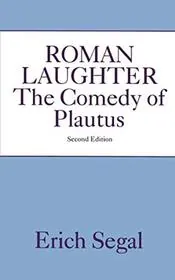
Roman Laughter
by Erich Segal
1968
Segal's early scholarly study of Plautus asks why Roman comedy still feels alive. He argues that Plautus' farce works by flipping everyday values upside down, opening a lively window onto Roman society and popular entertainment.
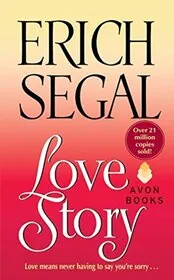
Love Story
by Erich Segal
1970
Wealthy Harvard athlete Oliver Barrett IV falls for Jenny Cavilleri, a sharp, funny Radcliffe music student from a very different world. Their romance moves fast, but class, family pressure, and pride make every step feel costly.
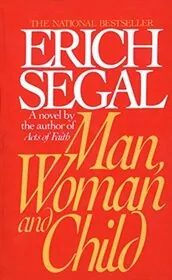
Man, Woman, and Child
by Erich Segal
1970
Bob and Sheila Beckwith seem to have a stable marriage, two daughters, and a settled life, until a call from France changes everything. The arrival of Bob's unknown son forces the whole family to face old secrets.
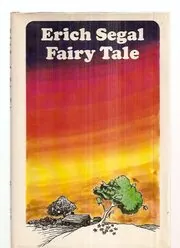
Fairy Tale
by Erich Segal
1973
In this playful detour from Segal's adult romances, a good-hearted Ozarks family find trouble after magic beans bring sudden wealth. The book leans into silliness, wordplay, and the old lesson that money can complicate a simple life.
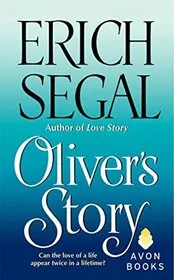
Oliver's Story
by Erich Segal
1977
After a devastating loss, Oliver Barrett throws himself into work and grief, convinced the best part of his life is over. A new relationship offers hope, but moving forward proves much harder than simply wanting to.
Greek Tragedy
by Erich Segal
1983
Edited by Segal, this volume brings together modern critical essays on the major tragic playwrights and the ideas behind their work. It offers a useful doorway into myth, structure, and the lasting pull of Greek drama.
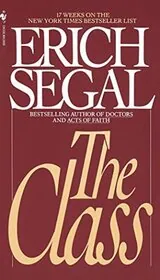
The Class
by Erich Segal
1985
Five members of Harvard's class of 1958 move from youthful promise into fame, compromise, heartbreak, and hard self-reckoning. Their lives keep crossing for decades, until a reunion forces them to measure what they have really made of themselves.
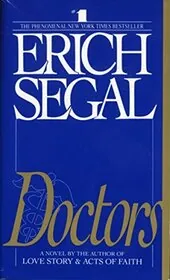
Doctors
by Erich Segal
1988
Childhood neighbors Barney Livingstone and Laura Castellano carry their fierce friendship into Harvard Medical School and beyond. As training, ambition, ethics, and love collide, Segal turns the making of doctors into an emotional and moral pressure cooker.
Oxford Readings in Greek Tragedy
by Erich Segal
1989
This collection gathers major modern essays on Aeschylus, Sophocles, and Euripides, with the Greek translated for accessibility. It is built for students and curious readers who want a fuller critical map of tragic drama.
Acts of Faith
by Erich Segal
1992
Timothy, Daniel, and Deborah grow up bound to religion, family duty, and each other, even as their lives pull them across continents. Segal uses forbidden love and spiritual conflict to drive a sweeping story about identity, loyalty, and rebellion.
Prizes
by Erich Segal
1995
Three brilliant scientists and doctors chase discovery, love, and the Nobel Prize, while betrayal and ambition keep raising the stakes. Segal turns laboratories and lecture halls into a high-pressure drama about genius and the private cost of success.
Oxford Readings in Aristophanes
by Erich Segal
1996
A one-volume selection of important essays on Aristophanes, the great surviving playwright of Athenian Old Comedy. It gives readers a strong guide to his satire, politics, theatrical tricks, and lasting importance.
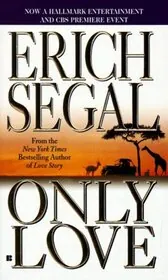
Only Love
by Erich Segal
1997
Years after a brutal separation in Africa, doctor Matthew has built a career in genetic therapy and a life shaped by loss. Then a desperate medical case brings Silvia, the woman he never forgot, back into his world.
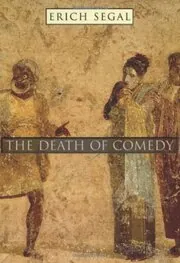
The Death of Comedy
by Erich Segal
2001
Segal surveys comedy from ancient Greece and Rome to Shakespeare, Moliere, and Beckett, asking what made the form thrive and where it changed course. It is a wide-ranging history with a scholar's depth and a storyteller's pace.
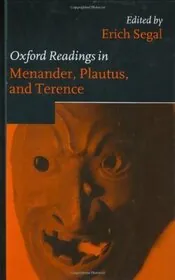
Oxford Readings in Menander, Plautus, and Terence
by Erich Segal
2002
This essay collection tracks the rise of Greek New Comedy and its Roman heirs, Plautus and Terence. It is a solid entry point for readers who want to see how stock characters, plot patterns, and comic style traveled into later Western drama.
Where to start with Erich Segal
If you want the classic campus romance first: Love Story → Oliver's Story
If you prefer family drama under pressure: Man, Woman, and Child → Only Love
If you want big campus and career sagas: The Class → Doctors → Prizes
If you want faith, identity, and a wider canvas: Acts of Faith
If you want Segal at his lightest and strangest: Fairy Tale
Erich Segal sub-series and character series
Love Story (Erich Segal) books in order
Explore this seriesLove Story (Erich Segal) books in chronological order
Erich Segal collections, short stories, and related book types
Non-Fiction
Standalone Erich Segal books
Author bio
Erich Segal was born in Brooklyn on June 16, 1937, and grew up in a family shaped by learning, religion, and argument. He was the son and grandson of rabbis, and he later joked that he had broken the family line by not following that path. For his first years, because his parents' apartment building did not allow children, he lived with his grandparents in Bedford-Stuyvesant.
At Midwood High School he was already serious about books, languages, and competition. He went on to Harvard, where he graduated in 1958 as class poet and Latin salutatorian, then stayed for a master's degree and a PhD in comparative literature. Very early on, teaching and writing were running side by side.
He thought of himself, first and last, as a classicist.
Segal taught Greek and Latin literature at Harvard, Yale, and Princeton, and later became a fellow at Wolfson College, Oxford. His scholarly work never sat in the background as a side hobby. Books such as Roman Laughter, Greek Tragedy, and The Death of Comedy show how deeply he cared about ancient drama, especially the way old plays could still feel lively, funny, and theatrical in the present.
But he was never built for just one career. As a Harvard student he wrote for the Hasty Pudding, later he worked on screenplays, and he helped write Yellow Submarine for the Beatles. The big turning point came when he wrote Love Story as a screenplay and then turned it into a novel. That story of Oliver Barrett and Jenny Cavilleri made him famous far beyond the classroom.
And it changed the scale of his life overnight.
The book became a huge bestseller, and the film version of Love Story turned him into a public figure, something rare for a professor of classics. Readers came for the romance, but Segal's work often had more going on than that. He liked class clashes, family strain, achievement, guilt, and the moment when smart people realize they cannot reason their way out of pain.
He kept returning to those pressures in later novels. Man, Woman, and Child tests a marriage with the arrival of a boy from a long-hidden affair. The Class follows five Harvard classmates across ambition, friendship, and disappointment. Doctors moves through medical school and professional life, asking what happens when gifted people try to heal others while making a mess of their own hearts. Acts of Faith and Prizes widened his canvas even further, bringing in religion, science, identity, and rivalry.
There was another side to him, too. After a serious canoeing accident in high school, he took up jogging as part of rehab and never really stopped. Running became a lifelong habit, and he completed the Boston Marathon many times, often fast enough to finish in under three hours. That stubborn, forward motion feels very much in tune with his books.
In later life he lived in London with his wife, Karen James, and their two daughters, Francesca and Miranda. He kept writing while living with Parkinson's disease and died there on January 17, 2010, after a heart attack. What lasts is the strange, very Segal mix: bestselling love stories, campus and family dramas, screen work, and serious classical scholarship, all coming from the same restless mind.







Edited by
Software engineer whose passion for tracking book recommendations from podcasts inspired the creation of MRB.
Lead investor at 3one4 Capital whose startup expertise and love for books helped shape MRB and its growth.
Comments
Did we miss something? Have feedback?
Help us improve this page by sharing your thoughts