
EM Forster Books in Order
See all E.M. Forster books in order, with summaries, notes on his novels, essays and travel writing, plus a simple guide to help you choose where to begin.
Last updated: 4 new books added
As an Amazon Associate, we earn from qualifying purchases (at no extra cost to you).
EM Forster books in publication order
25 books
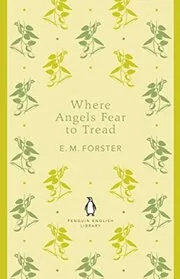
Where Angels Fear to Tread
by EM Forster
1905
Where Angels Fear to Tread begins with widowed Lilia Herriton falling for a young Italian in Tuscany, then follows the priggish English relatives who descend on the hill town of Monteriano to rescue her child, with tragic results that expose their snobbery and fear of passion.
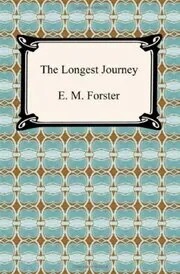
The Longest Journey
by EM Forster
1907
The Longest Journey is a searching coming of age novel about sensitive, lame Cambridge student Rickie Elliot, whose marriage and schoolmaster job slowly suffocate his imagination until the reappearance of a rough half brother challenges his compromises about class, loyalty and integrity.
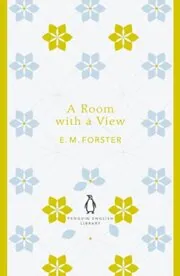
A Room with a View
by EM Forster
1908
A Room with a View follows young Lucy Honeychurch from a muddled holiday in Florence to her conventional life in Surrey, as a passionate kiss and the unconventional Emersons force her to choose between safe engagement and a more honest, risky happiness.
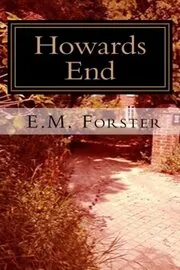
Howards End
by EM Forster
1910
Howards End centres on the idealistic Schlegel sisters, the wealthy Wilcox family and impoverished clerk Leonard Bast, using their tangled relationships and a much loved country house to explore class, inheritance and Forster's plea to "only connect" feeling with action.
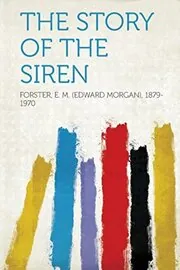
The Story of the Siren
by EM Forster
1920
In this atmospheric short story set off the Sicilian coast, an English traveller hears a local fisherman's tale of a glimpse of a sea siren and the curse it brings, as myth and modern tourism uneasily share the same rocky shore.
Pharos and Pharillon
by EM Forster
1923
Pharos and Pharillon collects impressionistic sketches of Alexandria, pairing brisk retellings of ancient episodes with memories of Forster's own Red Cross years in the city, to create an idiosyncratic blend of history, travel writing and literary portrait.
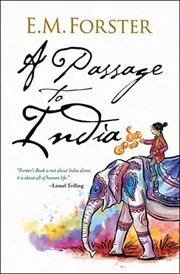
A Passage to India
by EM Forster
1924
Set in the fictional city of Chandrapore under the British Raj, A Passage to India follows Dr Aziz, schoolteacher Adela Quested and her future mother in law Mrs Moore as an incident in the Marabar Caves ignites racial tension and tests the possibility of friendship across empire.
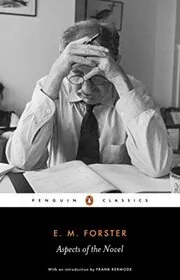
Aspects of the Novel
by EM Forster
1927
Based on his Clark Lectures at Cambridge, Aspects of the Novel is Forster's conversational guide to how fiction works, exploring story, character, plot, fantasy, pattern and rhythm through examples from classic novels rather than strict academic rules.
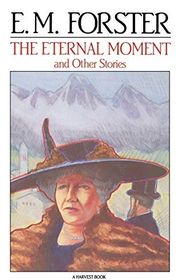
The Eternal Moment and Other Stories
by EM Forster
1928
These six stories use fantasy and speculative worlds to explore human connection, mortality and social constraints. A society dependent on machines, an encounter with a siren and a remembered moment of passion challenge familiar assumptions about life.
Abinger Harvest
by EM Forster
1936
Forster gathers essays, reviews, poems and observations about literature, English society and India. Reflections on admired writers and national character reveal the connections between artistic judgment, cultural habits and the individual’s place within them.
What I Believe, and Other Essays
by EM Forster
1939
This short volume gathers Forster's central humanist essays, including 'What I Believe', 'An Alternative in Humanism' and 'How I Lost My Faith', where he sets out a quietly radical creed based on tolerance, personal loyalty and scepticism toward dogma.

Nordic Twilight
by EM Forster
1940
Nordic Twilight is a brief Macmillan war pamphlet in which Forster warns that a Nazi victory would destroy European civilisation, arguing in plain, urgent prose for the values Britain is fighting to defend at the start of the Second World War.
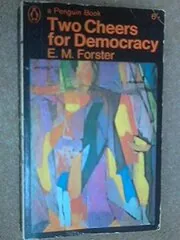
Two Cheers For Democracy
by EM Forster
1951
This essay collection brings together Forster's political and cultural writings from the 1930s and 1940s, including his famous defence of liberal humanism in 'What I Believe' and frank reflections on fascism, war, art and individual conscience.
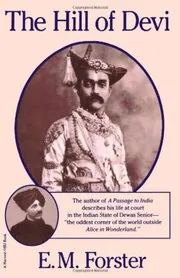
The Hill of Devi
by EM Forster
1953
The Hill of Devi is Forster's memoir of serving as private secretary to the Maharaja of Dewas, told through letters and commentary that capture the odd mixture of ceremony, humour and melancholy in a small princely state and foreshadow his novel A Passage to India.
Battersea Rise
by EM Forster
1955
Battersea Rise prints the opening chapter of Forster's biography of Marianne Thornton as a standalone keepsake, sketching the Thornton family home on Clapham Common and the tight knit evangelical world that shaped both Marianne's activism and Forster's family story.
Marianne Thornton
by EM Forster
1956
Drawing on family letters and diaries, this domestic biography recreates the life of Forster's great aunt Marianne Thornton, an evangelical reformer in the Clapham Sect, and uses her household to illuminate Victorian campaigns against slavery, changing class attitudes and the roots of his own inheritance.
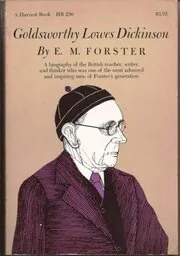
Goldsworthy Lowes Dickinson
by EM Forster
1962
Forster's biography of his friend Goldsworthy Lowes Dickinson traces the life of the Cambridge historian and political thinker who helped imagine the League of Nations, combining personal recollection with a clear account of Dickinson's pacifism, scholarship and quietly radical politics.
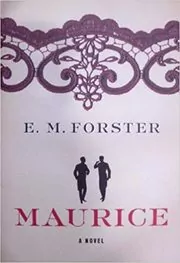
Maurice
by EM Forster
1971
Written in 1913-1914 but published after Forster's death, Maurice follows a young middle class Englishman from public school to Cambridge as he discovers his homosexuality and falls in love, ending with a defiantly hopeful vision of lasting same sex partnership.
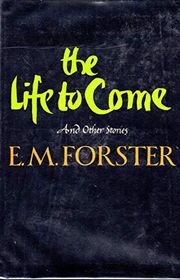
The Life to Come and Other Short Stories
by EM Forster
1972
Fourteen stories explore forbidden desire, betrayal and the pressures of class and race. Written across more than five decades, many remained unpublished during Forster’s lifetime because their depictions of gay relationships challenged prevailing social restrictions.
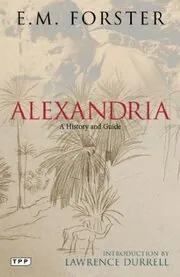
Alexandria
by EM Forster
1974
Alexandria is Forster's history and guide to the Egyptian port city, braiding three thousand years of politics, religion and legend with his own wartime walks through its streets to create a rich portrait of place for curious readers and travellers.
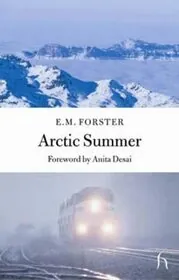
Arctic Summer
by EM Forster
1980
Arctic Summer is Forster's unfinished novel, following the uneasy friendship between cautious civil servant Martin Whitby and idealistic Clesant March on a journey south, where clashes over class, loyalty and desire expose the fault lines of Edwardian English life.
Selected Letters of E M Forster 1879-1920 V1
by EM Forster
1983
Covering 1879 to 1920, this first volume of letters follows Forster from childhood and Cambridge into his early travels, the writing of his first novels and his time in Egypt and India, offering a lively day to day portrait behind the published work.
Selected Letters of E.M. Forster, Vol. 2
by EM Forster
1985
This second volume gathers Forster's correspondence from 1921 to 1970, tracing his life after 'A Passage to India' through wartime broadcasting, humanist campaigning and late friendships, and revealing his wit, doubts and private reflections in his own words.
The Machine Stops
by EM Forster
In an underground society, an all-powerful Machine supplies people's needs while communication replaces physical contact. Vashti trusts the system, but her son Kuno questions its authority and longs to experience the world beyond his isolated room.
Recommended by
1 person Elon Musk recommended this book
Elon Musk
"Worth reading." - Elon Musk
Elon Musk's recommendation of this book
The Story of a Panic
by EM Forster
A group of English tourists experiences a sudden panic in the woods above Ravello. Afterward, young Eustace behaves in unsettling new ways, confronting his companions with a mysterious force beyond their comfortable understanding of nature.
Where to start with EM Forster
If you want his most famous novels: A Room with a View → Howards End → A Passage to India
If you prefer queer romance and coming of age themes: Maurice → The Longest Journey
If you're curious about his ideas on fiction and politics: Aspects of the Novel → Two Cheers For Democracy → What I Believe, and Other Essays
If you love travel and place writing: Alexandria → Pharos and Pharillon → The Hill of Devi
If you want to follow his early development: Where Angels Fear to Tread → The Longest Journey → A Room with a View
Standalone EM Forster books
Author bio
E. M. Forster was born Edward Morgan Forster on 1 January 1879 in London and became one of the defining English novelists of the twentieth century, best known for A Room with a View, Howards End and A Passage to India. His fiction returned again and again to questions of class, empire and the struggle to connect feeling with action.
His father, an architect, died when he was a baby, and he was raised by his mother, Lily, and a network of aunts and great aunts. In 1883 they settled at Rooks Nest, a small house in Hertfordshire whose orchard, lane and drawing room later reappeared, transformed, as the beloved home at the heart of Howards End.
Forster's childhood security collided with the harshness of Tonbridge School in Kent, where bullying and rigid convention left him distrustful of the English public school ethos. Cambridge felt like a rescue: at King's College he read classics and history, joined the secretive Apostles discussion society and found friends who valued talk, art and emotional candour.
An inheritance from his great aunt Marianne Thornton meant he did not need a conventional career, so in his twenties he travelled in Europe and wrote. Within a decade he produced four novels, including Where Angels Fear to Tread, The Longest Journey, A Room with a View and Howards End, books that exposed middle class hypocrisy while quietly asking how people might live more honestly with one another.
During the First World War he served with the Red Cross in Alexandria, then returned to India as private secretary to the Maharaja of Dewas, experiences he later wrote up in Alexandria: A History and Guide, Pharos and Pharillon, The Hill of Devi and finally the novel A Passage to India.
After A Passage to India appeared in 1924 he effectively stopped writing full length fiction. Instead he became an essayist, broadcaster and critic, producing works like Aspects of the Novel, in which he talks through how stories, characters and pattern function, and collections such as Abinger Harvest and Two Cheers for Democracy that mix literary appreciation with uneasy reflections on fascism, war and liberal values.
Forster called himself a humanist rather than a religious believer, and in essays like What I Believe and the pieces collected in Two Cheers for Democracy he argued for tolerance, personal loyalty and the right to criticise even cherished institutions, while working with civil liberties and humanist groups in Britain.
Again and again he returned to the simple instruction that runs through Howards End and much of his work, the plea to "only connect" private feeling with public action.
Privately he was a gay man in a country where sex between men was criminal for most of his life. He fell in love with the Indian student Syed Ross Masood before the First World War, later had affairs in Egypt, and from 1930 shared a long, complicated partnership with London policeman Bob Buckingham that eventually grew to include Buckingham's wife, May. The novel Maurice, written in 1913-14 but published only after his death, imagines a same sex couple choosing happiness together, a future he never quite saw reflected in public life.
From 1946 he lived mainly at King's College as an honorary fellow, writing occasional stories, editing other writers and enjoying the company of younger friends, while his earlier novels reached new audiences on radio and later in film. In June 1970 he died of a stroke at the Buckinghams' home in Coventry aged ninety one, his ashes scattered with Bob Buckingham's in a rose garden, leaving behind a body of work that still feels intimate, questioning and oddly hopeful.




Edited by
Software engineer whose passion for tracking book recommendations from podcasts inspired the creation of MRB.
Lead investor at 3one4 Capital whose startup expertise and love for books helped shape MRB and its growth.
Comments
Did we miss something? Have feedback?
Help us improve this page by sharing your thoughts