
Nathaniel Philbrick Books in Order
This page lists Nathaniel Philbrick's books in order, with quick summaries, background, and suggestions on where to start his blend of history and seafaring.
Last updated: 1 new book added
As an Amazon Associate, we earn from qualifying purchases (at no extra cost to you).
Nathaniel Philbrick books in publication order
19 books
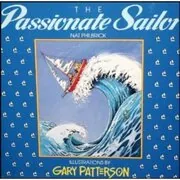
The Passionate Sailor
by Nathaniel Philbrick
1987
Drawing on years on the racecourse and in small boats, this early book gathers Philbrick's writing on sailors, regattas, and seamanship, celebrating the skills, obsessions, and small joys that keep people chasing wind and water.
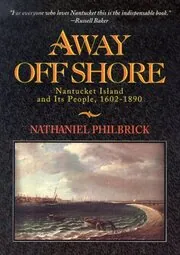
Away Off Shore
by Nathaniel Philbrick
1993
This sweeping history of Nantucket follows the island from its early English settlement through its rise as a whaling center and eventual decline, focusing on everyday men and women whose lives were tied to the sea, the land, and a tight-knit community.
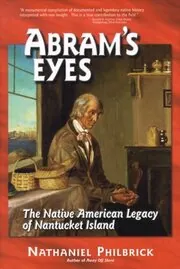
Abram's Eyes
by Nathaniel Philbrick
1998
Abram's Eyes uncovers the Native American history of Nantucket, tracing Wampanoag communities, legends, archaeological findings, and place-names to show how Indigenous people shaped the island long before it became a whaling port and fashionable vacation spot.
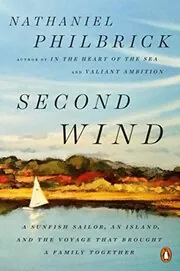
Second Wind
by Nathaniel Philbrick
1999
In this memoir, Philbrick describes returning to competitive Sunfish racing in his thirties while living on Nantucket, using solo training sails, family road trips, and one high-stakes championship to reflect on ambition, aging, and why sailing still grips him.
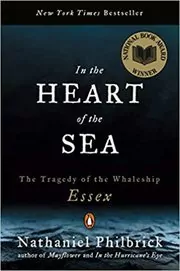
In the Heart of the Sea
by Nathaniel Philbrick
2000
This National Book Award winner tells the true story of the whaleship Essex, sunk by a furious sperm whale in 1820, and follows the stranded crew's three-month struggle in open boats, connecting their ordeal to the world that produced Moby-Dick.
Recommended by
1 person Richard Branson recommended this book
Richard Branson
Richard Branson recommended this book on his "70 must-read books" blog post.
Richard Branson's recommendation of this book
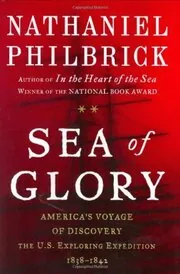
Sea of Glory
by Nathaniel Philbrick
2001
Sea of Glory recounts the U.S. Exploring Expedition of 1838 to 1842, a global voyage that mapped the Pacific, charted Antarctic coasts, and gathered scientific collections, while its domineering commander Charles Wilkes battled storms, mutiny scares, and a string of courts-martial.
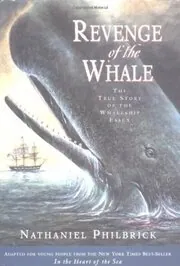
Revenge of the Whale
by Nathaniel Philbrick
2002
Written for teens, this adaptation of In the Heart of the Sea follows the whaleship Essex after it is rammed by a sperm whale, tracing the young crew's desperate open-boat journey across the Pacific and the brutal choices they face to survive.
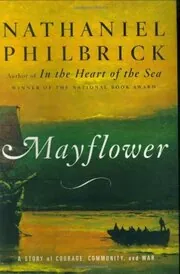
Mayflower
by Nathaniel Philbrick
2006
Philbrick retells the Mayflower voyage and the first half century of Plymouth Colony, from the search for religious freedom to fragile alliances with the Wampanoags and the devastation of King Philip's War, showing how cooperation and conflict shaped New England.

The Mayflower Papers
by Nathaniel Philbrick
2007
This anthology gathers key firsthand accounts behind Mayflower, including William Bradford's history of Plymouth and Benjamin Church's narrative of King Philip's War, giving readers direct access to the voices that shaped early New England.
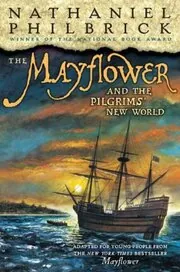
The Mayflower and the Pilgrims' New World
by Nathaniel Philbrick
2008
Adapted for younger readers from Mayflower, this book follows the Pilgrims from Europe to Plymouth, through uneasy cooperation with Native neighbors and into King Philip's War, using maps and archival images to make a complex early American story accessible.

The Last Stand
by Nathaniel Philbrick
2010
Here Philbrick reconsiders the Battle of the Little Bighorn, portraying George Armstrong Custer, Sitting Bull, Crazy Horse, and their followers on both sides, and exploring how one spectacular victory for the Sioux and Cheyenne became a tragic turning point in the West.

Why Read Moby-Dick?
by Nathaniel Philbrick
2010
In this slim companion to Melville's novel, Philbrick mixes close reading, literary history, and sea lore to explain why Moby-Dick still matters, offering practical guidance and infectious enthusiasm for readers who may be wary of tackling the classic.

Bunker Hill
by Nathaniel Philbrick
2013
This narrative history of Revolutionary Boston traces the road from the Boston Tea Party to the bloody Battle of Bunker Hill, focusing on figures like Joseph Warren, John Adams, and George Washington as a restless town turns into a revolutionary army.
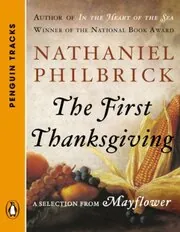
The First Thanksgiving
by Nathaniel Philbrick
2013
In this brief selection from Mayflower, Philbrick revisits the 1621 harvest feast and the decades around it, unpacking the uneasy alliance between Plymouth colonists and Wampanoag peoples and showing how memory turned a conflicted past into a comforting holiday story.
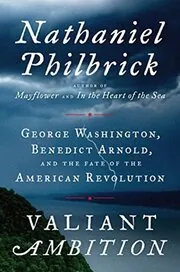
Valiant Ambition
by Nathaniel Philbrick
2016
Philbrick follows the intertwined fortunes of George Washington and Benedict Arnold, from early battlefield heroics to Arnold's attempted betrayal of West Point, revealing a revolutionary era plagued by rivalries, near civil war, and fragile loyalty on both sides.
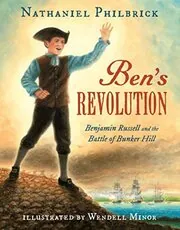
Ben's Revolution
by Nathaniel Philbrick
2017
In this illustrated history for young readers, Boston schoolboy Benjamin Russell watches tensions with Britain explode, becomes a clerk to General Israel Putnam, witnesses the Battle of Bunker Hill, and later helps report the signing of the Declaration of Independence.
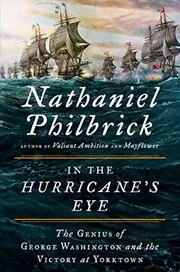
In the Hurricane's Eye
by Nathaniel Philbrick
2018
Focusing on the final years of the Revolutionary War, this book shows how George Washington and the French navy combined land campaigns, risky sea battles, and political gambles to trap the British at Yorktown and win American independence.

Travels with George
by Nathaniel Philbrick
2021
Philbrick retraces George Washington's early presidential tours, driving the same roads with his wife and their dog while weaving together travel memoir, biography, and history to ask what Washington meant then and what his legacy looks like now.
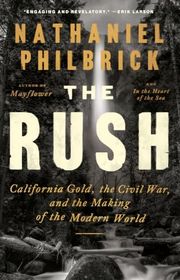
The Rush
by Nathaniel Philbrick
2026
The California gold rush draws migrants into a struggle over land, wealth and political power. Through rival leaders and the people caught between them, Philbrick examines how violence, exclusion and conflict over slavery helped reshape America before the Civil War.
Where to start with Nathaniel Philbrick
If you want his big American founding saga: Mayflower → Bunker Hill → Valiant Ambition → In the Hurricane's Eye → Travels with George
If you love sea stories and exploration: In the Heart of the Sea → Sea of Glory → Why Read Moby-Dick?
If you're curious about Nantucket and local history: Away Off Shore → Abram's Eyes → Second Wind → The Passionate Sailor
If you're reading with teens or kids: The Mayflower and the Pilgrims' New World → Ben's Revolution → Revenge of the Whale → The First Thanksgiving
Nathaniel Philbrick collections, short stories, and related book types
Non-Fiction
Standalone Nathaniel Philbrick books
Author bio
Nathaniel Philbrick was born in Boston in 1956 and grew up in Pittsburgh, Pennsylvania, far from the ocean that would later shape his work.
As a kid he loved books and stories, but it was sailing that first pulled him into history. Summer trips to Cape Cod introduced him to small wooden sailboats and the feeling of catching wind on open water, and back home in Pittsburgh he convinced his parents to buy a simple Sunfish so he could spend weekends learning to race on inland lakes.
Philbrick studied English at Brown University, where he raced for the sailing team and became the school's first Intercollegiate All-American sailor. He went on to earn a master's degree in American literature at Duke University, sharpening the research skills that would later drive his historical writing.
After graduate school he worked as an editor at a sailing magazine, writing and editing pieces about boats, races, and the culture around them. Those years produced early books such as The Passionate Sailor and Second Wind, and confirmed that he liked long projects that mixed physical experience with careful reporting.
In 1986 he moved with his wife Melissa and their two children to Nantucket Island. There he dug into the island's past, first with Away Off Shore, a history of Nantucket and its people, and Abram's Eyes, a study of the island's Native American legacy.
His breakthrough came with In the Heart of the Sea, the story of the whaleship Essex, rammed and sunk by a sperm whale in 1820.
Drawing on sailors' journals and forgotten accounts, the book explored how a tight-knit whaling community responded when a routine voyage turned into a fight for survival, and it won the National Book Award for Nonfiction and later inspired a feature film.
From there Philbrick kept returning to big turning points in American history. Sea of Glory recounts the U.S. Exploring Expedition of the 1830s and 1840s, while Mayflower follows the Pilgrims and Wampanoags through cooperation, betrayal, and war, and The Last Stand shifts to the Great Plains and the tangled stories around the Battle of the Little Bighorn. He has also written a sequence of books about the American Revolution, including Bunker Hill, Valiant Ambition, In the Hurricane's Eye, and Travels with George, which together trace a loose arc from the streets of Boston to Washington's victory at Yorktown and his later journeys as president.
Across these projects, certain themes recur. Philbrick is drawn to leadership under pressure, to the ways ordinary families experience famous events, and to the uneasy meeting of cultures on contested ground. He likes to work from diaries, letters, and logbooks, then tell the story in plain, scene-filled prose that brings places like Nantucket, Plymouth, and the Pacific into focus.
Today he continues to live on Nantucket with Melissa, sailing when he can and researching in local archives when he is home. Whether he is writing for adults or adapting his work for younger readers, he tends to start with a simple question about the past and follow it until the people involved feel as real as neighbors.












Edited by
Software engineer whose passion for tracking book recommendations from podcasts inspired the creation of MRB.
Lead investor at 3one4 Capital whose startup expertise and love for books helped shape MRB and its growth.
Comments
Did we miss something? Have feedback?
Help us improve this page by sharing your thoughts