
ECR Lorac Books in Order
Find ECR Lorac mysteries in order, with Chief Inspector Macdonald and Carol Carnac titles, brief summaries, series background and guidance on where to start.
Last updated: 2 new books added
As an Amazon Associate, we earn from qualifying purchases (at no extra cost to you).
ECR Lorac books in publication order
36 books

The Greenwell Mystery
by ECR Lorac
1932
When brilliant research chemist Ian Campbell disappears just as he makes a breakthrough in synthetic fuel, suspicion falls on treachery and foreign agents. Macdonald teams up with industrialist Sir Henry Blakely to follow false trails from London lodgings to a Yorkshire laboratory before confronting the conspirators.
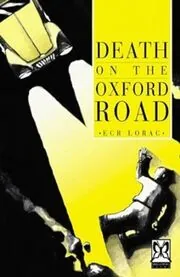
Death On The Oxford Road
by ECR Lorac
1933
On a dark stretch of the Oxford Road, a body is dumped from a speeding car, only for the killers to be spotted by Macdonald himself. What begins as a chance encounter grows into a patient reconstruction of a calculated murder disguised as a roadside accident.
The Case of Colonel Marchand
by ECR Lorac
1933
Colonel Marchand is found dead from cyanide poisoning soon after entertaining a pretty young visitor to tea. With a household of wary servants, a hard‑pressed secretary and a spendthrift heir all in line for suspicion, Macdonald must sift their stories to learn who decided the colonel had lived long enough.
Murder in Chelsea
by ECR Lorac
1934
A young woman who runs a Chelsea bookshop is discovered gassed in her bed, apparently a tragic suicide. When inconsistencies emerge, Macdonald turns a sympathetic eye on her friends, customers and co‑workers, uncovering hidden pressures and motives in the small world built around the shop.

Crime Counter Crime
by ECR Lorac
1936
During the 1935 General Election in a Lancashire mining town, a communist agitator is murdered on his way to break up a Conservative meeting. Macdonald’s inquiry into the killing is complicated when a nationalist politician launches his own private “investigation,” turning political rivalries into a dangerous second front.
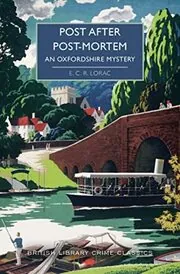
Post After Post-Mortem
by ECR Lorac
1936
The Surrays are a high‑achieving family of writers and professionals, so novelist Ruth’s apparent suicide at their Oxfordshire home shocks everyone. When her brother receives a cheerful letter posted the night she died, Macdonald reopens the case and finds ambition, jealousy and literary politics beneath the family’s polished surface.
Bats in the Belfry
by ECR Lorac
1937
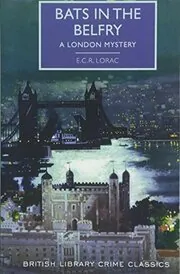
Bruce Attleton, once a rising novelist, vanishes after a strange phone call from a man named Debrette. His suitcase and papers later surface in a derelict Notting Hill studio called the Belfry, where Macdonald’s search through bohemian studios, bad marriages and possible inheritances leads to a chillingly concealed corpse.
These Names Make Clues
by ECR Lorac
1937
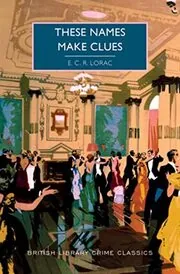
Invited to a publisher’s party in London, Macdonald joins a group of writers playing an elaborate treasure hunt, each hiding behind the name of a famous author. When a bestselling crime novelist is found dead, the playful literary clues become the key to unmasking a very real killer.
Slippery Staircase
by ECR Lorac
1938
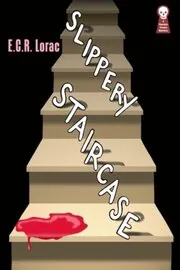
A gloomy London house divided into flats is linked by an old central staircase that binds the tenants’ lives together. When elderly Miss Fanny Seeley falls to her death, echoing a similar recent tragedy, Macdonald wonders which of the residents is using the stairs as a perfect cover for murder.
Black Beadle
by ECR Lorac
1939
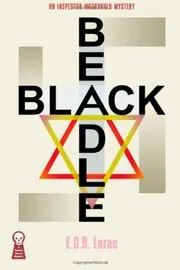
In a quiet English village, a reclusive figure nicknamed “Black Beadle” is found murdered, his odd habits and shadowy past suddenly of intense interest to his neighbours. Macdonald has to pick apart rivalries, gossip and long‑standing fears to learn who decided the beadle’s secrets were worth killing for.
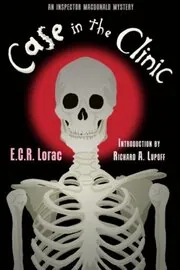
Case in the Clinic
by ECR Lorac
1941
The sudden collapse of elderly Reverend Anderby while hosing his garden seems natural enough, until a second unexpected death unsettles a small market town. Called in from Scotland Yard, Macdonald follows the trail through a local clinic, medical tensions and village loyalties to find a quiet but ruthless murderer.
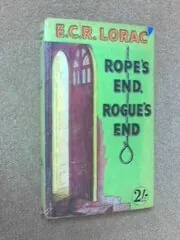
Rope's End, Rogue's End
by ECR Lorac
1942
Veronica Mallowood summons her scattered relatives back to Wulfstane Manor to discuss the future of their crumbling country house. The family conference ends with her brother found hanged in what looks like suicide, but Macdonald’s patient questioning reveals bitter quarrels, financial pressures and a carefully staged death.
The Sixteenth Stair
by ECR Lorac
1942
An American cousin visiting a long‑shuttered St John’s Wood villa owned by the Hazely family stumbles over a body at the foot of a staircase. As Macdonald investigates, it becomes clear the supposedly abandoned house has been in clandestine use, and several people had reason to keep that fact hidden.
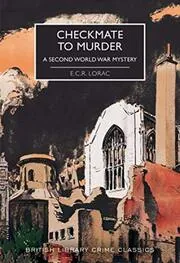
Checkmate to Murder
by ECR Lorac
1944
During a foggy evening in the London Blitz, an artist’s studio in Hampstead hosts a portrait sitting and a tense chess game. Next door, an elderly man is found shot and his Canadian soldier nephew arrested, but Macdonald’s investigation into the studio’s occupants and a zealous special constable shows the case is far from simple.
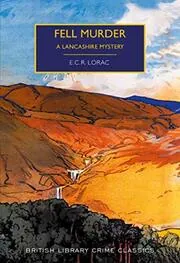
Fell Murder
by ECR Lorac
1944
On a remote Lancashire farm during wartime, domineering patriarch Robert Garth is discovered dead among his beloved cattle. Called north from Scotland Yard, Macdonald has to read the rhythms of farm work, inheritance worries and family quarrels before he can identify which of the Garths had murder in mind.
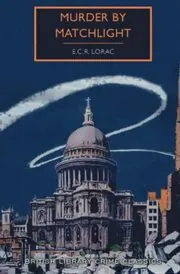
Murder by Matchlight
by ECR Lorac
1945
On a blackout night in Regent’s Park, a passer‑by sees a man struck down, lit only by the flare of a match. The victim’s identity proves slippery, leading Macdonald to a theatrical boarding house, black‑market dealings and air‑raid chaos where truth and imposture are hard to separate.
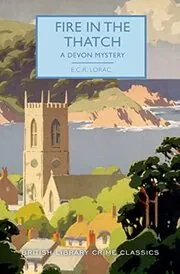
Fire in the Thatch
by ECR Lorac
1946
Late in the Second World War, a quiet ex‑naval officer rents a thatched cottage on a Devon estate, hoping to make a new start as a market gardener. When he dies in a suspicious fire amid local schemes for a luxury hotel, Macdonald must decide whether the blaze was tragic accident or calculated murder.
Relative to Poison
by ECR Lorac
1947
A demobbed ATS girl takes a promising job in a Regent Street café and persuades a friend to join her. Their new life quickly sours when they are drawn into a case of poisoning and blackmail, and Macdonald must decide who is victim, who is dupe and who is killer.
Death Before Dinner
by ECR Lorac
1948
During the war, eight writers and travellers accept invitations to what they believe is an exclusive dinner at a famous London French restaurant. When no officials of the supposed club appear and a body is found at the end of the evening, Macdonald must untangle hoax, motive and opportunity among the guests.
Part for a Poisoner
by ECR Lorac
1948
An irritable, wealthy invalid unexpectedly begins to recover under the care of an attractive nurse, then astonishes his family by proposing marriage. When he dies shortly before the wedding, Macdonald studies uneasy relatives and servants who suddenly face a very different financial future.

Policemen in the Precinct
by ECR Lorac
1949
In the Midlands town of Paulborough, dominated by its ancient abbey, a notorious local gossip is discovered dead after spreading stories about leading citizens. Macdonald’s methodical inquiry through choir stalls, vestries and council chambers shows how dangerous a tongue can be when old secrets are at stake.

Accident by Design
by ECR Lorac
1951
At Templedean Place in the Cotswolds, the Vanstead family distrusts heir Gerald and his outspoken Australian wife. When the couple die in a car crash and their surviving child later succumbs to apparent misadventure, Macdonald has to decide whether a series of accidents hides a carefully designed plan.
Crossed Skis
by ECR Lorac
1952
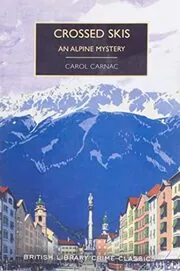
A dead man in a burned London lodging house and a cheerful party of sixteen skiers in the Austrian Alps turn out to be linked. Inspector Julian Rivers must follow a faint trail from Bloomsbury boarding house to snowbound slopes to unmask a killer hiding in holiday high spirits.
Murder in the Mill-Race
by ECR Lorac
1952
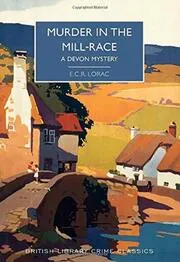
In the North Devon village of Milham, a much‑admired woman known for tireless charity work is found drowned in the mill race. Chief Inspector Macdonald meets a wall of polite silence as he probes behind the saintly reputation to the divisions and resentments hidden in the community.
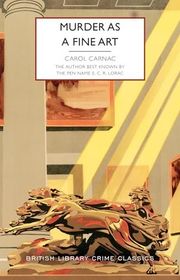
Murder As a Fine Art
by Various & ECR Lorac
1953
A civil servant is killed by a falling marble bust at the Ministry of Fine Arts. Inspector Julian Rivers investigates what appears to be another workplace accident, uncovering grievances, suspected forgeries and reasons to doubt the official explanation.
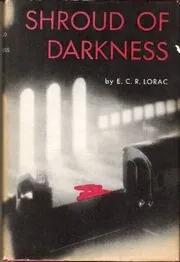
Shroud of Darkness
by ECR Lorac
1954
A young man arriving at Paddington Station on a train from Exeter is found with his skull smashed during the lethal Great Smog of 1952. With the victim’s identity concealed and witnesses half‑blind in the fog, Macdonald traces fragile leads between London and Devon to expose a killer.
Ask A Policeman
by ECR Lorac
1955
An elderly lady, firmly rooted in Edwardian habits, goes to the police to report that her journalist nephew has vanished. What looks like a routine missing‑person inquiry turns grim when Macdonald uncovers a murder, a menacing St John’s Wood lodging house and witnesses who keep disappearing.
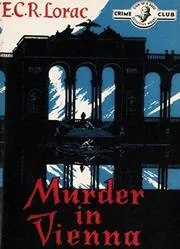
Murder in Vienna
by ECR Lorac
1956
Taking a rare holiday, Macdonald flies to post‑war Vienna to visit an old friend, determined to stop thinking like a detective. When the English secretary of a retired diplomat is attacked and an English novelist is killed, he is drawn into a case shaped by divided loyalties and a scarred city.
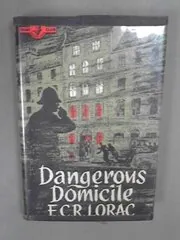
Dangerous Domicile
by ECR Lorac
1957
In a slightly shabby London house run by the formidable Madame Chevreuse, four young tenants share meals, rent and a growing sense of unease. As accidents and tensions mount inside this “safe” lodging, Macdonald must work out who is turning a respectable home into a truly dangerous domicile.
Death in Triplicate
by ECR Lorac
1958
In this non‑Macdonald novel, Superintendent Kempson is called in when a woman insists her sister did not simply desert her husband, a retired colonel. As the colonel is later found dead and rumours swirl, Kempson traces how poisonous gossip and half‑truths can lead to more than one death.
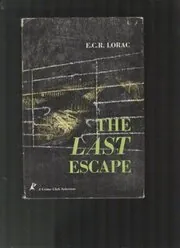
The Last Escape/Dishonour Among Thieves
by ECR Lorac
1959
Planning for retirement, Superintendent Macdonald buys a hill farm in the country and installs a young couple to run it while he is still on duty. After a prisoner escapes from Dartmoor and a body is found in the abandoned farmhouse, Macdonald’s quiet future is threatened by one final, intricate case.
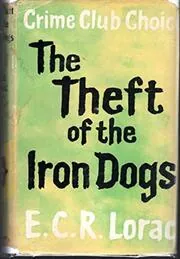
The Theft of the Iron Dogs
by ECR Lorac
1960
While tracking London coupon‑racketeer Gordon Ginner, Macdonald receives a letter from a Lancashire farmer whose summer cottage has been burgled, with only odd items such as a sack, fishing line and a pair of iron fireplace dogs missing. A rainy Lunesdale weekend brings the two cases together when Ginner’s body is found in the river.
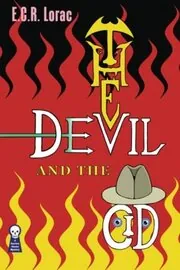
The Devil and the C.I.D.
by ECR Lorac
2012
An audacious criminal dressed as the Devil kills a victim during a bizarre masquerade and then hides the body in Chief Inspector Macdonald’s own car. Forced into a very personal investigation, Macdonald follows a trail of theatrical tricks and calculated bravado to uncover who is taunting the police.

Death Came Softly
by ECR Lorac
2021
At Valehead House in Devon, an eccentric anthropology professor living in the estate’s cave dwelling is found dead from carbon monoxide poisoning. Was it carelessness in his curious retreat or a murder arranged to look like an odd accident? Macdonald’s visit to the quiet valley reveals sharper tensions beneath the rural calm.
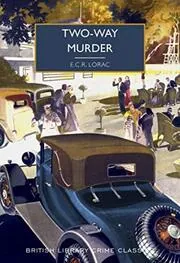
Two-Way Murder
by ECR Lorac
2021
During a foggy drive home from the Fordings Hunt Ball, Nick Brent and Dilys Maine narrowly avoid running over a corpse sprawled in the road. Nick is attacked when he goes to call the police, and an inquiry tangled with an earlier disappearance slowly unravels jealousies and long-held local grudges.
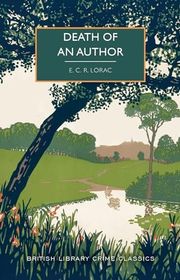
Death of an Author
by Various & ECR Lorac
A reclusive novelist disappears, and his secretary reports him missing before the housekeeper also vanishes. Inspectors Bond and Warner must establish whether a murder occurred, even as doubts arise about the supposed author’s identity.
Where to start with ECR Lorac
If you want atmospheric London wartime mysteries: Murder by Matchlight → Checkmate to Murder.
If you enjoy rural and village settings: Fell Murder → Fire in the Thatch → The Theft of the Iron Dogs.
If you like intricate, character‑driven puzzles: Post After Post-Mortem → These Names Make Clues.
If country house tensions are your thing: Rope's End, Rogue's End → Death Before Dinner.
If you prefer a standalone without Macdonald: Two-Way Murder.
ECR Lorac sub-series and character series
British Library Crime Classics (ECR Lorac) books in order
Explore this seriesRobert MacDonald books in order
Explore this seriesStandalone ECR Lorac books
Author bio
ECR Lorac was the working name of British crime writer Edith Caroline Rivett, born in Hendon, Middlesex, in 1894, who spent nearly three decades writing classic whodunits during the Golden Age of detective fiction.
She was the youngest daughter in a family that briefly tried to start over in Australia for her father’s health. When he died on the voyage home, Rivett, her mother and sisters returned to London with very little money and moved in with her grandfather’s crowded household. She went on to attend South Hampstead High School and the Central School of Arts and Crafts, and kept a lifelong interest in embroidery, lettering and church art.
Art and words ran side by side for her. While she trained her eye and hand on crafts that later appeared in places like Westminster Abbey, she was also reading widely and thinking about plots. In 1931 she brought those interests together in The Murder on the Burrows, her first detective story and the debut of a new series policeman, Chief Inspector Robert Macdonald.
Macdonald, sometimes described as a “London Scot,” is steady, observant and happiest following real police work rather than theatrical flourishes. Across dozens of novels he moves between smoky London streets and remote countryside, solving cases in concert with colleagues such as Detective Inspector Reeves. Books like Bats in the Belfry and Murder by Matchlight draw on the capital’s fog, bomb damage and theatrical subcultures, while Fell Murder and Fire in the Thatch turn to farms, fells and small village communities.
Rivett’s own life fed those settings. During the Second World War she was evacuated from London to Devon, writing to friends about bomb damage and the strain on ordinary families. Those experiences surface in wartime stories where blackouts, rationing and dispersal are part of the puzzle, from the Blitz‑haunted Checkmate to Murder to the village secrets of Murder in the Mill-Race and the fogbound investigation in Shroud of Darkness.
She was also one of the Golden Age writers who juggled more than one name. Under the pseudonym Carol Carnac she wrote a parallel run of novels about Inspector Julian Rivers of Scotland Yard, including the ski‑holiday mystery Crossed Skis. Later in her career she tried a different byline, Mary le Bourne, for the manuscript that would eventually appear as Two-Way Murder, a stand‑alone story without Macdonald that plays games with viewpoint and small‑town loyalties.
In later years Rivett settled in the Lune Valley in Lancashire, sharing a house with her sister Gladys in the village of Aughton. The northern landscape, with its fells, farms and changing post‑war economy, became the backdrop for several novels, among them Fell Murder, Still Waters and The Theft of the Iron Dogs, all of which combine close observation of farming life with slow‑building tension.
Colleagues knew her as a hard‑working professional and a committed member of the Detection Club, more interested in fair puzzles and strong sense of place than in flashy tricks. She stayed unmarried, wrote steadily through illness and upheaval, and was remembered locally as energetic, independent and socially minded.
After her death in 1958, many of her books slipped out of print. In the twenty‑first century, however, a wave of reissues in the British Library Crime Classics line and other imprints has brought Macdonald and his cases back to new readers, along with Carol Carnac’s Alpine and railway mysteries. Today Rivett is once again being read alongside better‑known contemporaries, valued for her clear prose, grounded characters and the feeling that her detectives are working in a real, complicated world rather than on a puzzle board.







Edited by
Software engineer whose passion for tracking book recommendations from podcasts inspired the creation of MRB.
Lead investor at 3one4 Capital whose startup expertise and love for books helped shape MRB and its growth.
Comments
Did we miss something? Have feedback?
Help us improve this page by sharing your thoughts