
British Library Crime Classics (ECR Lorac) Books in Order
Part ofECR Lorac Books in OrderExplore the British Library Crime Classics editions of ECR Lorac, with Macdonald and Carol Carnac mysteries listed in order, short summaries, series background and suggestions on the best books to try first.
Last updated: 2 new books added
As an Amazon Associate, we earn from qualifying purchases (at no extra cost to you).
British Library Crime Classics (ECR Lorac) books in publication order
10 books
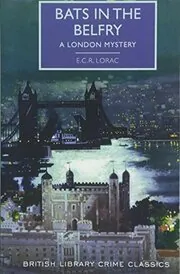
Bats in the Belfry
by ECR Lorac
1937
Bruce Attleton, once a rising novelist, vanishes after a strange phone call from a man named Debrette. His suitcase and papers later surface in a derelict Notting Hill studio called the Belfry, where Macdonald’s search through bohemian studios, bad marriages and possible inheritances leads to a chillingly concealed corpse.
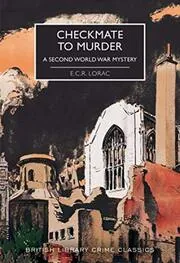
Checkmate to Murder
by ECR Lorac
1944
During a foggy evening in the London Blitz, an artist’s studio in Hampstead hosts a portrait sitting and a tense chess game. Next door, an elderly man is found shot and his Canadian soldier nephew arrested, but Macdonald’s investigation into the studio’s occupants and a zealous special constable shows the case is far from simple.
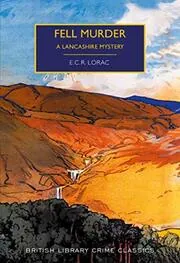
Fell Murder
by ECR Lorac
1944
On a remote Lancashire farm during wartime, domineering patriarch Robert Garth is discovered dead among his beloved cattle. Called north from Scotland Yard, Macdonald has to read the rhythms of farm work, inheritance worries and family quarrels before he can identify which of the Garths had murder in mind.
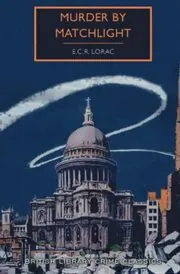
Murder by Matchlight
by ECR Lorac
1945
On a blackout night in Regent’s Park, a passer‑by sees a man struck down, lit only by the flare of a match. The victim’s identity proves slippery, leading Macdonald to a theatrical boarding house, black‑market dealings and air‑raid chaos where truth and imposture are hard to separate.
Fire in the Thatch
by ECR Lorac
1946
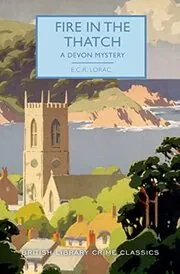
Late in the Second World War, a quiet ex‑naval officer rents a thatched cottage on a Devon estate, hoping to make a new start as a market gardener. When he dies in a suspicious fire amid local schemes for a luxury hotel, Macdonald must decide whether the blaze was tragic accident or calculated murder.
Crossed Skis
by ECR Lorac
1952
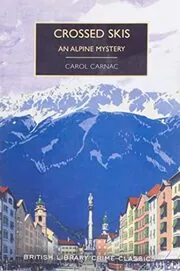
A dead man in a burned London lodging house and a cheerful party of sixteen skiers in the Austrian Alps turn out to be linked. Inspector Julian Rivers must follow a faint trail from Bloomsbury boarding house to snowbound slopes to unmask a killer hiding in holiday high spirits.
Murder in the Mill-Race
by ECR Lorac
1952
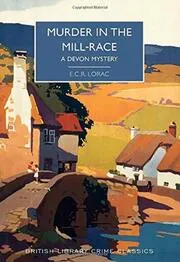
In the North Devon village of Milham, a much‑admired woman known for tireless charity work is found drowned in the mill race. Chief Inspector Macdonald meets a wall of polite silence as he probes behind the saintly reputation to the divisions and resentments hidden in the community.
Murder As a Fine Art
by Various & ECR Lorac
1953
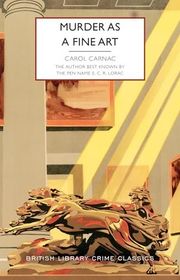
A civil servant is killed by a falling marble bust at the Ministry of Fine Arts. Inspector Julian Rivers investigates what appears to be another workplace accident, uncovering grievances, suspected forgeries and reasons to doubt the official explanation.
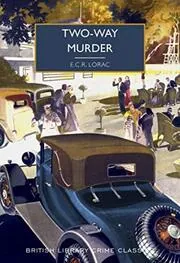
Two-Way Murder
by ECR Lorac
2021
During a foggy drive home from the Fordings Hunt Ball, Nick Brent and Dilys Maine narrowly avoid running over a corpse sprawled in the road. Nick is attacked when he goes to call the police, and an inquiry tangled with an earlier disappearance slowly unravels jealousies and long-held local grudges.
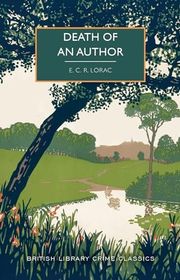
Death of an Author
by Various & ECR Lorac
A reclusive novelist disappears, and his secretary reports him missing before the housekeeper also vanishes. Inspectors Bond and Warner must establish whether a murder occurred, even as doubts arise about the supposed author’s identity.
Series background & context
This strand of the British Library Crime Classics series gathers together the novels by ECR Lorac, her alter ego Carol Carnac and her late stand‑alone Two-Way Murder that have been brought back into print. Together they form a compact tour of her work from the mid‑1930s into the post‑war years.
Most of the books here feature Chief Inspector, later Superintendent, Robert Macdonald of Scotland Yard. Macdonald is a practical, unshowy policeman who likes careful interviewing, local knowledge and common sense more than theatrical displays. Through his cases readers see both bomb‑damaged London and the quieter corners of the British countryside that Lorac loved.
Several Crime Classics take Macdonald out of the capital. Fell Murder and The Theft of the Iron Dogs use the hill farms and river valleys of Lancashire as their backdrop, showing how land, inheritance and long memories can be just as dangerous as city alleys. Fire in the Thatch and Murder in the Mill-Race move to Devon, contrasting picturesque villages and farms with simmering resentments and secrets.
Other titles stay in London but make vivid use of wartime and immediate post‑war conditions. In Checkmate to Murder and Murder by Matchlight, blackouts, air raids and shortages shape not just the atmosphere but the mechanics of the crimes. Bats in the Belfry offers an earlier, pre‑war city full of crumbling studios, theatrical types and unnerving buildings where a missing man’s luggage and a corpse turn up in odd places.
The Lorac Crime Classics also show her interest in family dynamics and work communities. Post After Post-Mortem and These Names Make Clues take readers into literary circles, one centered on a high‑achieving family of writers, the other on a publisher’s parlour game that turns fatal. Crime Counter Crime and Relative to Poison touch on politics, industry and post‑war employment, while still playing fair with clues and suspects.
Alongside the Macdonald novels, this subset includes Crossed Skis, written as Carol Carnac, and Two-Way Murder, a stand‑alone that does without any series detective. Crossed Skis splits its story between a ski party in the Austrian Alps and a murder inquiry in London, while Two-Way Murder unfolds around a seaside ball, a body in the road and a past disappearance that still haunts everyone involved.
Taken together, the ECR Lorac Crime Classics offer an accessible way to see how she handled city and country, war and peace, series continuity and experiment. You can dip into any one as a self‑contained puzzle, or read across them to watch Macdonald age, the settings change and Lorac’s style shift from neat pre‑war problems to darker, more reflective post‑war stories.
Other Series





Edited by
Software engineer whose passion for tracking book recommendations from podcasts inspired the creation of MRB.
Lead investor at 3one4 Capital whose startup expertise and love for books helped shape MRB and its growth.
Comments
Did we miss something? Have feedback?
Help us improve this page by sharing your thoughts